Miracles of St. Francis Xavier
Peter Paul Rubens · 1610s
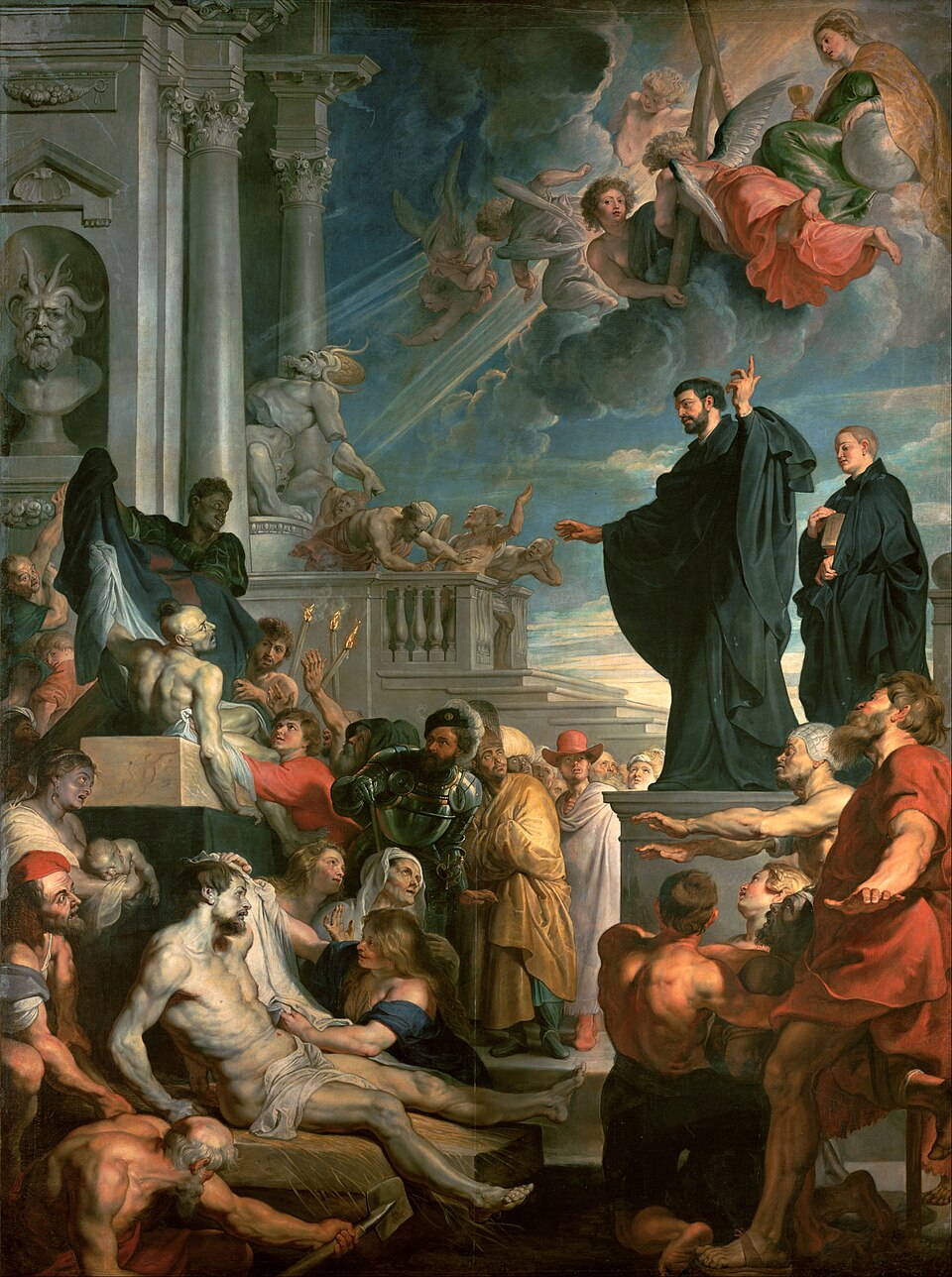
A drowned baby breathes again, the dead rise, a blind man reaches out, and a crowned idol topples from its column. Rubens packed all these miracles of Francis Xavier into a single towering altarpiece for the Jesuits of Antwerp.
The story behind the painting
Rubens painted the altarpiece in 1617 or 1618 for the Jesuit church in Antwerp, now known as Saint Charles Borromeo. A contract signed in 1620 with Jacobus Tirinus, head of the Antwerp Jesuits, required at least thirty-nine ceiling paintings and two large paintings, to be displayed in rotation. By then this canvas and its companion, the Miracles of Saint Ignatius of Loyola, were already finished. It was completed before Francis Xavier was made a saint in 1622. Wikidata simply dates it to the 1610s.
What to look for
Francis Xavier stands on a platform at the right. On the left a mother holds a baby with water coming from its mouth, recalling the child he was said to have raised from drowning in India. People rise from the dead. Near the upper left, between two columns, a crowned statue with an open mouth in its body falls, while the saint directs a heavenly vision against it. On the right a blind man stretches out his arms. In the middle stand men in East Asian dress. Rubens made many life studies, especially of the saint's healing gestures.
Meaning and intent
Shaped by the Counter-Reformation, the painting served Catholic doctrine. Showing Xavier's power over death supported his canonisation. The idol reflects the Western view of Hindu gods as demonic, the mouth in its body a sign of the devil. The man at lower left, with exposed underarm, is thought to be a plague victim, perhaps inspired by Tintoretto. The figure in East Asian dress, once read as Korean, has recently been identified as a Chinese man of the Ming period named Yppong. The Jesuits wanted varied foreign dress to show their activity in Asia.
Legacy
After a fire closed the Saint Charles Borromeo church in 1773, this painting and its companion were purchased by Empress Maria Theresa. Both altarpieces now hang in the Kunsthistorisches Museum in Vienna. The painting remains a vivid record of how Europe imagined Asia in the early seventeenth century, built from travel accounts, sculptures and goods traded in Antwerp. Rubens even softened the altarpiece after thinking about how it would look from far away, down the length of the church.
Did you know?
- Painted in 1617 or 1618 for the Jesuit church in Antwerp.
- Finished before Francis Xavier's canonisation in 1622.
- A figure once called Korean is now identified as a Chinese man named Yppong.
- Now in the Kunsthistorisches Museum, Vienna.
About the artist
Peter Paul Rubens (1577-1640)
religious art · Kunsthistorisches Museum
More by Peter Paul Rubens
.jpg) The Elevation of the Cross - Peter Paul Rubens (1609)
The Elevation of the Cross - Peter Paul Rubens (1609)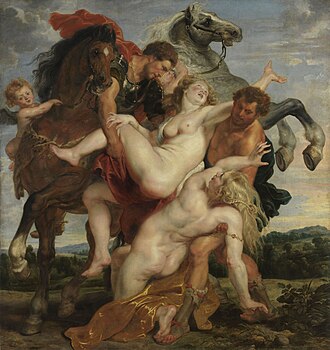 The Rape of the Daughters of Leucippus - Peter Paul Rubens (1618)
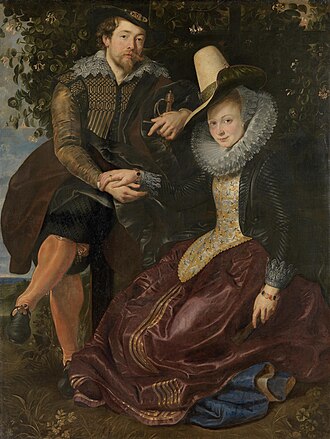 Rubens and Isabella Brant in the honeysuckle bower - Peter Paul Rubens (1600s)
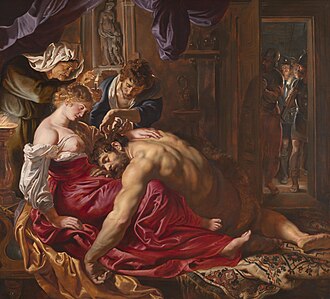 Samson and Delilah - Peter Paul Rubens (1600s)
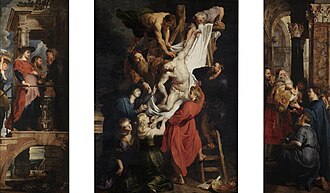 The Descent from the Cross - Peter Paul Rubens (1611)
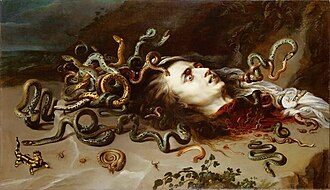 Head of Medusa - Peter Paul Rubens (1618)
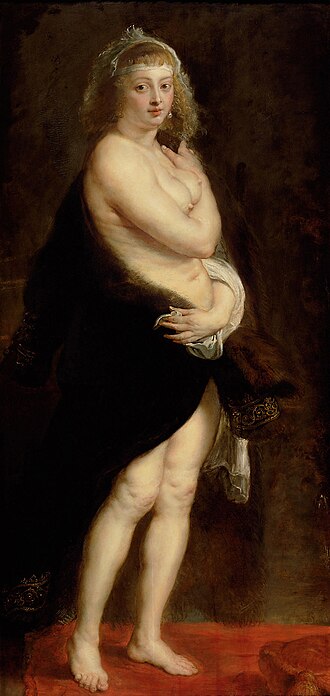 Helena Fourment in a Fur Robe - Peter Paul Rubens (1638)
.jpg) The Garden of Love - Peter Paul Rubens (1632)
The Garden of Love - Peter Paul Rubens (1632)
Paintings by related artists
 The Starry Night - Vincent van Gogh (1889)
.jpg) Café Terrace at Night - Vincent van Gogh (1888)
Café Terrace at Night - Vincent van Gogh (1888)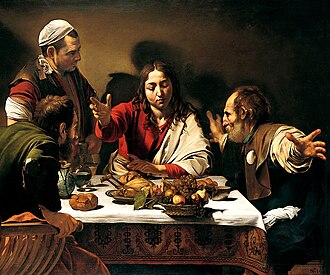 Supper at Emmaus - Caravaggio (1601)
 The Calling of Saint Matthew - Caravaggio (1609)
 Las Meninas - Diego Velázquez (1656)
 The Surrender of Brea - Diego Velázquez (1635)
%20-%20Google%20Art%20Project.jpg) Charles I in Three Positions - Anthony van Dyck (1635)
Charles I in Three Positions - Anthony van Dyck (1635)%20with%20M.%20de%20St%20Antoine%20-%20Google%20Art%20Project.jpg) Charles I (1600-1649) with M. de St Antoine - Anthony van Dyck (1636)
Charles I (1600-1649) with M. de St Antoine - Anthony van Dyck (1636) The Night Watch - Rembrandt van Rijn (1642)
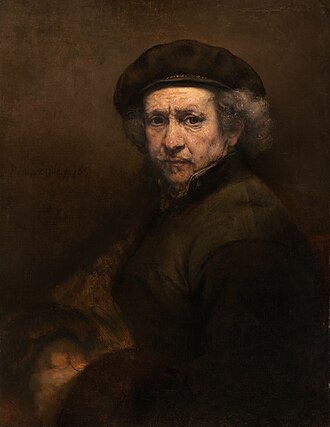 Self-Portrait - Rembrandt van Rijn (1659)
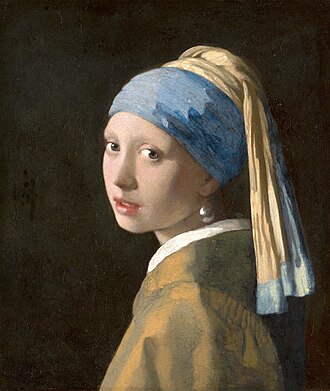 Girl with a Pearl Earring - Johannes Vermeer (1665)
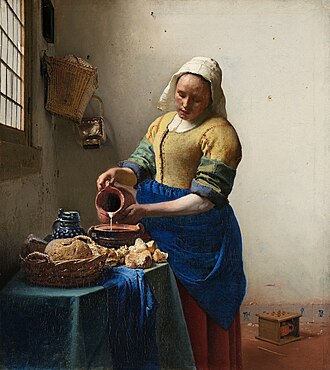 The Milkmaid - Johannes Vermeer (c. 1658)