Martyrdom of Saint Thomas
Peter Paul Rubens · 1630s
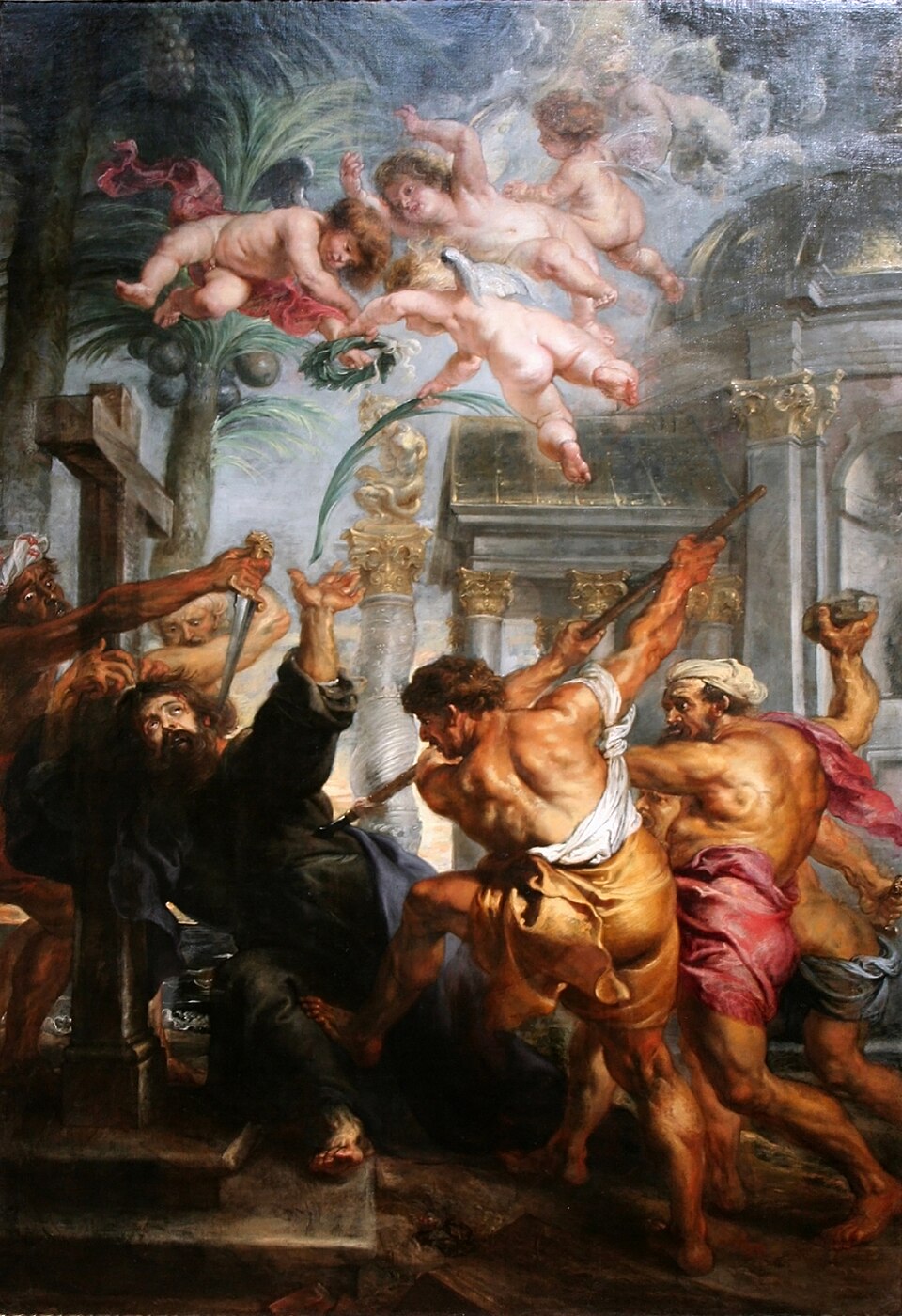
Barefoot and dressed in black, the apostle Thomas clutches a stone cross as a spear strikes him and an angel holds out a palm. Rubens painted this altarpiece for Prague in 1637 to 1638, imagining an India he never saw.
The story behind the painting
Jan Svitavsky, prior of the Augustinian monastery in Prague, commissioned this painting together with Saint Augustine at the Seashore for the altar of St. Thomas's Church, during his last period in office. Rubens painted it in 1637 to 1638; Wikidata simply dates it to the 1630s. The subject comes from legend, probably from the Golden Legend of Jacobus de Voragine: Thomas, a skilled architect, was sent to India to build a palace for King Gundoferus but gave the money to the people instead. When he challenged an idol, it melted like wax, and the Brahmins killed him with a spear. The source dates the martyrdom to 3 July 72 at Chennai.
What to look for
There are eleven figures: five angels, five Brahmins and Thomas. He reaches toward an angel handing him a palm frond. Behind him one Brahmin raises a dagger and another is about to hurl a rock. In the background stands a Roman-style domed building with spiral columns, a devil-like idol and elephant heads, with two palm trees and waves of the sea. The dying apostle's posture recalls the ancient Laocoon, which Rubens had drawn from several angles in Rome. Originally the canvas was larger, with another palm and another Brahmin; it was trimmed when the church was rebuilt after lightning in 1723. Only an engraving by Jacob Neeffs records the full composition.
Meaning and intent
Rubens never went to India and built the scene from books. For the Brahmins he followed India Orientalis by Theodor and Israel De Bry, which described them as near nude, with loincloths and turbans. Following Ribadeneyra's Flos Sanctorum, he showed Thomas as poor and barefoot, like a mendicant friar, so the Augustinians of Prague would see in him a model of their own order. The palms stand for eternal life after martyrdom. The twisted columns carry Christian meaning, the elephants recall a legend of Thomas moving a tree that elephants could not, and the horned, tailed idol tells viewers that what opposes the faith is the devil's work.
Legacy
The painting is remembered for its mixture of faith and fantasy, and especially for Rubens's mistaken use of classical Roman architecture for an Indian building and his invented image of a Hindu god. Its story is also one of survival and loss: lightning struck the church in 1723, and the new frame cost the picture strips on every side, so the composition we see is smaller than Rubens made it. The altarpiece is now in the collection of the National Gallery Prague, a vast canvas of about 380 by 253 cm.
Did you know?
- Painted in 1637-1638 for St. Thomas's Church in Prague.
- Commissioned by the Augustinian prior Jan Svitavsky.
- Trimmed on all sides after lightning damaged the church in 1723.
- Now in the National Gallery Prague.
About the artist
Peter Paul Rubens (1577-1640)
religious art · National Gallery Prague · Thomas the Apostle
More by Peter Paul Rubens
.jpg) The Elevation of the Cross - Peter Paul Rubens (1609)
The Elevation of the Cross - Peter Paul Rubens (1609) The Rape of the Daughters of Leucippus - Peter Paul Rubens (1618)
 Rubens and Isabella Brant in the honeysuckle bower - Peter Paul Rubens (1600s)
 Samson and Delilah - Peter Paul Rubens (1600s)
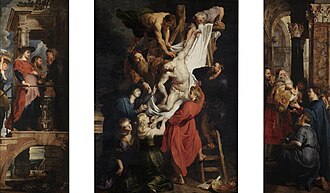 The Descent from the Cross - Peter Paul Rubens (1611)
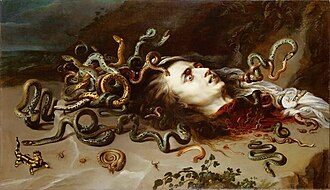 Head of Medusa - Peter Paul Rubens (1618)
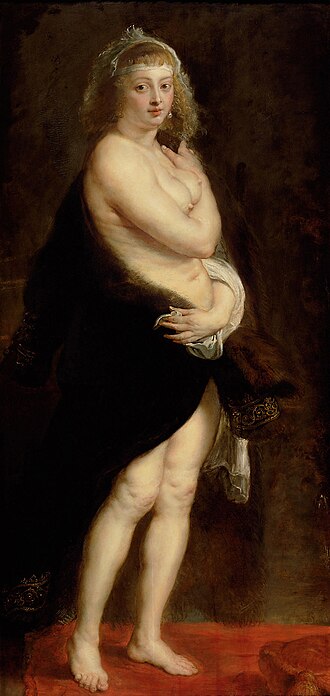 Helena Fourment in a Fur Robe - Peter Paul Rubens (1638)
.jpg) The Garden of Love - Peter Paul Rubens (1632)
The Garden of Love - Peter Paul Rubens (1632)
Paintings by related artists
 The Starry Night - Vincent van Gogh (1889)
.jpg) Café Terrace at Night - Vincent van Gogh (1888)
Café Terrace at Night - Vincent van Gogh (1888) Supper at Emmaus - Caravaggio (1601)
 The Calling of Saint Matthew - Caravaggio (1609)
 Las Meninas - Diego Velázquez (1656)
 The Surrender of Brea - Diego Velázquez (1635)
%20-%20Google%20Art%20Project.jpg) Charles I in Three Positions - Anthony van Dyck (1635)
Charles I in Three Positions - Anthony van Dyck (1635)%20with%20M.%20de%20St%20Antoine%20-%20Google%20Art%20Project.jpg) Charles I (1600-1649) with M. de St Antoine - Anthony van Dyck (1636)
Charles I (1600-1649) with M. de St Antoine - Anthony van Dyck (1636)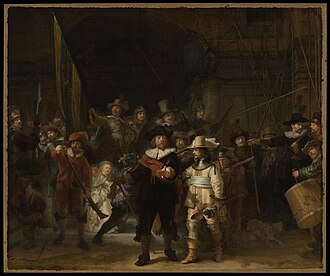 The Night Watch - Rembrandt van Rijn (1642)
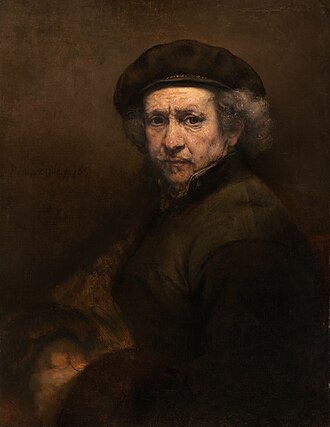 Self-Portrait - Rembrandt van Rijn (1659)
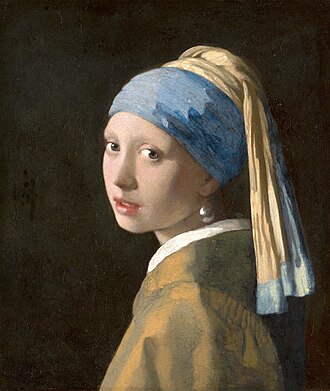 Girl with a Pearl Earring - Johannes Vermeer (1665)
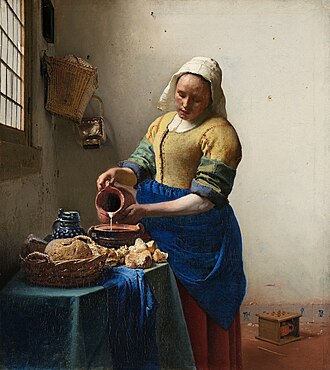 The Milkmaid - Johannes Vermeer (c. 1658)