Isabella d'Este
Peter Paul Rubens · 1605
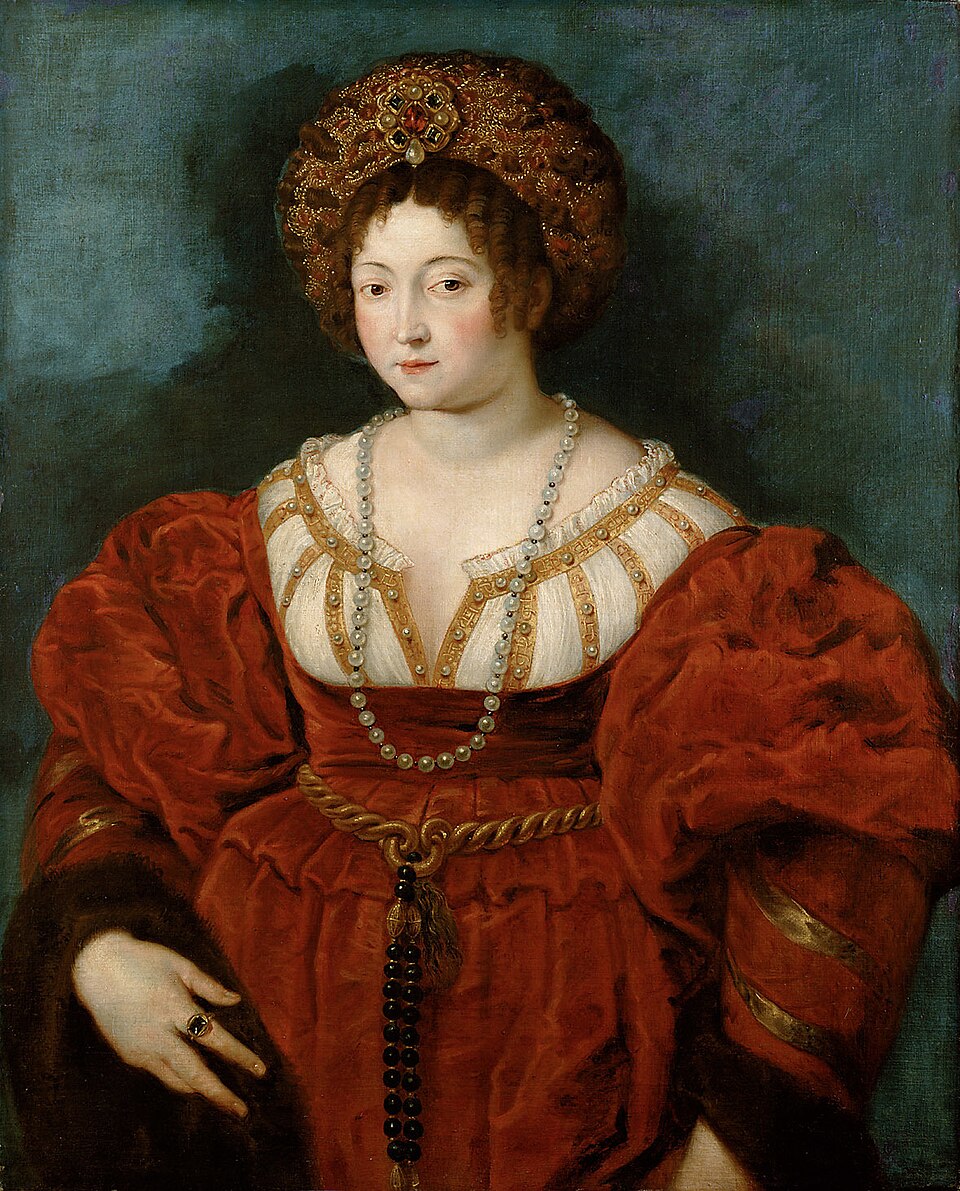
A woman in red velvet against a turquoise ground, a balzo on her head. Rubens copied her from a lost Titian, and who she really is has puzzled the museum that owns her ever since.
The story behind the painting
At the beginning of the seventeenth century Rubens was court painter in Mantua, and there and later elsewhere he copied Italian masters, Titian among them. This portrait, also called Isabella in Red or Portrait of the Aged Isabella d'Este, is considered a close copy of a lost Titian original. The dates are uncertain on both sides: the Rubens copy is placed in 1600, around 1605 or later, and the Titian original anywhere between 1524 and 1536 depending on the source. After Rubens died, his inventory listed two copies by his hand of Titian portraits of Isabella d'Este. The painting later passed from Archduke Leopold Wilhelm of Austria to the Kunsthistorisches Museum in Vienna.
What to look for
The picture is a knee-length portrait of a somewhat chubby middle-aged woman in a red velvet dress, set before a turquoise background. On her head she wears a balzo, a fashionable headdress that Isabella d'Este herself invented around 1509 and which was widely worn in northern Italy in the 1530s. Look at the personal features that matter so much to the identity debate: reddish-brown curls, brown eyes and classically arched eyebrows. The red of the velvet against the cool turquoise gives the portrait its warmth, and its name, Isabella in Red.
Meaning and intent
The Kunsthistorisches Museum shows three coloured portraits identified as Isabella d'Este (1474 to 1539): the Ambras Miniature, this Isabella in Red, and Titian's Isabella in Black. Their features contradict each other, and the differences cannot be explained by flattery. Because of the confusion, other museums have withdrawn colour identifications. The trouble may start with the 1640 inventory after Rubens's death, which names both pictures, and with the habit of calling any sitter in a balzo after the famous patron. Either Isabella in Black is misidentified, or both Isabella in Red and the Ambras Miniature are.
Legacy
The evidence favours this painting. Two older copies of the lost Titian exist independently of Rubens: a workshop copy with a younger face, known from a photograph, and an anonymous sixteenth-century copy in the Walker Art Gallery in Liverpool inscribed Isabella Estensis. The Ambras Miniature, a Mantuan copy about a generation later, also carries the inscription Isabella Estensis and shares her features. Some experts have therefore published that the confusion lies with Isabella in Black. So Rubens's copy, made to study Titian, may be one of our best guides to what Isabella looked like.
Did you know?
- A close copy by Rubens of a lost Titian portrait.
- She wears a balzo, a headdress Isabella d'Este invented.
- Came from Archduke Leopold Wilhelm to the Kunsthistorisches Museum.
- Her identity conflicts with Titian's Isabella in Black.
About the artist
Peter Paul Rubens (1577-1640)
portrait · Kunsthistorisches Museum · Isabella d'Este
More by Peter Paul Rubens
.jpg) The Elevation of the Cross - Peter Paul Rubens (1609)
The Elevation of the Cross - Peter Paul Rubens (1609) The Rape of the Daughters of Leucippus - Peter Paul Rubens (1618)
 Rubens and Isabella Brant in the honeysuckle bower - Peter Paul Rubens (1600s)
 Samson and Delilah - Peter Paul Rubens (1600s)
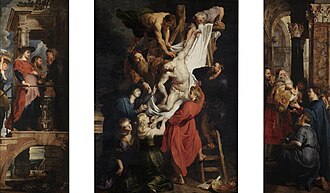 The Descent from the Cross - Peter Paul Rubens (1611)
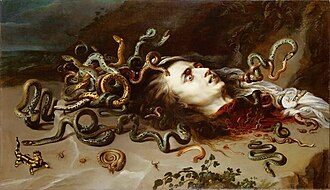 Head of Medusa - Peter Paul Rubens (1618)
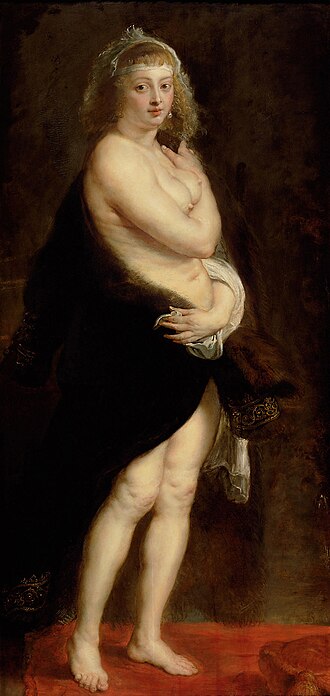 Helena Fourment in a Fur Robe - Peter Paul Rubens (1638)
.jpg) The Garden of Love - Peter Paul Rubens (1632)
The Garden of Love - Peter Paul Rubens (1632)
Paintings by related artists
 The Starry Night - Vincent van Gogh (1889)
.jpg) Café Terrace at Night - Vincent van Gogh (1888)
Café Terrace at Night - Vincent van Gogh (1888) Supper at Emmaus - Caravaggio (1601)
 The Calling of Saint Matthew - Caravaggio (1609)
 Las Meninas - Diego Velázquez (1656)
 The Surrender of Brea - Diego Velázquez (1635)
%20-%20Google%20Art%20Project.jpg) Charles I in Three Positions - Anthony van Dyck (1635)
Charles I in Three Positions - Anthony van Dyck (1635)%20with%20M.%20de%20St%20Antoine%20-%20Google%20Art%20Project.jpg) Charles I (1600-1649) with M. de St Antoine - Anthony van Dyck (1636)
Charles I (1600-1649) with M. de St Antoine - Anthony van Dyck (1636)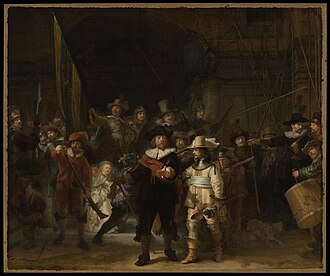 The Night Watch - Rembrandt van Rijn (1642)
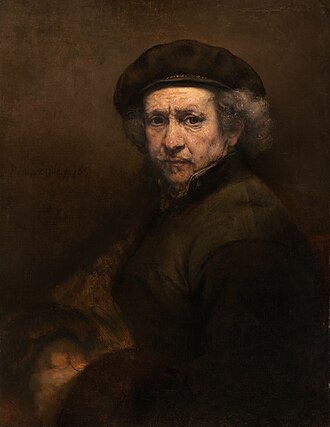 Self-Portrait - Rembrandt van Rijn (1659)
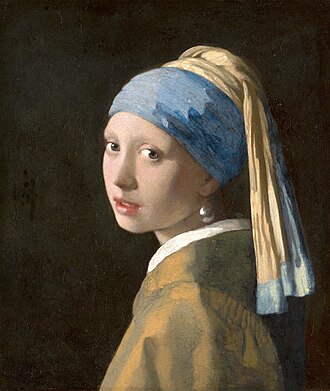 Girl with a Pearl Earring - Johannes Vermeer (1665)
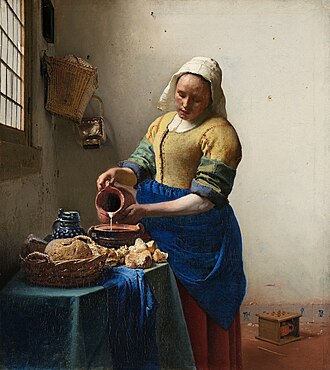 The Milkmaid - Johannes Vermeer (c. 1658)