眠れるヴィーナス
アルテミジア・ジェンティレスキ · 1620s
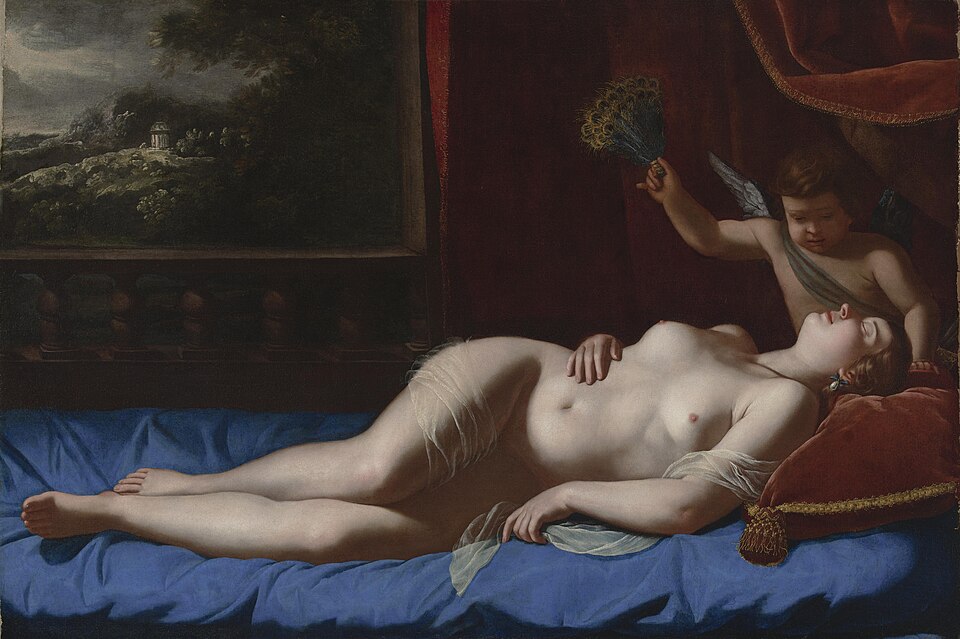
Venus drifts into sleep on a deep blue bed while her son fans her with peacock feathers, gazing at her in rapture. Artemisia Gentileschi gave the goddess features of her own face, in a rare sleeping nude painted by a woman.
The story behind the painting
Artemisia Gentileschi painted Venus and Cupid, also called Sleeping Venus, around 1626; Wikidata dates it simply to the 1620s. It was probably commissioned by an important and wealthy patron. The clue is in the bed: Gentileschi painted the blue sheets with two layers of lapis lazuli, an expensive material for artists to obtain. Because the picture shows a slumbering, vulnerable woman, unlike her earlier works, it is thought to show her willingness to adapt her style to what patrons wanted. A second artist may have been commissioned to paint the landscape at the top left.
What to look for
The canvas is about 96.5 by 143.8 cm. Venus reclines on a blue bed covering, her head on a rich crimson and gold tasselled pillow. She wears only a thin wisp of transparent linen around her thigh. Cupid fans her with richly coloured peacock feathers, gazing at her with an adoring, rapturous expression. Through a window you see a moonlit landscape with a temple to the goddess. Look at her face: full cheeks, heavy lids, a prominent nose and a small protruding chin, all features of Gentileschi's own face. Her hand rests lightly on her side and her legs lie gently together.
Meaning and intent
The art historian Udo Kultermann places the work in a long tradition of sleeping female nudes, from antiquity through the Renaissance, and notes that it is a rare example of a woman artist taking up the motif. He argues that the composition heightens the intimacy and voyeurism typical of the subject, making the viewer aware of the indiscretion of looking at a vulnerable, sleeping goddess. More recent scholarship stresses a balance between erotic display and a sacred, protective space. Addison Cucchiaro calls her a goddess at rest, framed as divine by the costly ultramarine and the temple behind her.
Legacy
The painting blends realism and classicism, both in its imagery and in Gentileschi's style. Its modern history is recent: it was first documented in a private collection in Rome in the 1980s. It was then acquired by the Barbara Piasecka Foundation in Princeton, New Jersey, and later by the Adolph D. and Wilkins C. Williams Foundation, which gave it to the Virginia Museum of Fine Arts. There it now invites visitors to reconsider a familiar theme of European art, seen this time through the eyes of a woman painter who gave the goddess her own face.
豆知識
- Painted by Artemisia Gentileschi around 1626.
- The blue sheets use two layers of costly lapis lazuli.
- Venus has features of the painter's own face.
- Gifted to the Virginia Museum of Fine Arts.
画家について
アルテミジア・ジェンティレスキ (1593-1653)
神話画 · ヌード · ウェヌス · クピードー · バージニア美術館
同じ画家の作品: アルテミジア・ジェンティレスキ
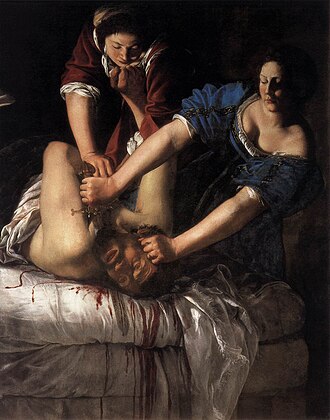 ホロフェルネスの首を斬るユディト - Artemisia Gentileschi (1613)
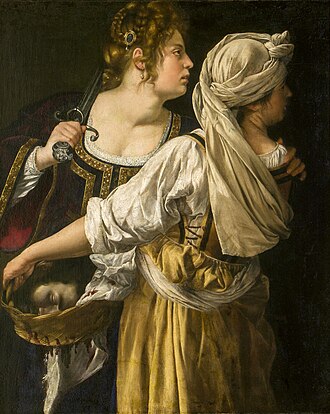 ユディトとその侍女 - Artemisia Gentileschi (1618)
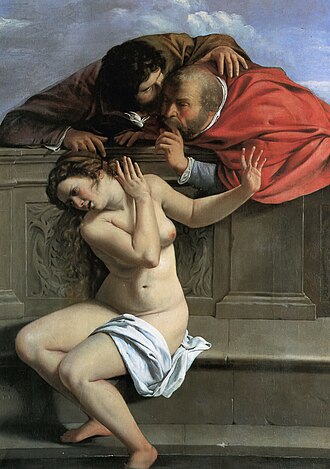 スザンナと長老たち - Artemisia Gentileschi (1610)
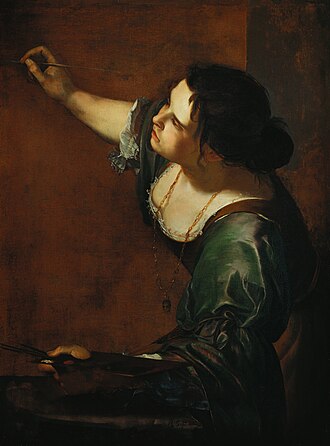 絵画の寓意としての自画像 - Artemisia Gentileschi (1638)
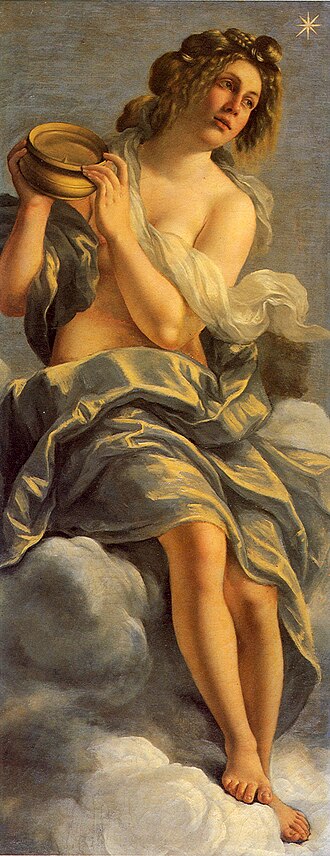 天性の素質の寓意 - Artemisia Gentileschi (1615)
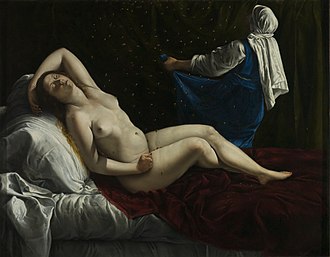 ダナエ - Artemisia Gentileschi (1612)
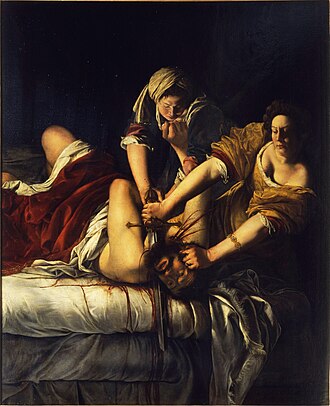 ホロフェルネスの首を斬るユディト - Artemisia Gentileschi (1620)
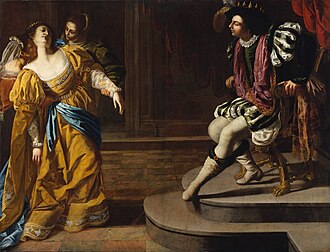 アハシュエロス王の前のエステル - Artemisia Gentileschi (1620s)
関連する画家の作品
 エマオの晩餐 - Caravaggio (1601)
 聖マタイの召命 - Caravaggio (1609)
 ラス・メニーナス - Diego Velázquez (1656)
 ブレダの開城 - Diego Velázquez (1635)
 Saint Francis in Meditation - Francisco de Zurbarán (1639)
 The Immaculate Conception - Francisco de Zurbarán (1661)
 チャールズ1世の三面肖像画 - Anthony van Dyck (1635)
 馬上のチャールズ1世とサン・アントワーヌの領主の肖像 - Anthony van Dyck (1636)
 キリスト昇架 - Peter Paul Rubens (1609)
 レウキッポスの娘たちの略奪 - Peter Paul Rubens (1618)
 夜警 - Rembrandt van Rijn (1642)
 自画像 - Rembrandt van Rijn (1659)