ユディトとその侍女
アルテミジア・ジェンティレスキ · 1618
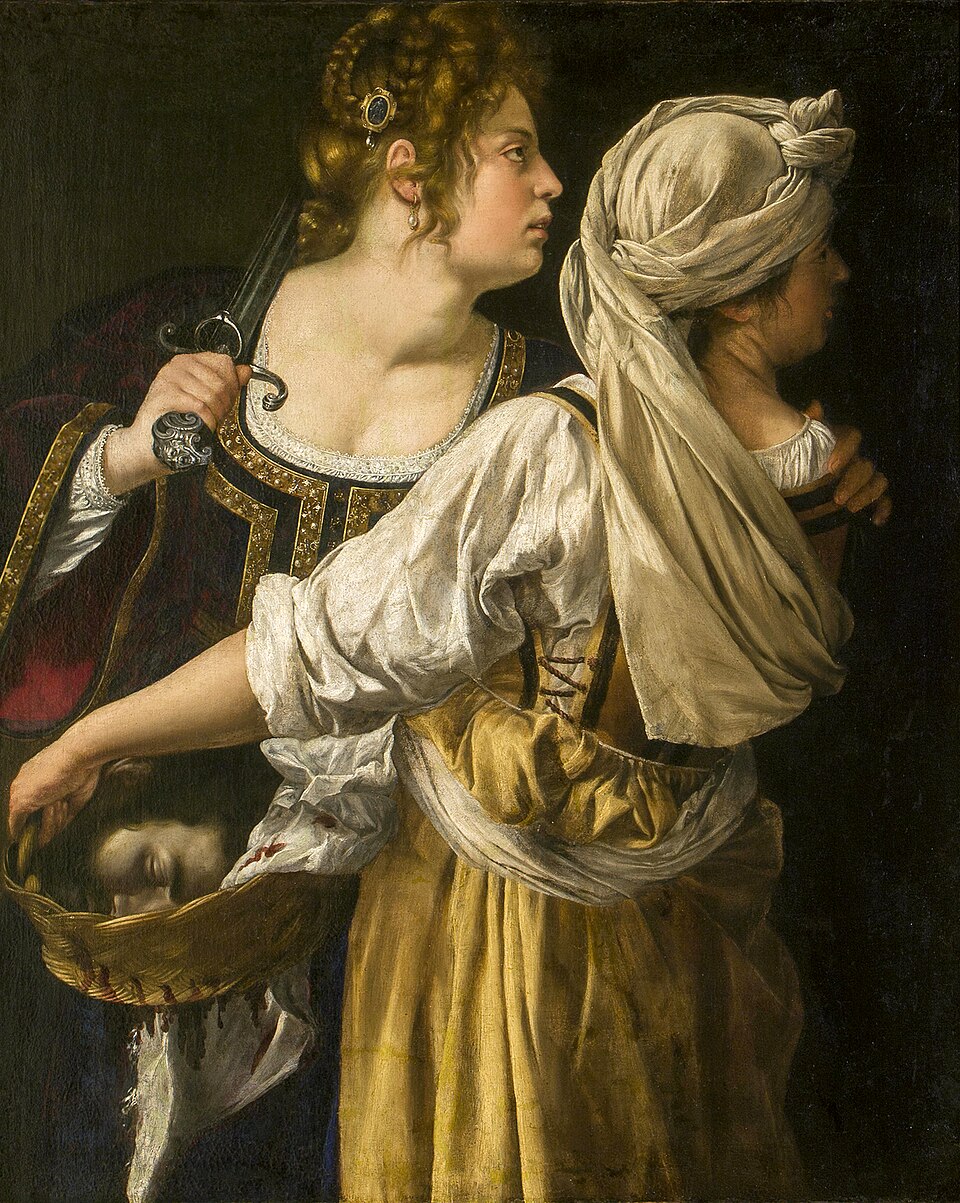
Two women stop mid-flight and look back over their shoulders, a sword on one shoulder and a basket with a severed head on the other's hip. Artemisia Gentileschi painted the tense moment after the killing, not the killing itself.
The story behind the painting
The story comes from the Book of Judith. The Assyrian general Holofernes besieges Bethulia, and Judith, an Israelite widow, slips into his tent while he is drunk and asleep and beheads him with the help of her maidservant Abra to save her city. Artemisia returned to this subject several times, painting the killing itself in two versions now in Naples and Florence. Here she shows the moments after, as the women flee the tent, a composition based on an earlier work by her father. Wikipedia dates the painting about 1615, while Wikidata gives 1618.
What to look for
The dark setting is lit by the red and gold of the fabrics, colours Artemisia often used during her Florentine years. Diagonal lines lead the eye from the two faces down to Holofernes's head in the basket, where fresh blood still drips. Strong contrasts of light and dark give the bodies a solid, three-dimensional weight. On the pommel of Judith's sword a screaming head, thought to be a mythological figure such as Medusa, reminds us of the violence just done. Abra is often shown elsewhere as an old woman, but here she is close to Judith's age.
Meaning and intent
The painting holds its breath. Nothing is happening yet, but both women are alert, as if they have heard something, and the viewer is left to imagine both what came before and the danger that might still follow. Baroque painting, unlike earlier movements, did not shy away from blood in biblical scenes, and Artemisia shows the severed head in full view. The young, capable maidservant becomes Judith's partner rather than a bystander.
Legacy
The painting was first recorded in a 1638 inventory of the collection of Grand Duchess Maria Maddalena of Austria. It has been altered several times and was probably considerably larger when first made, especially at the top and left side, and earlier conservation efforts have harmed the condition of the paint. It now hangs in the Galleria Palatina of the Pitti Palace in Florence, one of several Judith paintings that made the subject central to Artemisia's fame.
豆知識
- Shows Judith and Abra fleeing after killing Holofernes.
- Dated about 1615 by Wikipedia, 1618 by Wikidata.
- First recorded in a 1638 Medici inventory.
- Now in the Galleria Palatina, Pitti Palace, Florence.
画家について
アルテミジア・ジェンティレスキ (1593-1653)
宗教美術 · パラティーナ美術館 · ユディト · beheaded head
同じ画家の作品: アルテミジア・ジェンティレスキ
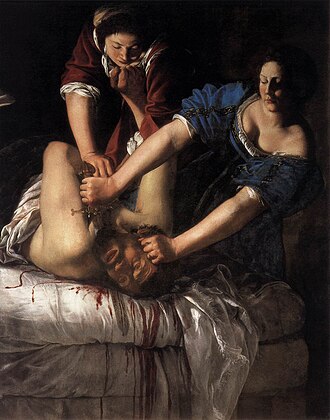 ホロフェルネスの首を斬るユディト - Artemisia Gentileschi (1613)
%2C%20Artemisia%20GentileschiFXD.jpg) スザンナと長老たち - Artemisia Gentileschi (1610)
スザンナと長老たち - Artemisia Gentileschi (1610)%20-%20Artemisia%20Gentileschi.jpg) 絵画の寓意としての自画像 - Artemisia Gentileschi (1638)
絵画の寓意としての自画像 - Artemisia Gentileschi (1638)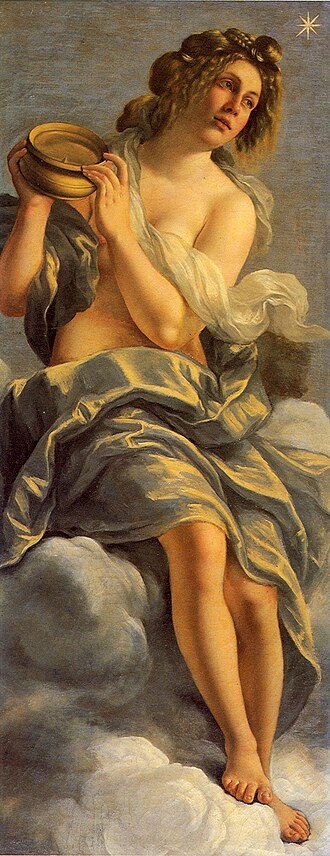 天性の素質の寓意 - Artemisia Gentileschi (1615)
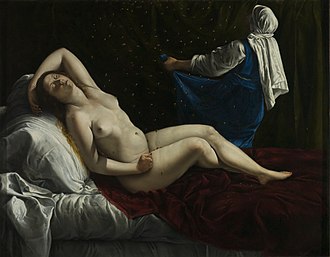 ダナエ - Artemisia Gentileschi (1612)
 ホロフェルネスの首を斬るユディト - Artemisia Gentileschi (1620)
 アハシュエロス王の前のエステル - Artemisia Gentileschi (1620s)
 マグダラのマリアの回心 - Artemisia Gentileschi (1616)