ホロフェルネスの首を斬るユディト
アルテミジア・ジェンティレスキ · 1620
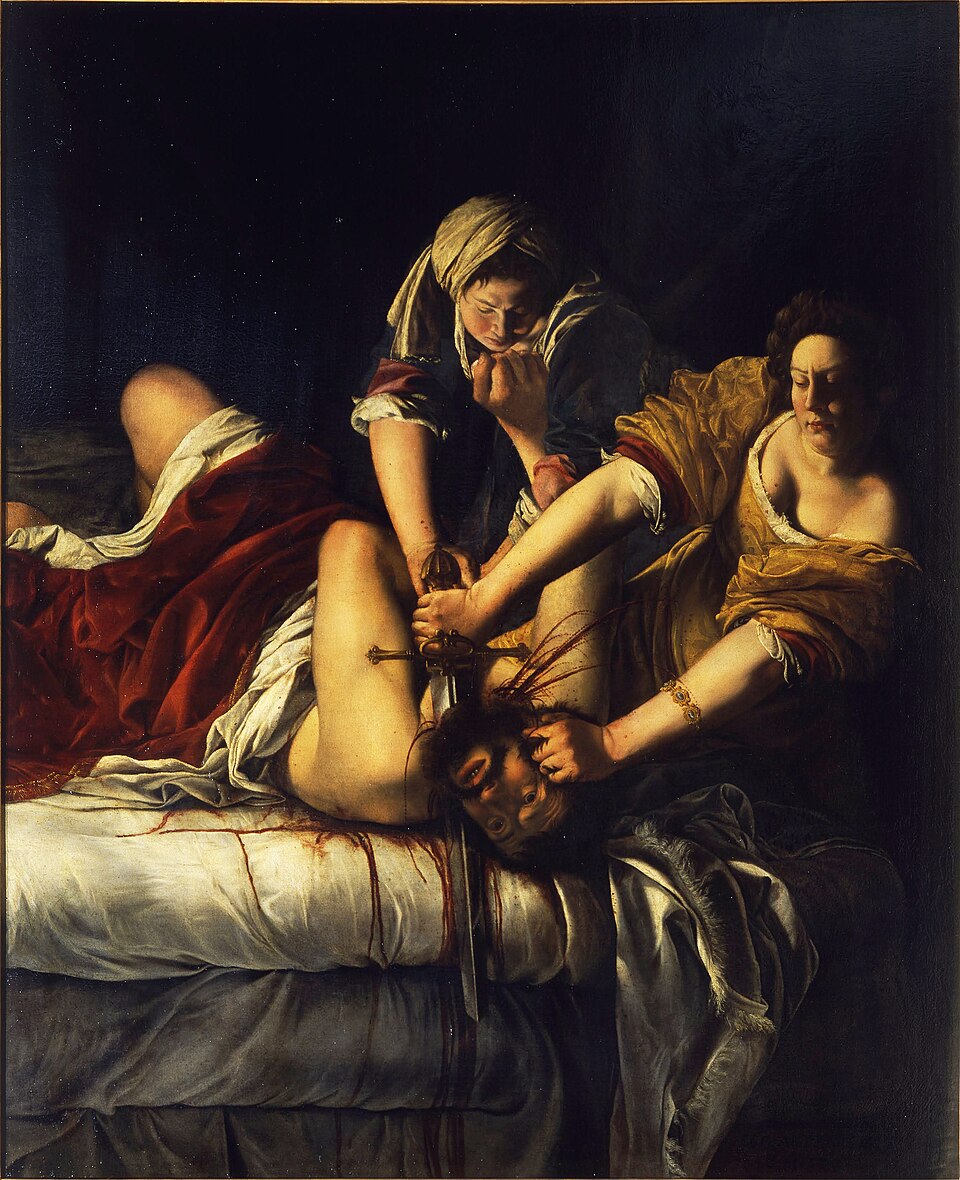
Sleeves rolled up, two women hold a general down while blood arcs across the sheets. Artemisia Gentileschi painted this second, sharper version of her most famous scene for the Medici court around 1620.
The story behind the painting
In the Book of Judith, the widow Judith and her maid Abra enter the camp of the Assyrian general Holofernes, who is besieging Bethulia. He invites Judith to a banquet, drinks himself into a stupor, and she beheads him with his own sword in two blows. Artemisia had painted the scene in Naples around 1612; this version, about 1620, was commissioned by Grand Duke Cosimo II de' Medici, who had presumably seen the earlier one and wanted a variation for his wife, Maria Maddalena. It joined a group of paintings of biblical heroines at the Pitti Palace.
What to look for
The eye starts in a tangle of blood, limbs and metal. The two women press Holofernes down with strong arms, their sleeves rolled up as if doing an unavoidable household chore, their faces set in firm resolve. Judith drives a vertical sword shaped like a cross into his neck, and an arc of blood spatters across the frame, deep red against the white sheets. Abra, young and almost a mirror of Judith, grips his left arm as he pushes desperately against her. Compared with the Naples version, the composition and details are subtly but clearly improved.
Meaning and intent
Artemisia was raped as a young woman by the painter Agostino Tassi, hired to teach her perspective; at the 1612 trial, under torture, she repeated that her testimony was true, and Tassi was found guilty. Mary Garrard and other feminist historians read her violent Judiths in light of that trauma and as gendered defiance. Griselda Pollock and Elena Ciletti push back, arguing that constant focus on the assault limits our image of her. In the Counter-Reformation, Judith was mostly a symbol of divine virtue overcoming heresy.
Legacy
In the late 1700s a Grand Duchess disliked the gruesome picture and had it moved to an isolated part of the Uffizi, where it stayed until the twentieth century. It was damaged in the 1993 bombing in Florence and, after restoration, again hung in a peripheral spot. Today, now at the Uffizi, it shares space with other great Baroque painters, including Caravaggio, whose Judith Beheading Holofernes of about 1598 to 1599 had shown the killing with unprecedented realism and influenced hers. It is considered Artemisia's most prominent work.
豆知識
- Commissioned by Grand Duke Cosimo II de' Medici around 1620.
- A second version of her Naples painting of about 1612.
- Damaged in the 1993 bombing and restored.
- Now in the Uffizi, Florence.
画家について
アルテミジア・ジェンティレスキ (1593-1653)
宗教美術 · 女性 · 男性 · ウフィツィ美術館 · ユディト · 斬首 · ホロフェルネス · 殺人
同じ画家の作品: アルテミジア・ジェンティレスキ
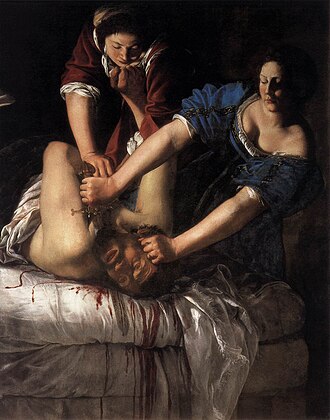 ホロフェルネスの首を斬るユディト - Artemisia Gentileschi (1613)
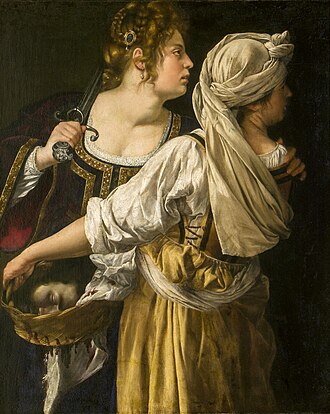 ユディトとその侍女 - Artemisia Gentileschi (1618)
%2C%20Artemisia%20GentileschiFXD.jpg) スザンナと長老たち - Artemisia Gentileschi (1610)
スザンナと長老たち - Artemisia Gentileschi (1610)%20-%20Artemisia%20Gentileschi.jpg) 絵画の寓意としての自画像 - Artemisia Gentileschi (1638)
絵画の寓意としての自画像 - Artemisia Gentileschi (1638)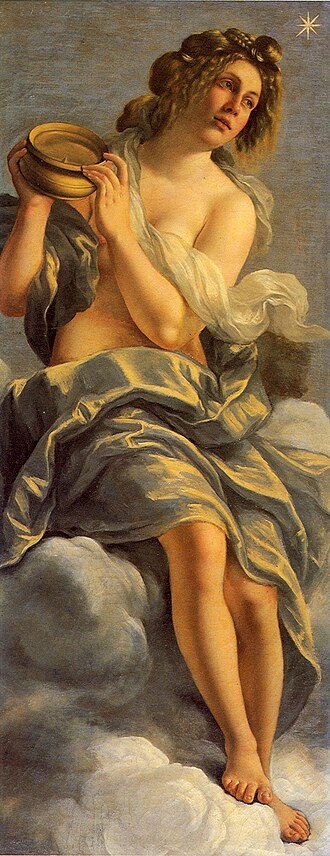 天性の素質の寓意 - Artemisia Gentileschi (1615)
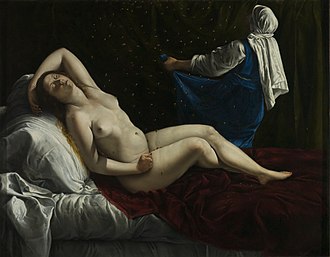 ダナエ - Artemisia Gentileschi (1612)
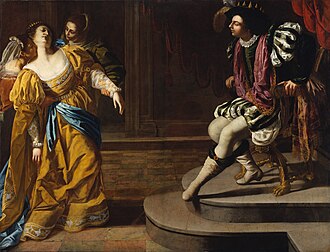 アハシュエロス王の前のエステル - Artemisia Gentileschi (1620s)
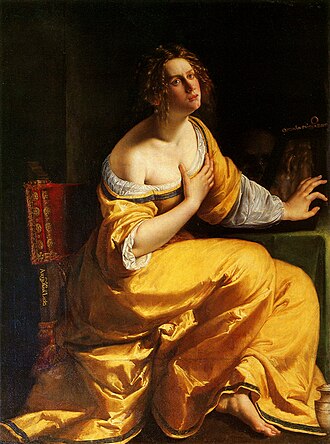 マグダラのマリアの回心 - Artemisia Gentileschi (1616)