スザンナと長老たち
アルテミジア・ジェンティレスキ · 1610
%2C%20Artemisia%20GentileschiFXD.jpg)
A young woman twists away on a stone bench as two men loom over her like a dark cloud. It is Artemisia Gentileschi's earliest known signed and dated painting, and no one before her had shown Susanna's fear this way.
The story behind the painting
The story comes from the Book of Susanna in the Additions to Daniel. Two elders hide in a garden while a young married woman, Susanna, bathes. They demand sexual favours and threaten to ruin her if she refuses. She refuses, they accuse her of adultery, a crime punishable by death, and the young Daniel saves her by questioning them apart until their stories clash. Artemisia Gentileschi's 1610 version is her earliest known signed and dated work. It hangs at Schloss Weißenstein in Pommersfelden, Germany.
What to look for
Susanna sits uncomfortably, her body twisting in distress, unlike many versions that show no discomfort at all. The two elders are spread across the top of the tall canvas as a dark mass hovering above her, creating a feeling of malevolent pressure. Instead of the usual garden, the scene is set in a stone enclosure, with only blue sky behind. Her body follows a classical model that lends her nudity a heroic dignity. The signature is on the stone step at lower left; Gentileschi signed only 19 paintings.
Meaning and intent
The subject often let male artists display the female nude for male patrons. Compared with Annibale Carracci's Susanna, who looks receptive, Gentileschi's is uncomfortable and more feminine, and no artist before her had explored the psychological side of the story. Scholars disagree about how much her father Orazio guided her: x-rays suggest adjustments to the composition. Mary D. Garrard links the image to the harassment she faced before her rape by Agostino Tassi, while Gianni Papi sees the elders as her father and Tassi. The source stresses there is no evidence for these opinions.
Legacy
The date was long disputed. In 1845 the last digit was read by some as a 6 or a 9, which would place the work in her Florentine years; x-rays by Susanna P. Sack in 1970 confirmed 1610, published by Garrard in 1982 and accepted by most scholars. By 1714 the painting belonged to the artist Benedetto Luti, who described it as a work by Orazio while copying it for Lothar Franz von Schönborn. It was in the Schönborn collection by 1719, and an 1845 guidebook first named Artemisia as its painter.
豆知識
- Artemisia Gentileschi's earliest known signed and dated work, 1610.
- The date was confirmed by x-ray in 1970.
- Once thought to be by her father Orazio.
- At Schloss Weißenstein, Pommersfelden, since around 1719.
画家について
アルテミジア・ジェンティレスキ (1593-1653)
宗教美術 · 女性 · ヌード · 裸 · 洗浄 · スザンナ
同じ画家の作品: アルテミジア・ジェンティレスキ
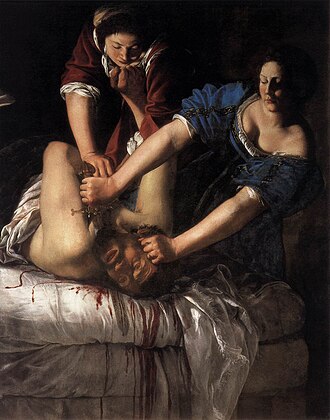 ホロフェルネスの首を斬るユディト - Artemisia Gentileschi (1613)
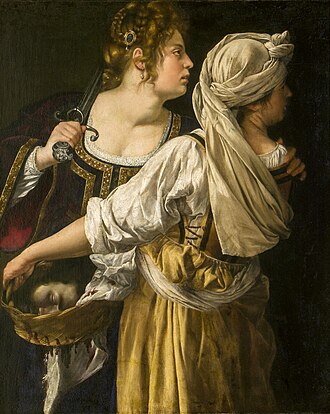 ユディトとその侍女 - Artemisia Gentileschi (1618)
%20-%20Artemisia%20Gentileschi.jpg) 絵画の寓意としての自画像 - Artemisia Gentileschi (1638)
絵画の寓意としての自画像 - Artemisia Gentileschi (1638)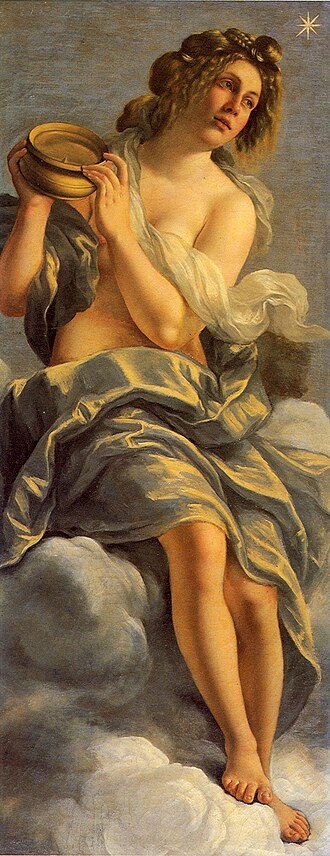 天性の素質の寓意 - Artemisia Gentileschi (1615)
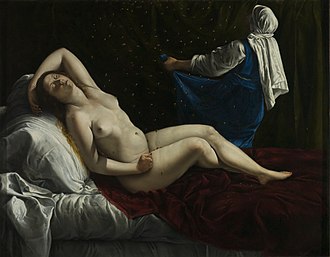 ダナエ - Artemisia Gentileschi (1612)
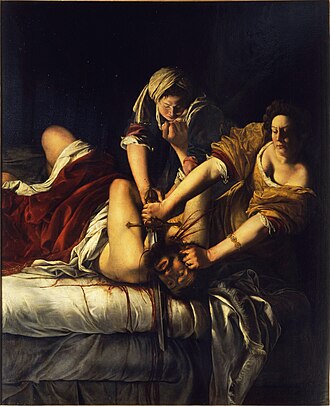 ホロフェルネスの首を斬るユディト - Artemisia Gentileschi (1620)
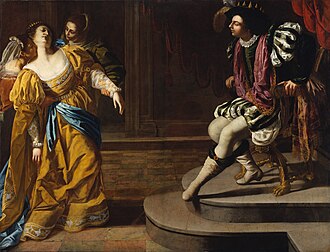 アハシュエロス王の前のエステル - Artemisia Gentileschi (1620s)
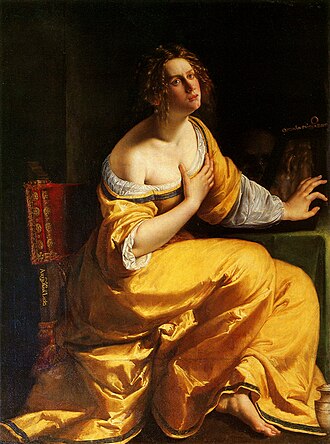 マグダラのマリアの回心 - Artemisia Gentileschi (1616)