ラザロの復活
Rembrandt van Rijn · 1630
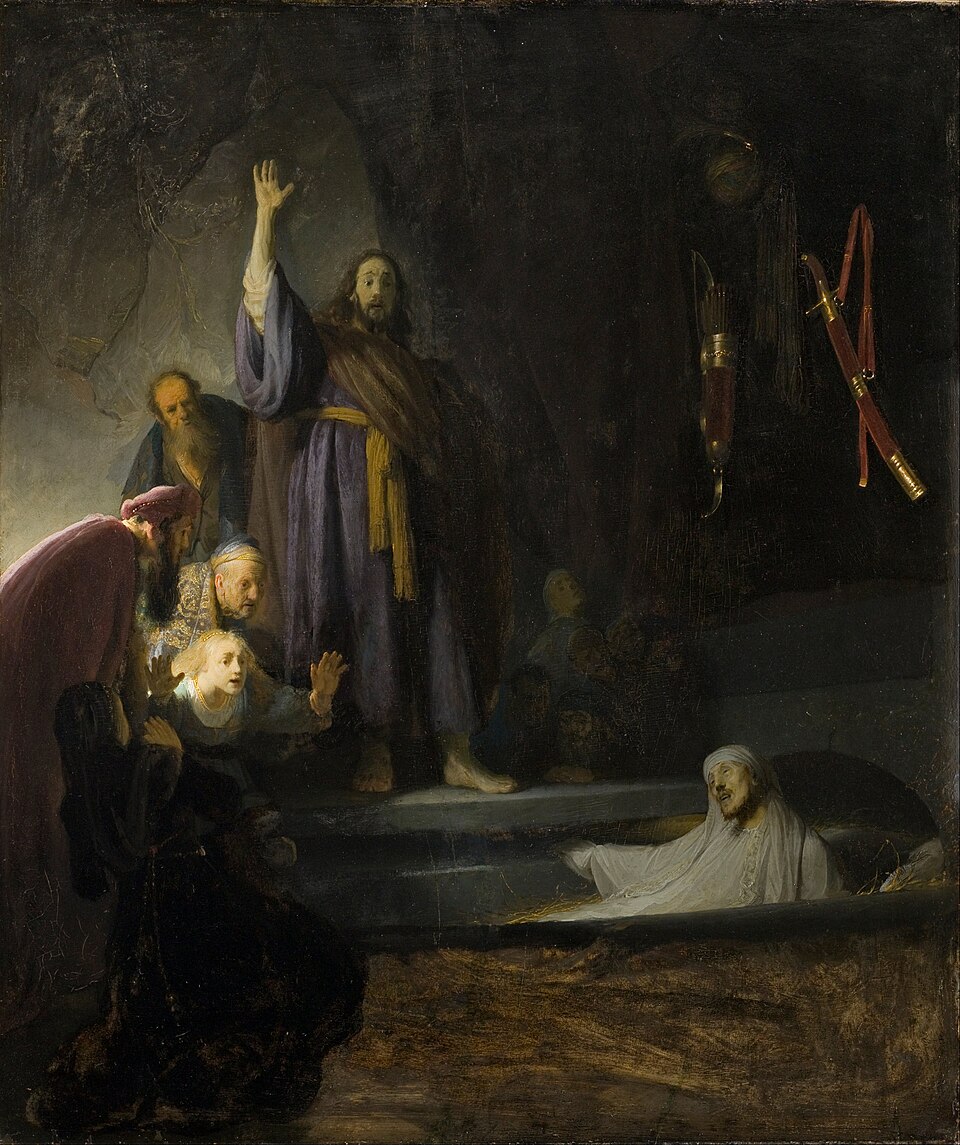
In a dark burial cave, Christ raises his arm and Lazarus stirs from death while the onlookers recoil in amazement. Young Rembrandt painted it in Leiden and kept it in his own house for most of his life.
The story behind the painting
Rembrandt painted this panel early in his career, while still in Leiden and not long after his apprenticeship with Pieter Lastman, whose influence is clear. Wikipedia dates it probably between 1630 and 1632, while Wikidata gives 1630. The subject comes from the Gospel of John, chapter 11. It may draw on an undated etching of the same subject by Jan Lievens; Lievens and Rembrandt were friends and probably worked together. The composition may come from a drawing Rembrandt made at the same time as one of the Burial of Christ.
What to look for
The painting shows the moment Lazarus reawakens and rises from his tomb as Christ calls him. Notice how Lazarus lies in the darker half of the picture, while the figures at left are far more brightly lit. Mary and the others look on in amazement as he comes back to life. Rembrandt uses chiaroscuro, strong contrasts of light and dark: the black interior of the cave and the limited torchlight focus our attention and give the figures their force. Sister Wendy Beckett felt Christ here looks more like a weary magician than a triumphant saviour.
Meaning and intent
The scene can be read as a parable of spiritual life: the hardened sinner receiving first grace, the sorrow for sins that leads toward penitence and redemption. It is one of relatively few New Testament subjects Rembrandt painted, though he made many prints of them. He returned to Lazarus in two etchings with different compositions, about 1632 and 1642. The later one shows Christ more as a healer than as the enchanter of this panel. The placement of figures here was echoed most closely in his painting The Resurrection of 1635 to 1639, which drawings show grew out of this one.
Legacy
Rembrandt kept the picture for most of his life; an inventory records it hanging in his anteroom. It was sold in his bankruptcy sale in 1656, a quiet sign of how much his fortunes had changed since the Leiden years. The painting then passed through various owners in Europe until Howard F. Ahmanson Sr. bought it in 1959 and gave it to the Los Angeles County Museum of Art, where it remains today.
豆知識
- Painted in Leiden, probably between 1630 and 1632.
- Hung in Rembrandt's anteroom for most of his life.
- Sold in his bankruptcy sale in 1656.
- Given to LACMA after 1959 by Howard F. Ahmanson Sr.
画家について
Rembrandt van Rijn (1606-1669)
宗教美術 · イエス・キリスト · オランダ黄金時代の絵画 · マグダラのマリア · アムステルダム国立美術館 · 剣 · ロサンゼルス・カウンティ美術館
同じ画家の作品: Rembrandt van Rijn
 夜警 - Rembrandt van Rijn (1642)
 自画像 - Rembrandt van Rijn (1659)
 テュルプ博士の解剖学講義 - Rembrandt van Rijn (1632)
 ユダヤの花嫁 - Rembrandt van Rijn (1660s)
 ガラリアの海の嵐 - Rembrandt van Rijn (1633)
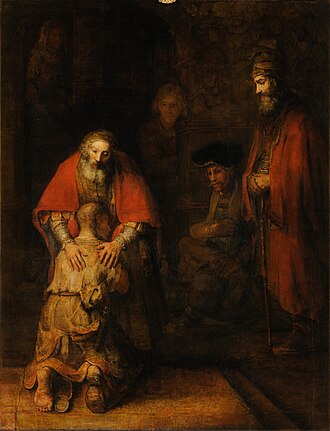 放蕩息子の帰還 - Rembrandt van Rijn (1668)
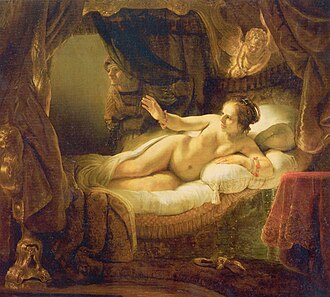 ダナエ - Rembrandt van Rijn (1636)
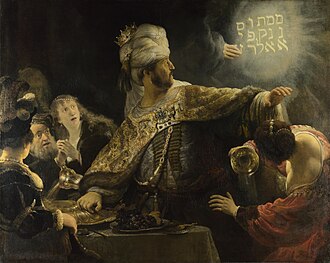 ベルシャザルの酒宴 - Rembrandt van Rijn (1636)
関連する画家の作品
 真珠の耳飾りの少女 - Johannes Vermeer (1665)
 牛乳を注ぐ女 - Johannes Vermeer (c. 1658)
 聖ニコラウスのお祭り - Jan Steen (1660s)
 牡蠣を食べる少女 - Jan Steen (1658)
 陽気な酒飲み - Frans Hals (1620s)
 微笑む騎士 - Frans Hals (1624)
 ウェイク・ベイ・ドゥールステーデの風車 - Jacob van Ruisdael (1670)
 The Jewish Cemetery - Jacob van Ruisdael (1650s)
 デルフトの家の中庭 - Pieter de Hooch (1658)
 リンゴの皮を剥く女性 - Pieter de Hooch (1663)