The prayer before the meal
ヤン・ステーン · 1660
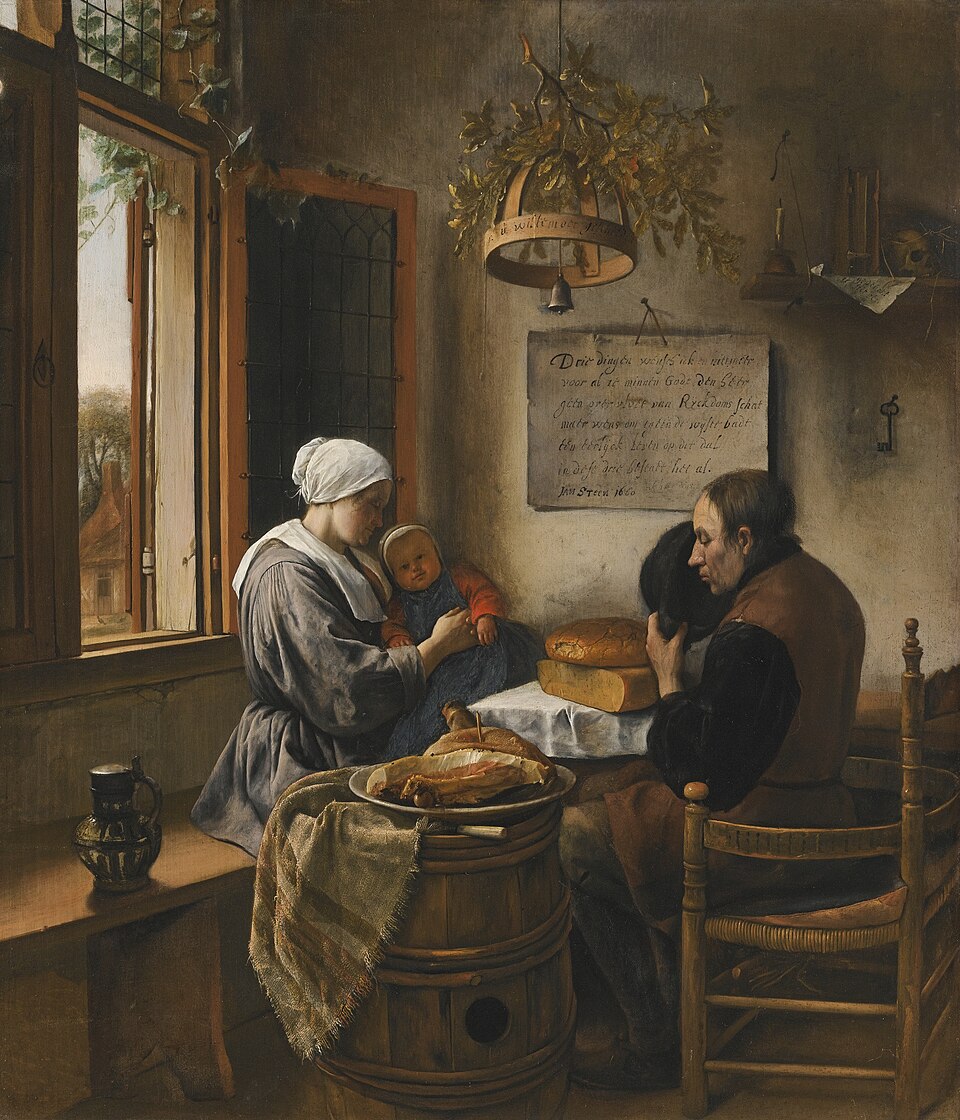
A humble Dutch family bows over bread, cheese and ham, the father bareheaded, the mother holding her child close, afternoon light falling through an open window. Jan Steen, better known for rowdy households, painted here a moment of complete stillness.
The story behind the painting
Jan Steen made four paintings on the theme of prayer before a meal, and this is the earliest of them. The subject belonged to a long tradition: from the early 17th century, paintings and prints of families saying grace were popular among both Catholic and Protestant Dutch viewers. Until about mid-century they usually showed wealthy households; later they turned more to people of modest means, as here. Wikidata dates the work to 1660. The Spanish Wikipedia article, our main source, does not give a year in its text.
What to look for
The father has taken off his hat and lowers his eyes, while the mother holds her child comfortably in her arms. Steen painted the food and setting with remarkable care, from the ham cut on the barrel to the soft, ragged cloth beneath it. A key hangs behind the father. Above the family a small wooden chandelier with a little bell bears words from the Lord's Prayer, Thy will be done. On a shelf to the right stand a snuffed candle, a large worn book that seems to be a Bible, and a skull, beneath a note reading Remember that you must die.
Meaning and intent
The picture reflects the ideal of a pious, harmonious Dutch family. A biblical text on the wall sets out its creed: to love God the Father, to reject the greed for riches and to lead an honest life. The key stands for the father's reliability and integrity. Candle, book and skull remind the family that earthly life passes, while a green oak sprig over the lamp and ears of wheat crowning the skull bring hope, since in Christian tradition death is a step toward eternal life.
Legacy
Which faith the family follows is not made clear, and the scene speaks across religious lines. Steen was Catholic, and he seems at first to have leaned that way: modern technical study revealed that a crucifix originally hung above the father's head. Steen later covered it, painting over it a memento mori with symbols of death and resurrection suited to Catholics and Protestants alike. The painting was sold at Sotheby's in London on 5 December 2012, and it can be compared with similar scenes such as Nicolaes Maes's Saying Grace.
豆知識
- The earliest of Jan Steen's four paintings of prayer before a meal.
- Shows a modest family rather than a wealthy one.
- A crucifix was painted over with a memento mori.
- Sold at Sotheby's in London in December 2012.
画家について
ヤン・ステーン (1626-1679)
宗教美術 · 女性 · 男性 · 風俗美術 · 子供 · 祈り · 食事
同じ画家の作品: ヤン・ステーン
 聖ニコラウスのお祭り - Jan Steen (1660s)
 牡蠣を食べる少女 - Jan Steen (1658)
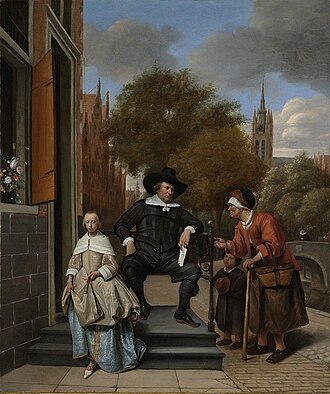 アドルフ・クルーゼルとその娘カタリナ・クルーゼル - Jan Steen (1655)
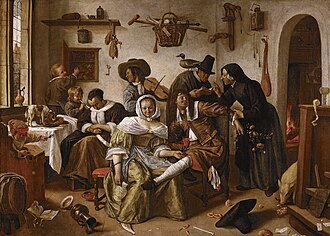 贅沢に気をつけよ - Jan Steen (1663)
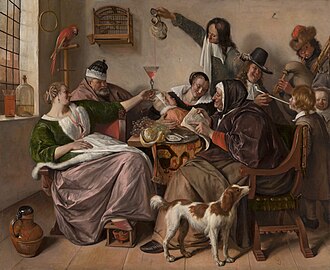 親に倣って子も歌う - Jan Steen (1665)
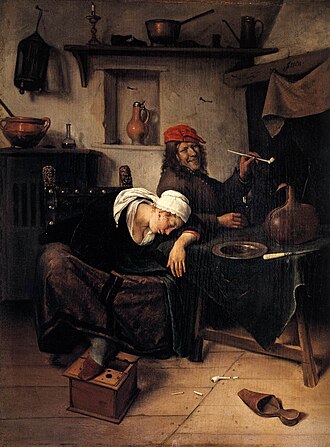 怠け者 - Jan Steen (1660s)
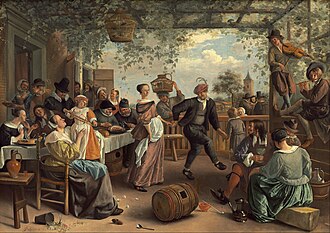 踊るカップル - Jan Steen (1663)
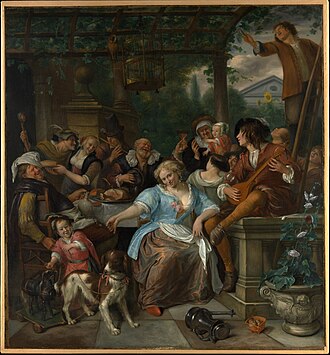 テラスの浮かれ騒ぎ - Jan Steen (1670)
関連する画家の作品
 夜警 - Rembrandt van Rijn (1642)
 自画像 - Rembrandt van Rijn (1659)
 真珠の耳飾りの少女 - Johannes Vermeer (1665)
 牛乳を注ぐ女 - Johannes Vermeer (c. 1658)
 陽気な酒飲み - Frans Hals (1620s)
 微笑む騎士 - Frans Hals (1624)
 ウェイク・ベイ・ドゥールステーデの風車 - Jacob van Ruisdael (1670)
 The Jewish Cemetery - Jacob van Ruisdael (1650s)
 デルフトの家の中庭 - Pieter de Hooch (1658)
 リンゴの皮を剥く女性 - Pieter de Hooch (1663)