スザンナと長老たち
アルテミジア・ジェンティレスキ · 1652
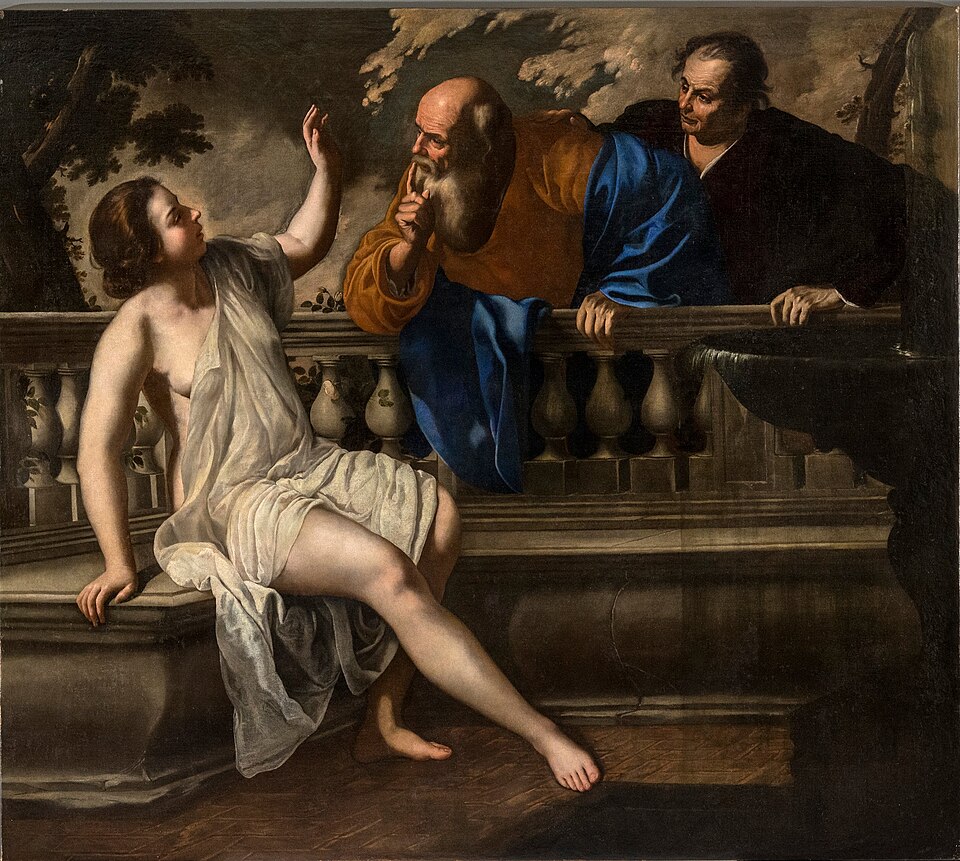
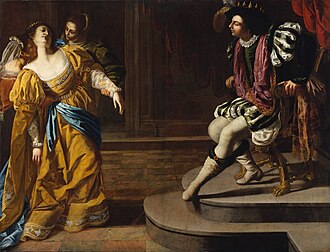
Near sixty, Artemisia Gentileschi painted Susanna one last time, and this time the woman does not shrink: she pushes the men away. It is her last known dated work, and it spent decades under another painter's name.
The story behind the painting
Artemisia Gentileschi returned to Susanna again and again. Her first version was painted when she was seventeen, around the time she was raped by one of her father's students. This one, dated 1652, was made when she was approaching sixty, and it is her last known dated work. It was a collaboration: documents about its sale mention a payment to her pupil Onofrio Palumbo. The painting, more than two metres wide, now hangs in the Pinacoteca Nazionale in Bologna.
What to look for
The story comes from the Book of Daniel: a virtuous woman bathing is surprised by two lustful older men, who demand that she submit and threaten to accuse her in public if she will not. In this late version Susanna takes a more theatrical pose, deflecting the men's advances rather than shrinking from them. Look closely at the base of the balustrade at lower left, where a faint signature and date have been detected. The broad canvas gives the encounter the scale of a stage.
Meaning and intent
The subject was common from the 16th century and often served as a pretext to paint the female nude. Gentileschi's career-long return to it, from a frightened girl to a woman who fends off her attackers, invites us to see the change across four decades. The source contrasts this version with the one painted at the start of her career, and the difference is in Susanna's response: she no longer only recoils, she resists.
Legacy
Bank records show that a Susanna was sold to Antonio Galise early in 1653, and historians believe it was this one. By 1774 it was in the Medici collection at the Palazzo Medici Riccardi. By 1945 it belonged to the Azzolini collection, catalogued as a work by Elisabetta Sirani, and it was left to the Italian nation and assigned to the gallery in Bologna. Recent restoration and study restored the attribution to Gentileschi rather than Sirani, giving back to her a late painting long credited to someone else.
豆知識
- Dated 1652, Artemisia Gentileschi's last known dated work.
- Painted with her pupil Onofrio Palumbo.
- Long attributed to Elisabetta Sirani.
- In the Pinacoteca Nazionale, Bologna.
画家について
アルテミジア・ジェンティレスキ (1593-1653)
同じ画家の作品: アルテミジア・ジェンティレスキ
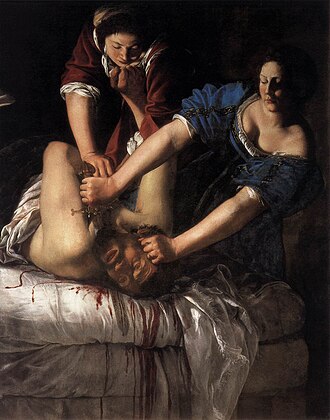 ホロフェルネスの首を斬るユディト - Artemisia Gentileschi (1613)
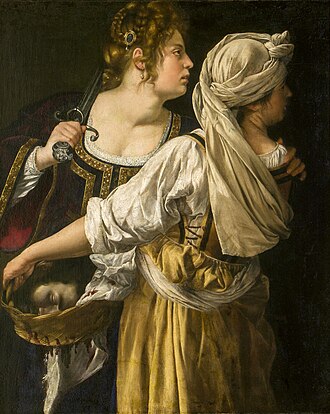 ユディトとその侍女 - Artemisia Gentileschi (1618)
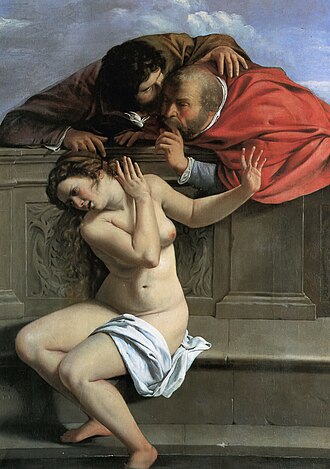 スザンナと長老たち - Artemisia Gentileschi (1610)
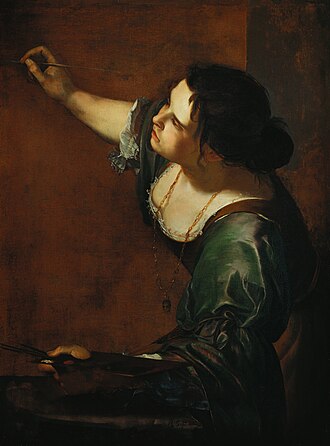 絵画の寓意としての自画像 - Artemisia Gentileschi (1638)
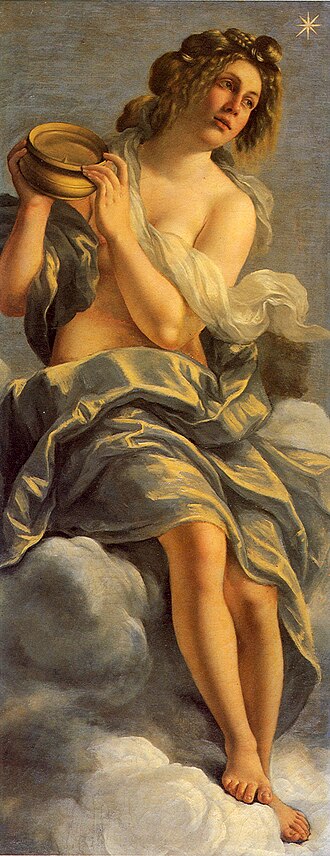 天性の素質の寓意 - Artemisia Gentileschi (1615)
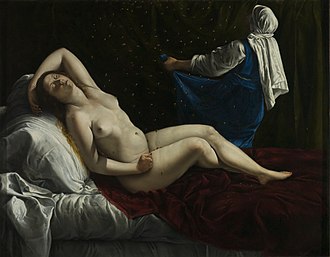 ダナエ - Artemisia Gentileschi (1612)
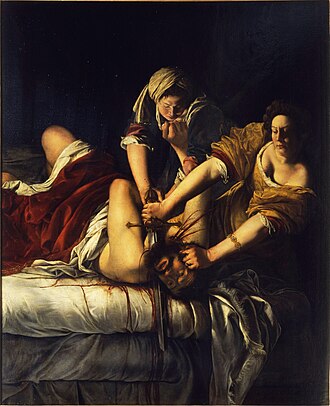 ホロフェルネスの首を斬るユディト - Artemisia Gentileschi (1620)
 アハシュエロス王の前のエステル - Artemisia Gentileschi (1620s)
関連する画家の作品
 エマオの晩餐 - Caravaggio (1601)
 聖マタイの召命 - Caravaggio (1609)
 ラス・メニーナス - Diego Velázquez (1656)
 ブレダの開城 - Diego Velázquez (1635)
 Saint Francis in Meditation - Francisco de Zurbarán (1639)
 The Immaculate Conception - Francisco de Zurbarán (1661)
 チャールズ1世の三面肖像画 - Anthony van Dyck (1635)
 馬上のチャールズ1世とサン・アントワーヌの領主の肖像 - Anthony van Dyck (1636)
 キリスト昇架 - Peter Paul Rubens (1609)
 レウキッポスの娘たちの略奪 - Peter Paul Rubens (1618)
 夜警 - Rembrandt van Rijn (1642)
 自画像 - Rembrandt van Rijn (1659)