Self-portrait wearing a white feathered bonnet
Rembrandt van Rijn · 1635
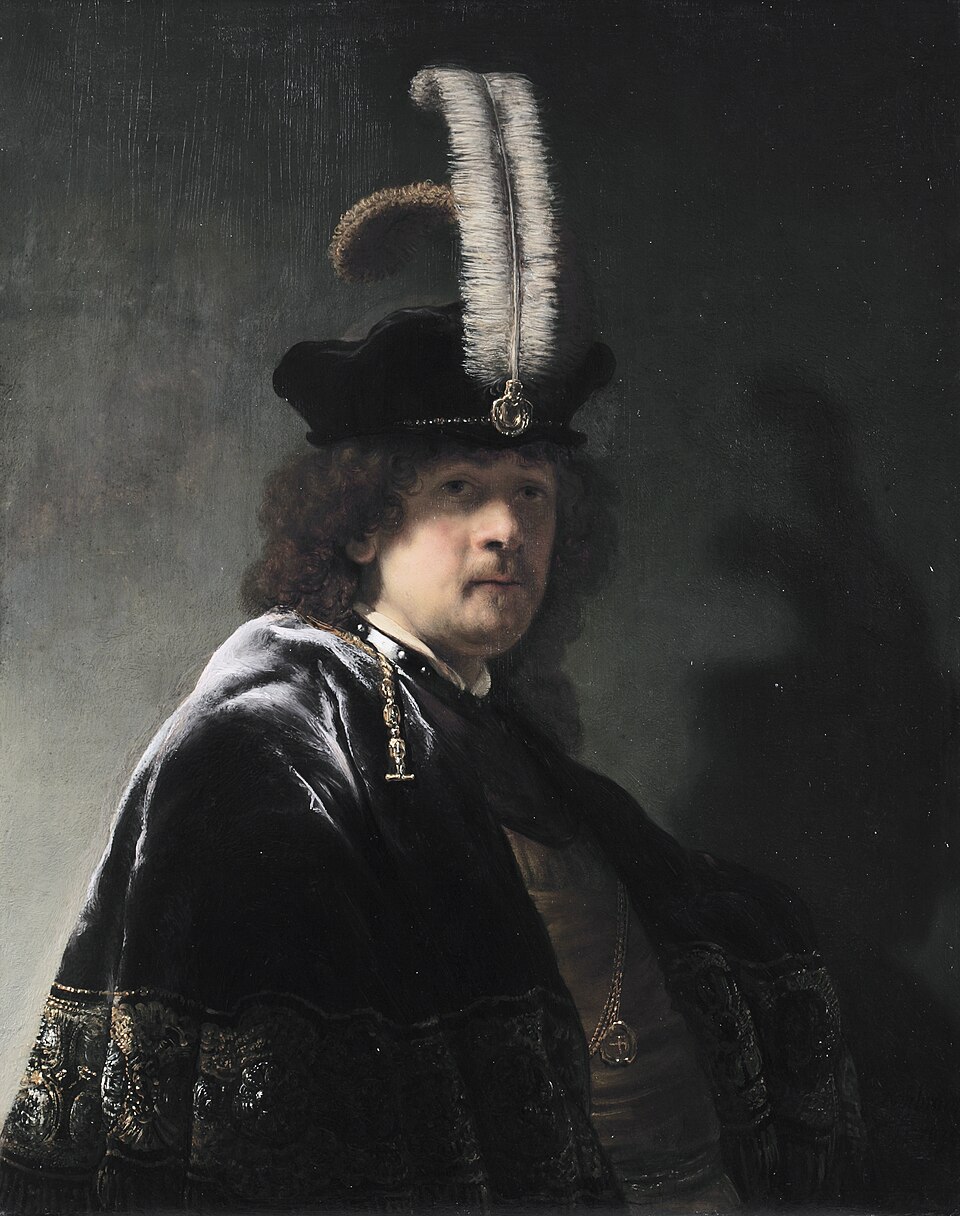
A young Rembrandt in velvet and gold, ostrich plumes rising from his beret, his eyes lost in shadow. Rejected as a Rembrandt in 1968, the painting was recognised as his own again almost half a century later.
The story behind the painting
The panel is signed and dated 1635. It was first recorded in 1727 in the catalogue of Joseph Wenzel I, Prince of Liechtenstein, and long accepted as a Rembrandt self-portrait. In 1968 Horst Gerson rejected it on stylistic grounds alone. It then passed through the London dealers Edward Speelman to Harold Samuel, Baron Samuel of Wych Cross, and in September 2010 it was given from the estate of Edna, Lady Samuel, to the National Trust. It was installed at Buckland Abbey, a historic house built on a Cistercian monastery once owned by Sir Richard Grenville and then Sir Francis Drake.
What to look for
Rembrandt appears at half length facing right, turning his head to us. He wears a velvet cape with gold embroidery over a steel gorget, a medallion on a gold chain, and a black velvet beret whose front medallion holds two upright ostrich feathers. The beret hides his eyes, so the nose and cheek become the brightest areas, with a small reflection of light on the lower eyelid. The art historian Ernst van de Wetering notes that in this period Rembrandt was playing with light and shadow around the eyes and often painted feathered hats and reflected light on lower lids.
Meaning and intent
The attribution has moved back and forth. Kurt Bauch accepted it in 1966, Gerson rejected it in 1968, Christian Tumpel gave it to Govert Flinck in 1986, and after new photographs in 1987 Leonard J. Slatkes returned it to the master with help from a pupil. Van de Wetering, who had worked on Gerson's team, still shared some of the original concerns, but judged that historical grounds and X-ray evidence made the case far stronger. He dated it through etchings for Christ before Pilate, where Rembrandt drew himself on a balcony in the same feathered bonnet.
Legacy
Van de Wetering made a tentative re-attribution after studying the X-ray in 2005, but only learned where the painting was after it reached the National Trust in 2010. He saw it at Buckland Abbey and in 2013 confirmed his view. The curator David Taylor scheduled a restoration for the winter of 2013 to 2014, and in June 2014, after eight months of work at the Hamilton Kerr Institute, its authenticity was confirmed. It is now among the leading works in a collection of about 13,500 paintings in National Trust houses across England and Wales.
豆知識
- Signed and dated 1635.
- Rejected by Horst Gerson in 1968, re-attributed by Ernst van de Wetering in 2013.
- Given to the National Trust in 2010.
- Displayed at Buckland Abbey.
画家について
Rembrandt van Rijn (1606-1669)
男性 · オランダ黄金時代の絵画 · 自画像 · レンブラント・ファン・レイン · ネックレス
同じ画家の作品: Rembrandt van Rijn
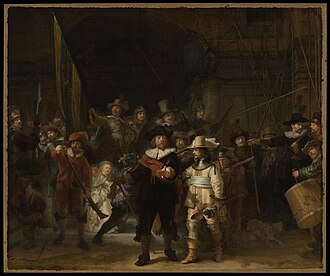 夜警 - Rembrandt van Rijn (1642)
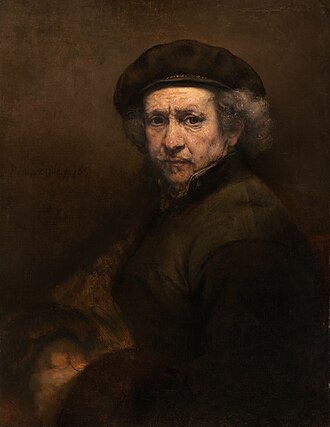 自画像 - Rembrandt van Rijn (1659)
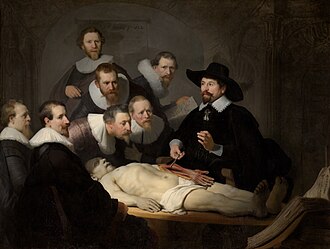 テュルプ博士の解剖学講義 - Rembrandt van Rijn (1632)
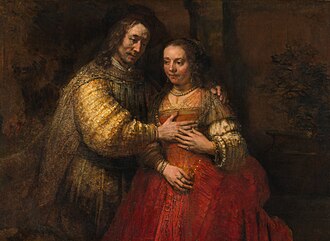 ユダヤの花嫁 - Rembrandt van Rijn (1660s)
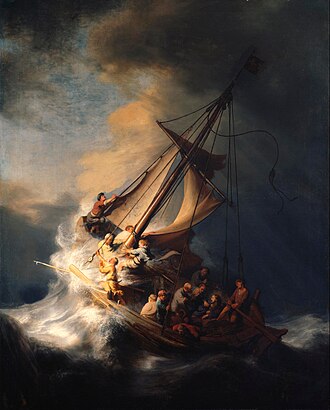 ガラリアの海の嵐 - Rembrandt van Rijn (1633)
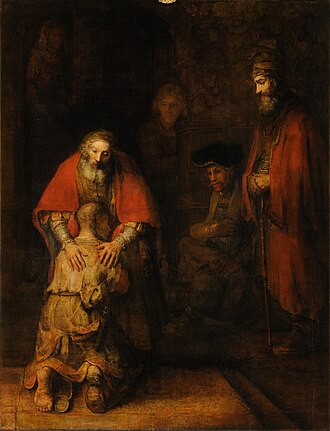 放蕩息子の帰還 - Rembrandt van Rijn (1668)
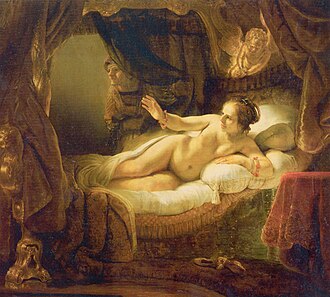 ダナエ - Rembrandt van Rijn (1636)
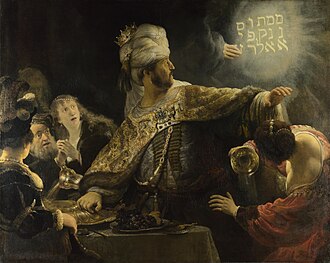 ベルシャザルの酒宴 - Rembrandt van Rijn (1636)
 真珠の耳飾りの少女
 牛乳を注ぐ女