使徒パウロに扮した自画像
Rembrandt van Rijn · 1661
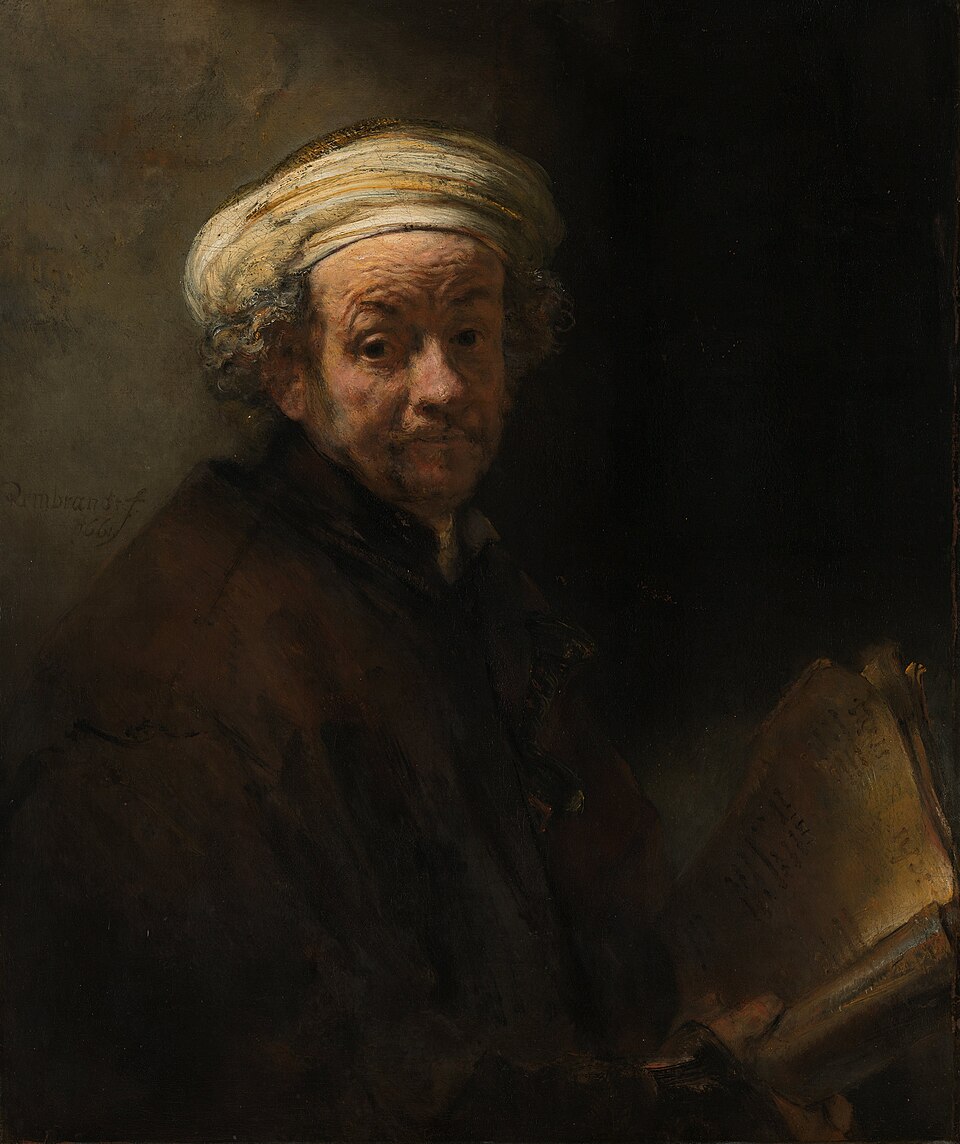
At fifty-five, Rembrandt cast himself as the Apostle Paul, a sword tucked under his arm and a manuscript in his hands. His furrowed brow catches the light, and he looks out at us as if interrupted mid-thought.
The story behind the painting
Rembrandt signed and dated this canvas Rembrandt.f./1661 near the sitter's left shoulder. It is one of more than forty self-portraits he painted, and it belongs to the Rijksmuseum in Amsterdam. Paul had been in his art for a long time: he painted the apostle as early as 1627, thirty-four years earlier, in Saint Paul in Prison, with a long beard and receding hairline. Here the apostle wears Rembrandt's own face instead. The art historian Ernst van de Wetering suggests that he may have worked from earlier self-portraits rather than a mirror, since pose and features resemble older works.
What to look for
Saint Paul is recognisable by the sword under his arm and the manuscript in his hand, his traditional attributes. Van de Wetering believes the work may have been painted wet-on-wet. Compare the rapid strokes in the turban with the thick impasto on the lit forehead, which creates the wrinkles and catches the light. The pages of the book curl slightly at the top and are picked out by light, while its rolled leather stays in shadow. That leather is painted in bluish-grey strokes that stand apart from the otherwise warm brown and beige palette.
Meaning and intent
Showing oneself as a famous historical or religious figure is called a self-portrait historie, a type popular in the 1660s; Rembrandt's other example is his Self-Portrait as Zeuxis. Art historians think the choice to be Paul himself was deliberate, not convenient, since models were easy to find. He may have felt a kinship with the apostle, who was prominent in seventeenth-century Protestant faith. Paul was also a religious teacher, and Rembrandt may have seen a parallel with his own art as a way of explaining scripture.
Legacy
The portrait is counted among the BBC's 100 Great Paintings. It stands apart from Rembrandt's earlier images of the apostle because it looks so much more like his other self-portraits than like a conventional saint. In it, the painter's control of brushwork and of light and dark, from the lit forehead to the shadowed book, gives the figure a strong sense of space. It remains one of the most personal of his late works, a face of the artist and a figure of faith held in the same frame.
豆知識
- Signed and dated 1661.
- One of Rembrandt's more than forty self-portraits.
- Paul is identified by his sword and manuscript.
- Held in the Rijksmuseum, Amsterdam.
画家について
Rembrandt van Rijn (1606-1669)
男性 · オランダ黄金時代の絵画 · 自画像 · アムステルダム国立美術館 · レンブラント・ファン・レイン · portrait historié · パウロ
同じ画家の作品: Rembrandt van Rijn
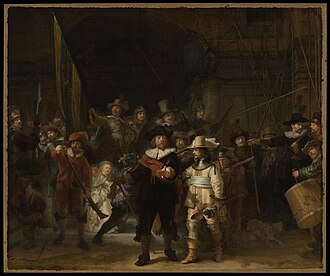 夜警 - Rembrandt van Rijn (1642)
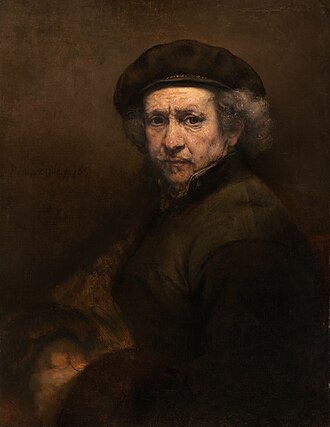 自画像 - Rembrandt van Rijn (1659)
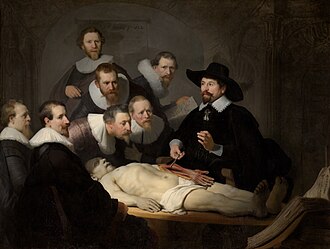 テュルプ博士の解剖学講義 - Rembrandt van Rijn (1632)
 ユダヤの花嫁 - Rembrandt van Rijn (1660s)
 ガラリアの海の嵐 - Rembrandt van Rijn (1633)
 放蕩息子の帰還 - Rembrandt van Rijn (1668)
 ダナエ - Rembrandt van Rijn (1636)
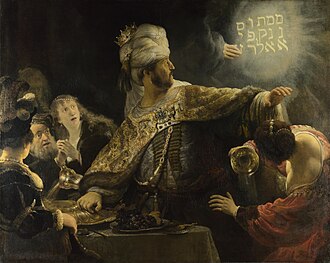 ベルシャザルの酒宴 - Rembrandt van Rijn (1636)
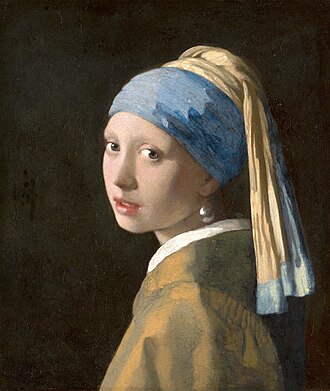 真珠の耳飾りの少女
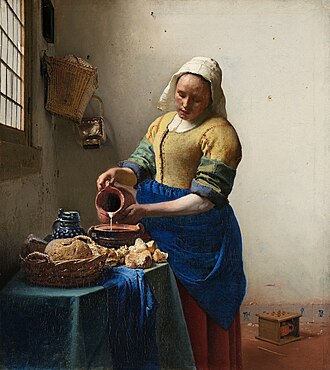 牛乳を注ぐ女