Self-Portrait as a Female Martyr
アルテミジア・ジェンティレスキ · 1615
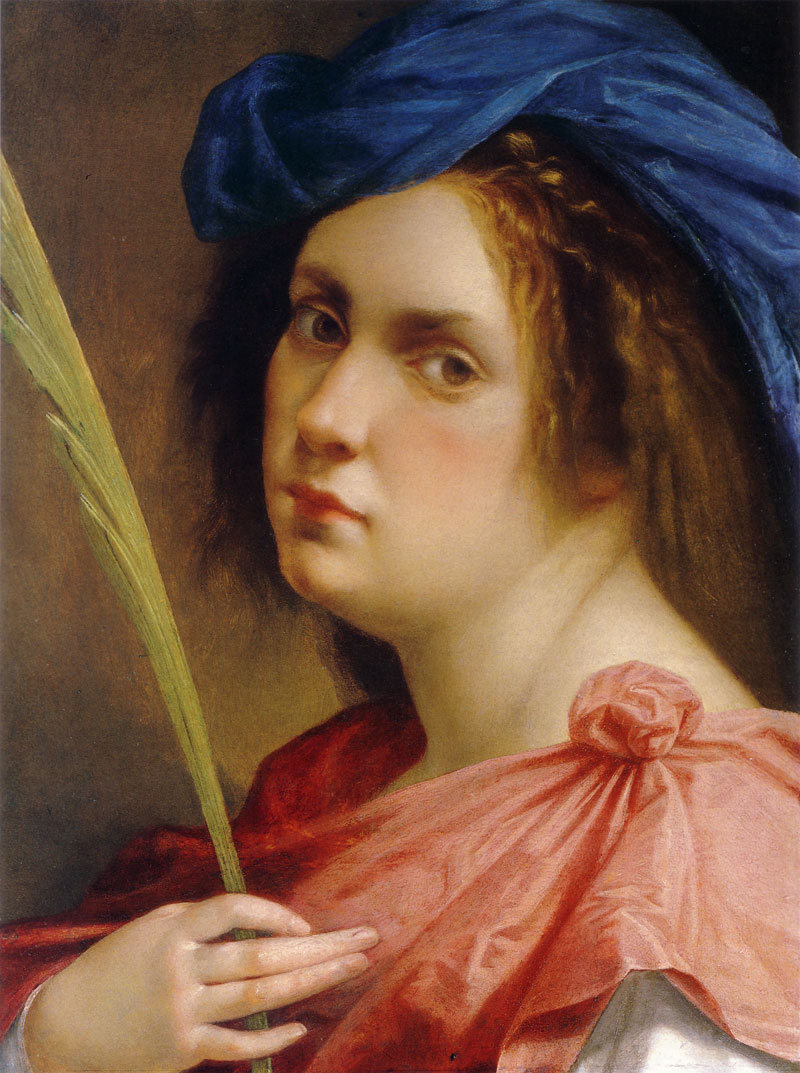
A small panel, barely larger than a page: a young woman in a turban holds a yellow palm and looks out, soft and unafraid. Artemisia Gentileschi painted herself as a martyr at about twenty-two, and scholars still debate what she meant by it.
The story behind the painting
Artemisia Gentileschi made this self-portrait in Florence. The panel is dated 1614, but because the Florentine year began only in March, the date is technically 1615. She was about twenty-two. It is signed Artemisia Lomi, the name she used in Florence to link herself with her uncle Aurelio Lomi, who already had a reputation there. An inscription on the back, in Italian, confirms that it is by her hand. The dating rests on both the painting's appearance and supplier records found in archives. She went on to become the first woman to join Florence's Academy of Design.
What to look for
The panel is tiny, 31.7 by 24.8 centimetres, and painted in oil on wood, unlike her usual oil on canvas; it is one of only two such panels by her. Against a dark ground she shows herself with a yellow palm frond, the sign of martyrdom since the Book of Revelation. Notice the bow lips, the dip in the nose and the round face, the features Keith Christiansen used to argue this is the artist herself, and the rose drapery and lapis blue that match her Mary Magdalene. Enrica Guerra suggests the awkwardly proportioned hand may have been added later. The turban was also a change.
Meaning and intent
There was long debate over whether this shows the artist or a specific saint, settled by those facial features. It is unusual for its time because the martyr carries no attribute of any particular saint, and it is the only work in which Gentileschi painted herself as a saint. Helen Clements finds her portrayal gentle and intimate, with no plea for pity. Clements weighs the theory that the picture reflects the rape Artemisia suffered as a teenager, and concludes that she refused to let that past define her. Susanna Scarparo likewise stresses her struggle to be known for her skill.
Legacy
Mary Garrard notes that the small size may point to a private meaning. The painting was in the collection of Ignazio Hugford, who lent it to an exhibition in Florence in the 1760s and kept it until 1779. Later it belonged to Martha Beavan, born Wallaston, of Leintwardine in Herefordshire. It appeared at auction at Sotheby's in London in 1987 and was with Newhouse Galleries in 1995. Today it is in a private collection in the United States, a rare intimate image from the painter's Florentine years.
豆知識
- Dated 1614 in the Florentine calendar, which is 1615 today.
- Signed Artemisia Lomi; one of only two oil-on-panel works by her.
- Her only self-portrait as a saint.
- Now in a private collection in the United States.
画家について
アルテミジア・ジェンティレスキ (1593-1653)
女性 · 自画像 · アルテミジア・ジェンティレスキ
同じ画家の作品: アルテミジア・ジェンティレスキ
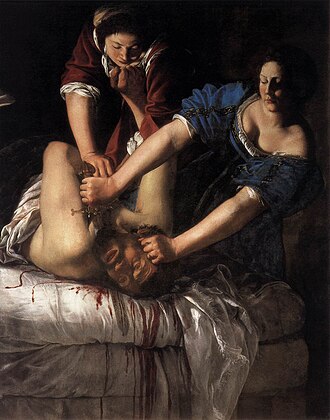 ホロフェルネスの首を斬るユディト - Artemisia Gentileschi (1613)
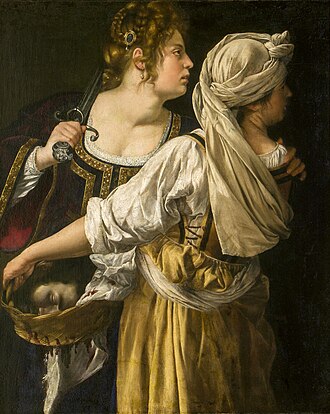 ユディトとその侍女 - Artemisia Gentileschi (1618)
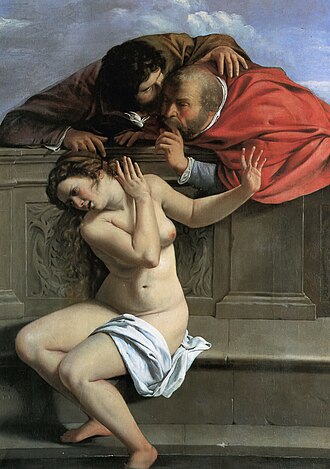 スザンナと長老たち - Artemisia Gentileschi (1610)
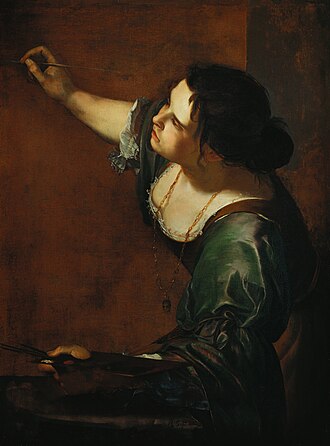 絵画の寓意としての自画像 - Artemisia Gentileschi (1638)
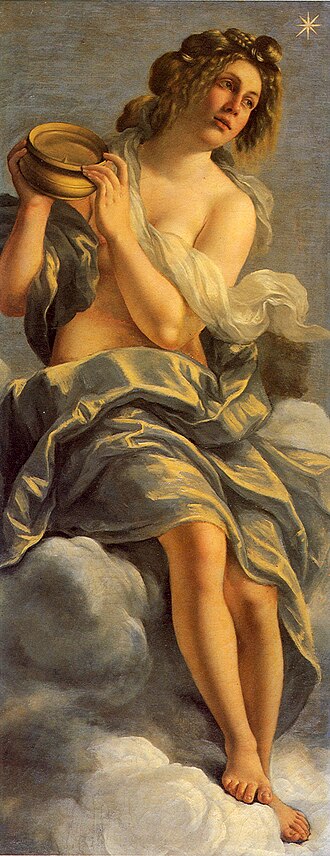 天性の素質の寓意 - Artemisia Gentileschi (1615)
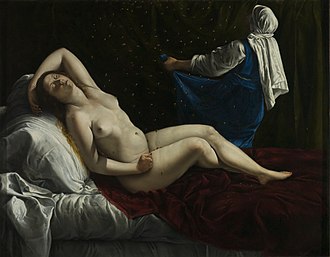 ダナエ - Artemisia Gentileschi (1612)
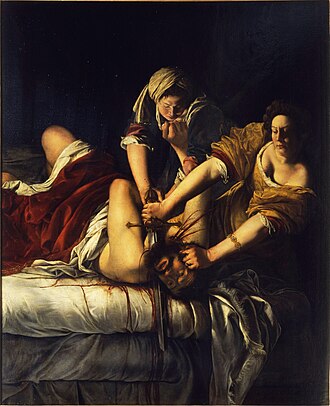 ホロフェルネスの首を斬るユディト - Artemisia Gentileschi (1620)
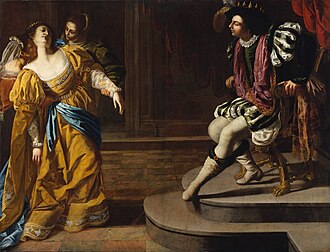 アハシュエロス王の前のエステル - Artemisia Gentileschi (1620s)
関連する画家の作品
 エマオの晩餐 - Caravaggio (1601)
 聖マタイの召命 - Caravaggio (1609)
 ラス・メニーナス - Diego Velázquez (1656)
 ブレダの開城 - Diego Velázquez (1635)
 Saint Francis in Meditation - Francisco de Zurbarán (1639)
 The Immaculate Conception - Francisco de Zurbarán (1661)
 チャールズ1世の三面肖像画 - Anthony van Dyck (1635)
 馬上のチャールズ1世とサン・アントワーヌの領主の肖像 - Anthony van Dyck (1636)
 キリスト昇架 - Peter Paul Rubens (1609)
 レウキッポスの娘たちの略奪 - Peter Paul Rubens (1618)
 夜警 - Rembrandt van Rijn (1642)
 自画像 - Rembrandt van Rijn (1659)