Saint Lucy
アルテミジア・ジェンティレスキ · 1642
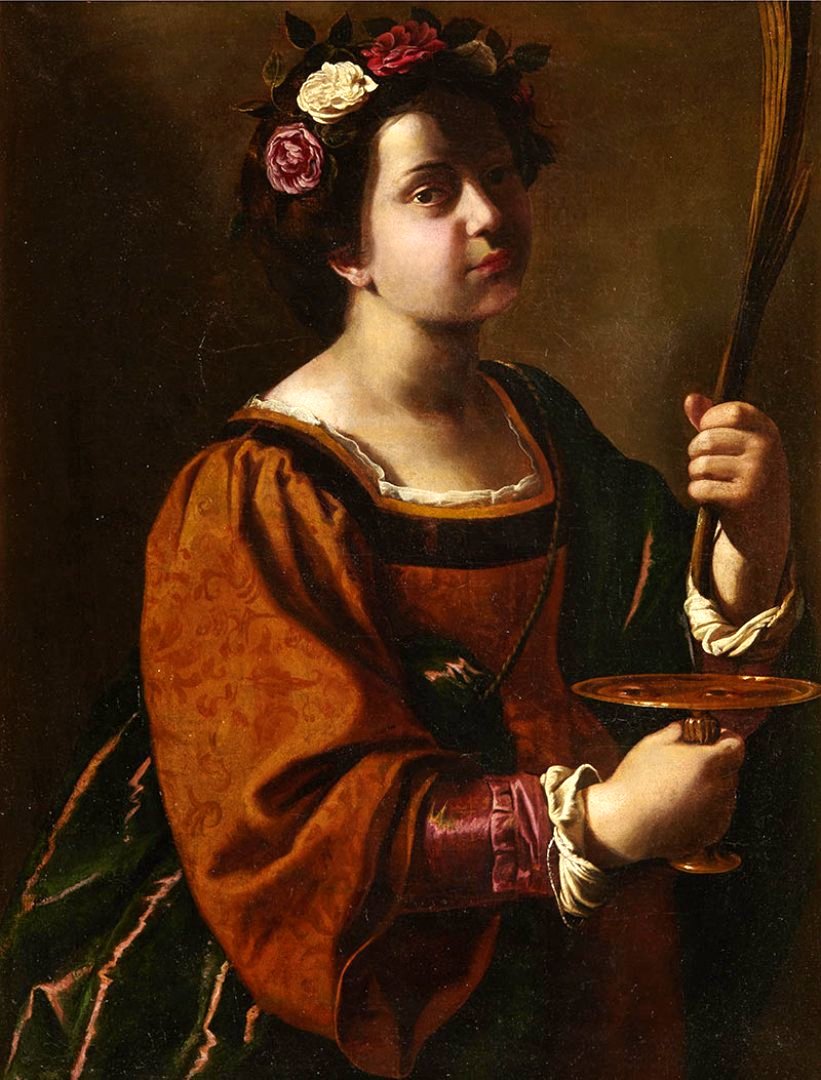
A young saint turns towards us, crowned with roses, holding a martyr's palm and a plate with two eyes. Her calm gaze is the whole point: even blinded, Lucy kept on seeing. The canvas is attributed to Artemisia Gentileschi in her last years in Naples.
The story behind the painting
The Spanish Wikipedia article dates this canvas between 1642 and 1644, during Artemisia Gentileschi's last period in Naples, after her return from London, while Wikidata gives 1642. It belongs to the Museo Soumaya. The subject is Lucy of Syracuse, a Christian martyr who died during the persecution under Diocletian. According to tradition, she came from a rich family and vowed her life to God, but her mother promised her to a pagan. After her mother was healed through prayer to Agatha of Catania, the engagement was broken and Lucy's wealth was given to the poor.
What to look for
The saint is turned three quarters, her eyes meeting ours. On her head is a crown of roses in several shades. In her left hand she holds a palm, the sign of a martyr, and in her right a plate holding two eyes, the most common emblem of Saint Lucy. A cord runs across her torso from the left shoulder to the hip. Her dress is yellowish with puffed sleeves, under which shows a sleeve of metallic burgundy, with a white shirt cuff peeping out at the wrist. A metallic green mantle wraps around her, alive with light and shadow.
Meaning and intent
The plate of eyes recalls the end of the legend. The rejected suitor denounced Lucy as a Christian. She refused to renounce her faith, and soldiers were ordered to drag her to a brothel, but they could not move her. Then her eyes were put out, yet she went on seeing, and the consul Paschasius ordered her beheaded. Gentileschi shows none of this violence. Instead the saint looks out quietly, with the cruel attribute held almost like an offering, so that steadiness, not suffering, becomes the subject of the picture.
Legacy
The attribution has a history of its own. One catalogue raisonne of the artist lists a painting of the martyr Saint Lucy that once belonged to Stanislao Poliastri, archbishop of Rossano. It was probably Gentileschi's only picture of this subject and was considered lost. The Neapolitan art scholar Nicola Spinosa later studied this canvas and proposed that it was painted by Artemisia Gentileschi. The source calls the work attributed to her, so the link to the lost painting remains a proposal, not a certainty. Today it hangs in Mexico City's Museo Soumaya.
豆知識
- Attributed to Artemisia Gentileschi, from her late Naples period.
- Dated 1642 to 1644 by Wikipedia, 1642 by Wikidata.
- Saint Lucy holds a martyr's palm and a plate with two eyes.
- Part of the Museo Soumaya collection.
画家について
アルテミジア・ジェンティレスキ (1593-1653)
同じ画家の作品: アルテミジア・ジェンティレスキ
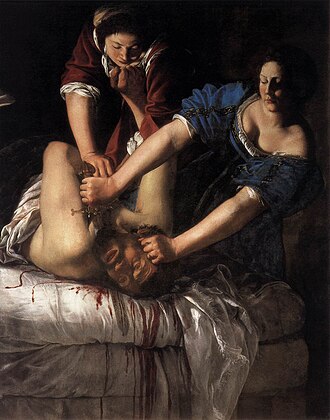 ホロフェルネスの首を斬るユディト - Artemisia Gentileschi (1613)
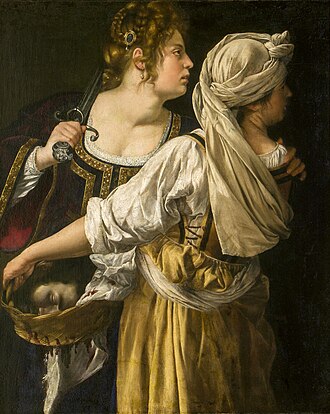 ユディトとその侍女 - Artemisia Gentileschi (1618)
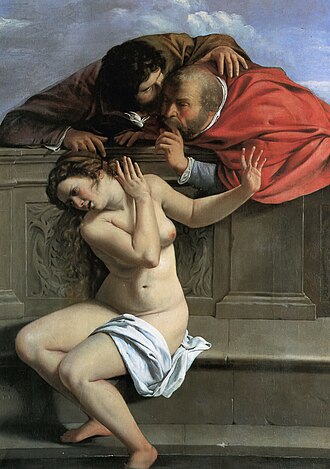 スザンナと長老たち - Artemisia Gentileschi (1610)
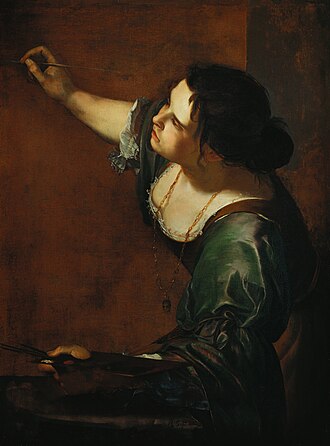 絵画の寓意としての自画像 - Artemisia Gentileschi (1638)
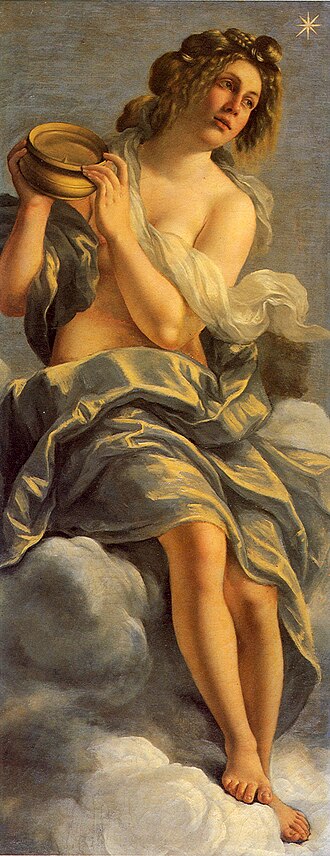 天性の素質の寓意 - Artemisia Gentileschi (1615)
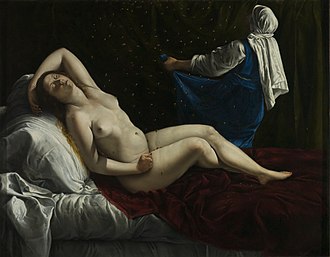 ダナエ - Artemisia Gentileschi (1612)
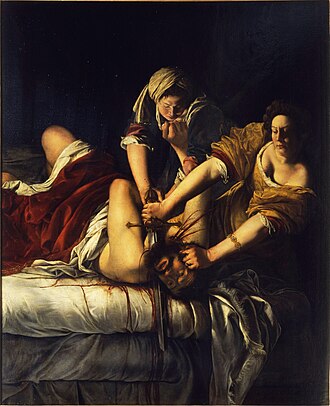 ホロフェルネスの首を斬るユディト - Artemisia Gentileschi (1620)
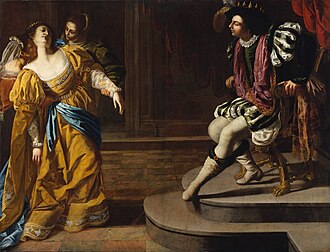 アハシュエロス王の前のエステル - Artemisia Gentileschi (1620s)
関連する画家の作品
 エマオの晩餐 - Caravaggio (1601)
 聖マタイの召命 - Caravaggio (1609)
 ラス・メニーナス - Diego Velázquez (1656)
 ブレダの開城 - Diego Velázquez (1635)
 Saint Francis in Meditation - Francisco de Zurbarán (1639)
 The Immaculate Conception - Francisco de Zurbarán (1661)
 チャールズ1世の三面肖像画 - Anthony van Dyck (1635)
 馬上のチャールズ1世とサン・アントワーヌの領主の肖像 - Anthony van Dyck (1636)
 キリスト昇架 - Peter Paul Rubens (1609)
 レウキッポスの娘たちの略奪 - Peter Paul Rubens (1618)
 夜警 - Rembrandt van Rijn (1642)
 自画像 - Rembrandt van Rijn (1659)