ニコラース・リュッツの肖像
Rembrandt van Rijn · 1631
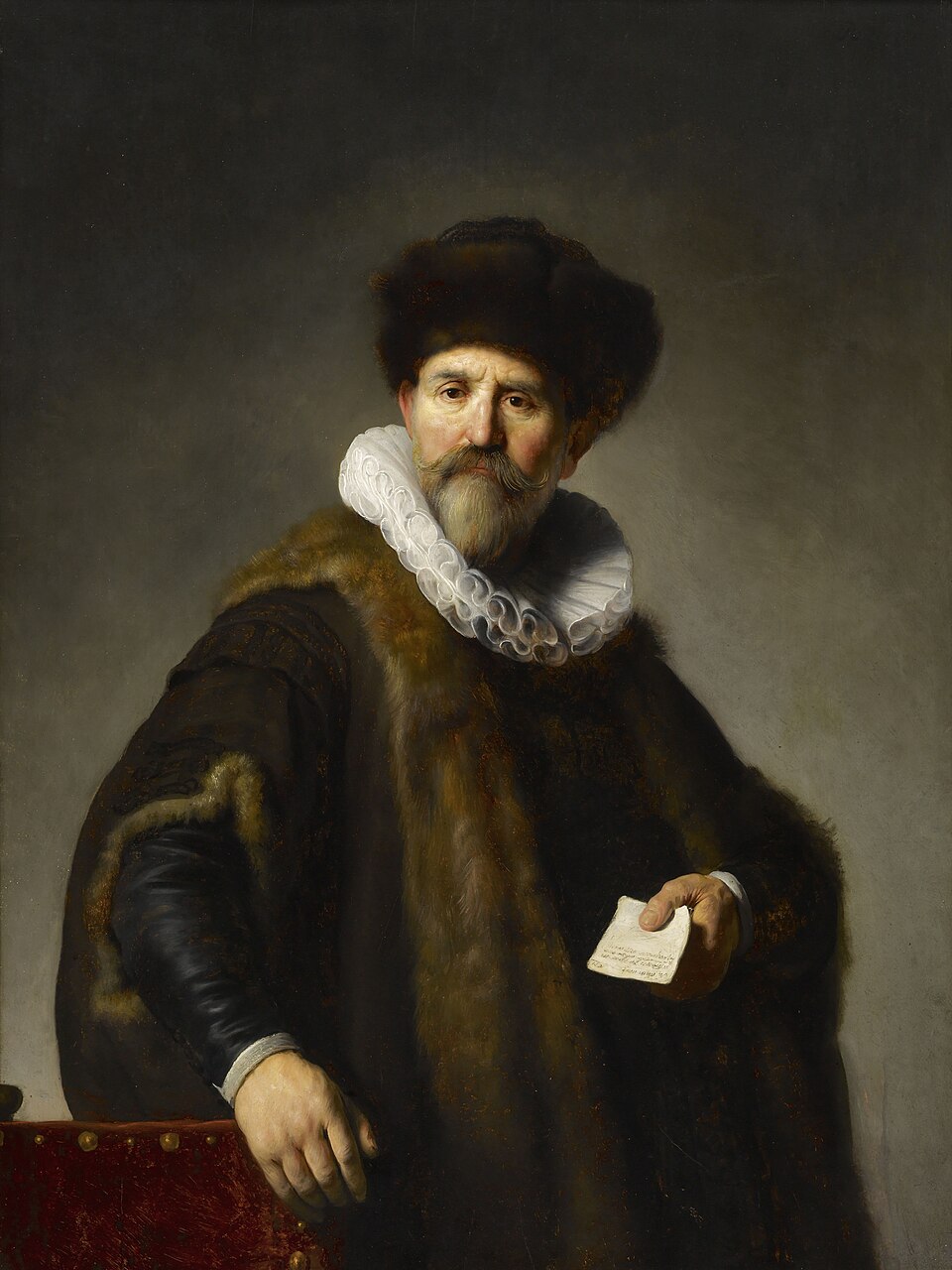
A 58-year-old merchant in a sable-lined robe and a Russian fur hat looks straight at us, a note dated 1631 in his hand. This was one of Rembrandt's earliest commissions, and it helped launch his career as a portrait painter.
The story behind the painting
Nicolaes Ruts was born in Cologne in 1573 and became an Amsterdam Mennonite merchant who traded often with the Russian colony at Arkhangelsk. Rembrandt painted him in 1631, when Ruts was 58. It is one of Rembrandt's earliest commissioned pieces. As a merchant, Ruts was not especially successful, and he filed for bankruptcy shortly before his death in 1638. The portrait may have been commissioned by his daughter Susanna, who with her husband was a successful Amsterdam merchant, and it stayed with her and her descendants.
What to look for
The portrait is painted in oil on a mahogany panel, about 116.8 by 87.3 cm. Ruts wears a robe known as a tabbaard lined with sable, a translucent neck ruff and a Russian ushanka hat, all pointing to his trade with Russia. He looks directly at the viewer. His right hand rests on the back of a red chair; in his left he holds a note. Lean in and try to read it: the text is illegible, except for the date, 1631. Rembrandt makes the furs and the sheer ruff almost tangible.
Meaning and intent
The furs and the Russian hat tell us who Ruts wanted to be seen as: a man of the Arkhangelsk trade. The direct gaze and the note in his hand make him present and busy, caught in the middle of his affairs. There is a quiet irony in the history the source gives: the image of prosperity belongs to a merchant who was not very successful and who went bankrupt before he died. If Susanna commissioned it, the painting may also be a daughter's way of honouring her father.
Legacy
The painting's later history shows how a name can slip. In 1823 it was sold in Amsterdam as Portrait of a Man, and in 1850, in the sale of King Willem II of the Netherlands, it was called Portrait of a Rabbi. It passed through Adrian Hope, Joseph Ruston and Comte Boni de Castellane before J. P. Morgan owned it from before 1903. After being shown at the Metropolitan Museum of Art in 1912 to 1914, it went to the Frick Collection in New York in 1943, where it remains.
豆知識
- Painted by Rembrandt in 1631, one of his earliest commissions.
- Ruts was a Mennonite merchant trading with Arkhangelsk.
- The note in his hand is legible only for the date 1631.
- In the Frick Collection since 1943.
画家について
Rembrandt van Rijn (1606-1669)
肖像 · オランダ黄金時代の絵画 · フリック・コレクション
同じ画家の作品: Rembrandt van Rijn
 夜警 - Rembrandt van Rijn (1642)
 自画像 - Rembrandt van Rijn (1659)
 テュルプ博士の解剖学講義 - Rembrandt van Rijn (1632)
 ユダヤの花嫁 - Rembrandt van Rijn (1660s)
 ガラリアの海の嵐 - Rembrandt van Rijn (1633)
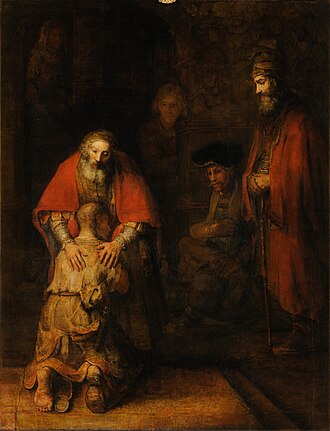 放蕩息子の帰還 - Rembrandt van Rijn (1668)
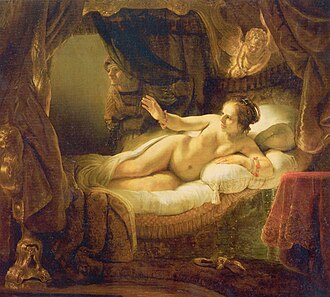 ダナエ - Rembrandt van Rijn (1636)
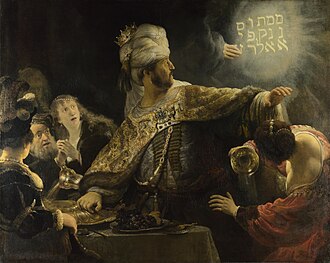 ベルシャザルの酒宴 - Rembrandt van Rijn (1636)
関連する画家の作品
 真珠の耳飾りの少女 - Johannes Vermeer (1665)
 牛乳を注ぐ女 - Johannes Vermeer (c. 1658)
 聖ニコラウスのお祭り - Jan Steen (1660s)
 牡蠣を食べる少女 - Jan Steen (1658)
 陽気な酒飲み - Frans Hals (1620s)
 微笑む騎士 - Frans Hals (1624)
 ウェイク・ベイ・ドゥールステーデの風車 - Jacob van Ruisdael (1670)
 The Jewish Cemetery - Jacob van Ruisdael (1650s)
 デルフトの家の中庭 - Pieter de Hooch (1658)
 リンゴの皮を剥く女性 - Pieter de Hooch (1663)