Portrait of Charles I and Queen Henrietta Maria
アンソニー・ヴァン・ダイク · 1632
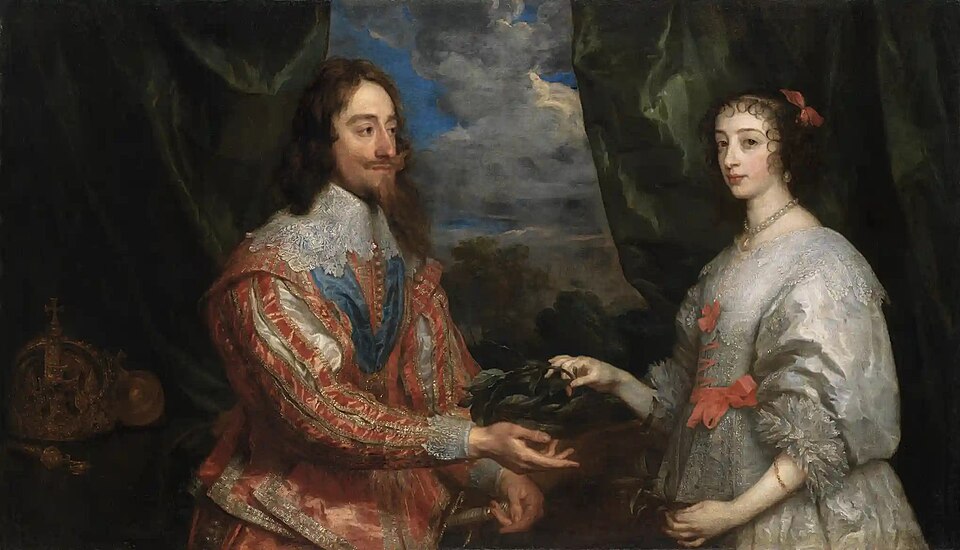
A queen in white hands her king a wreath of evergreen leaves, and he opens his palm to receive it. This tender double portrait made Anthony van Dyck the leading portrait painter in England.
The story behind the painting
The commission was one of the first van Dyck received after arriving in England in 1632. It had first gone to the Dutch painter Daniel Mytens, the leading court artist before him, but his picture hung only briefly in the queen's residence at Somerset House and did not meet royal expectations. Van Dyck took Mytens's composition as a starting point and added space, life and elegance. The painting was not meant as an official portrait but for the queen's private rooms at Somerset House. Today it is in the Archdiocesan Museum at Kroměříž Castle in the Czech Republic.
What to look for
Both figures are shown from the hips up in half profile. Charles looks at his wife, while Henrietta Maria looks at us. He wears a gold-red doublet with slashed sleeves, a lace collar and the blue ribbon of the Order of the Garter around his neck. She wears a white dress with puffed sleeves and red ribbons, earrings and a close necklace. With her right hand she passes him a laurel wreath; in her left she holds an olive branch. Behind him, in shadow, lie a crown, a sceptre and an orb. Between dark green curtains a cloudy sky opens, and clear blue circles his head almost like a halo.
Meaning and intent
Charles ruled from 1625 and was in conflict with Parliament from the start; crown, sceptre and orb assert his royal power. Henrietta Maria was the youngest daughter of Henry IV of France. The laurel may stand for her father's military success, the olive for the peaceable nature of Charles's father James I, so the picture can show the union of two houses allied against the Habsburgs. The couple married in 1625 for dynastic reasons, and the early years were tense, but by about 1630 their bond had grown and their first child was born. Read as myrtle, the wreath speaks of Venus and marital faithfulness.
Legacy
The painting made a lasting impression. Van Dyck was at once asked for another portrait of Henrietta Maria in the same pose and dress, and in the same year he was made a baronet and named principal painter to the king and queen, while Mytens left England. In England his portraiture reached a height that set the standard for contemporaries and followers across Europe. His growing workshop produced copies; versions of this double portrait are at Chiddingstone Castle and Knole House, and engravings spread it further, often cropped on the left so that king and queen stand equally far from the edges.
豆知識
- One of van Dyck's first commissions in England, in 1632.
- Painted for the queen's private rooms at Somerset House.
- Replaced an earlier version by Daniel Mytens.
- Now in the Archdiocesan Museum at Kroměříž, Czech Republic.
画家について
アンソニー・ヴァン・ダイク (1599-1641)
同じ画家の作品: アンソニー・ヴァン・ダイク
 チャールズ1世の三面肖像画 - Anthony van Dyck (1635)
 馬上のチャールズ1世とサン・アントワーヌの領主の肖像 - Anthony van Dyck (1636)
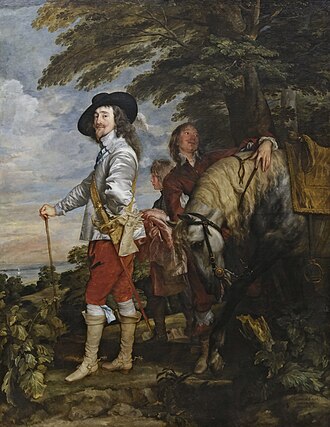 狩猟場のチャールズ1世 - Anthony van Dyck (1635)
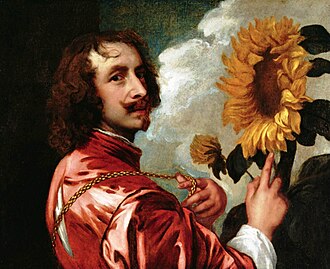 向日葵のある自画像 - Anthony van Dyck (1632)
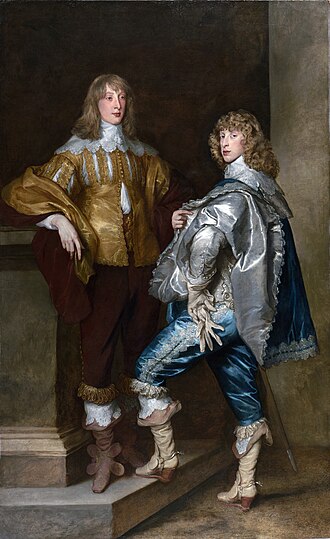 ジョン・ステュアート卿と弟バーナード・ステュアート卿の肖像 - Anthony van Dyck (1638)
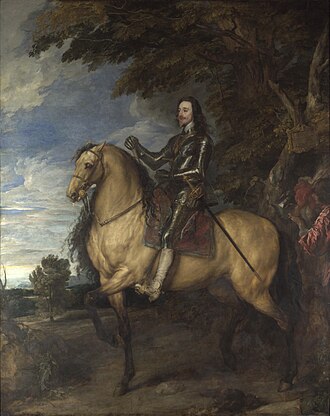 チャールズ1世騎馬像 - Anthony van Dyck (1637)
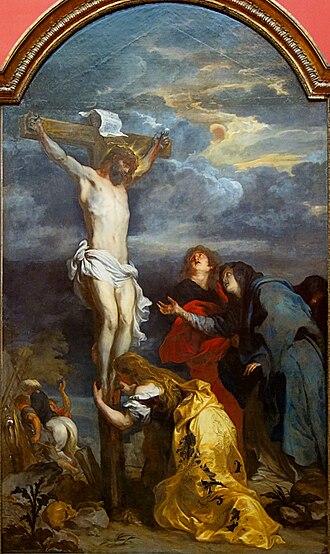 キリストの磔刑 - Anthony van Dyck
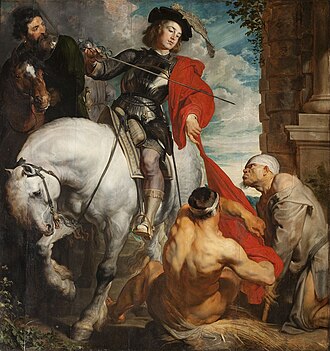 Saint Martin and the Beggar - Anthony van Dyck (1621)
関連する画家の作品
 エマオの晩餐 - Caravaggio (1601)
 聖マタイの召命 - Caravaggio (1609)
 ラス・メニーナス - Diego Velázquez (1656)
 ブレダの開城 - Diego Velázquez (1635)
 Saint Francis in Meditation - Francisco de Zurbarán (1639)
 The Immaculate Conception - Francisco de Zurbarán (1661)
 キリスト昇架 - Peter Paul Rubens (1609)
 レウキッポスの娘たちの略奪 - Peter Paul Rubens (1618)
 夜警 - Rembrandt van Rijn (1642)
 自画像 - Rembrandt van Rijn (1659)
 陽気な酒飲み - Frans Hals (1620s)
 微笑む騎士 - Frans Hals (1624)