Saint Martin and the Beggar
アンソニー・ヴァン・ダイク · 1621
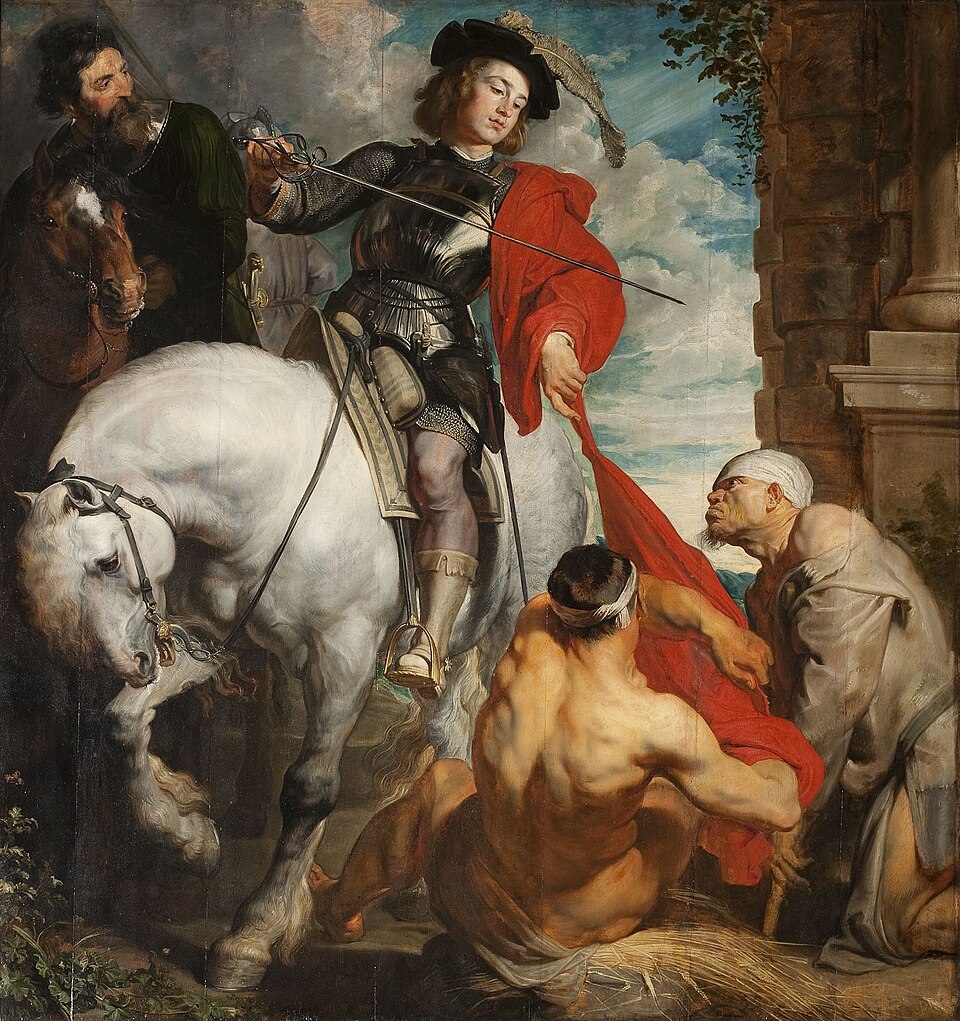
A young soldier on a white horse slices his fire-red cloak in two for a naked beggar. Van Dyck painted this altarpiece while still in Rubens's orbit, and it has hung in a village church in Zaventem for most of four centuries.
The story behind the painting
The scene comes from Sulpicius Severus's life of Martin of Tours. On a winter's day, riding out of the gates of Amiens, the young soldier saw a poor man shivering and cut his cloak in half for him. That night Christ appeared to him wearing the half he had given away. Julius Held suggested the commission first went to Rubens, who handed it to van Dyck, then his assistant. Van Dyck completed it around 1618, and it stayed in his studio until 1621, when Ferdinand van Boisschot, Chancellor of Brabant, gave it to the church of Saint Martin in Zaventem. Wikidata uses 1621, the source about 1618.
What to look for
Martin wears armour and a fashionable hat on a splendid white horse. With the sword in his right hand he has almost cut through his red cloak, while a naked beggar on the ground pulls at one half. Beside him another beggar in rags kneels on crutches. Behind them, a wall with ivy and a column suggests a city gate. Top left, an older rider watches with astonishment, and behind the riders is the silhouette of a helmeted man, then a wide cloudy sky that opens up the depth. The paint is smooth and opaque, almost sculptural, unlike van Dyck's usual loose brushwork.
Meaning and intent
In the legend, Christ told the angels: see how Martin has covered me with his cloak. Martin, a soldier at his father's wish, then left the army to devote himself to his faith. The painting catches the instant before that change, when a privileged young man shares what he has with someone who has nothing. It is regarded as one of van Dyck's most Rubensian works: the figures, the red cloak, the flesh tones bluish in shadow and the whites and greys of the horse all follow Rubens's style.
Legacy
A legend that van Dyck lingered in Zaventem for love of a local woman, Anna van Ophem, has been debunked. Around 1672, during the campaigns of Louis XIV, the painting was taken to Baron van Boisschot's residence in Brussels for safety. In August 1794 the French government had it removed to Paris, where it was shown in the Musée Central in the Louvre. It was returned in 1815 and back in the church in 1816. A later, larger version from around 1620, with a woman, two children and a dog among the beggars, is in the Royal Collection at Windsor Castle.
豆知識
- Painted by van Dyck around 1618, installed in Zaventem in 1621.
- Possibly a commission first given to Rubens.
- Taken to Paris in 1794 and returned in 1815-1816.
- A larger version is in the Royal Collection at Windsor.
画家について
アンソニー・ヴァン・ダイク (1599-1641)
同じ画家の作品: アンソニー・ヴァン・ダイク
 チャールズ1世の三面肖像画 - Anthony van Dyck (1635)
 馬上のチャールズ1世とサン・アントワーヌの領主の肖像 - Anthony van Dyck (1636)
 狩猟場のチャールズ1世 - Anthony van Dyck (1635)
 向日葵のある自画像 - Anthony van Dyck (1632)
 ジョン・ステュアート卿と弟バーナード・ステュアート卿の肖像 - Anthony van Dyck (1638)
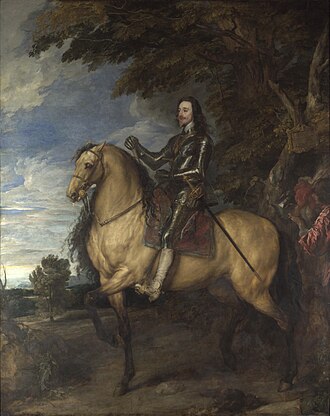 チャールズ1世騎馬像 - Anthony van Dyck (1637)
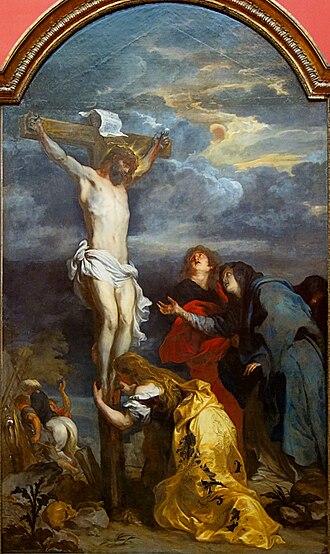 キリストの磔刑 - Anthony van Dyck
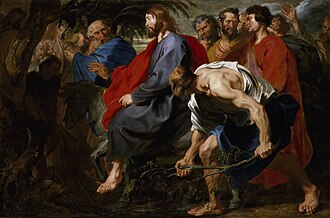 キリストのエルサレム入城 - Anthony van Dyck (1617)
関連する画家の作品
 エマオの晩餐 - Caravaggio (1601)
 聖マタイの召命 - Caravaggio (1609)
 ラス・メニーナス - Diego Velázquez (1656)
 ブレダの開城 - Diego Velázquez (1635)
 Saint Francis in Meditation - Francisco de Zurbarán (1639)
 The Immaculate Conception - Francisco de Zurbarán (1661)
 キリスト昇架 - Peter Paul Rubens (1609)
 レウキッポスの娘たちの略奪 - Peter Paul Rubens (1618)
 夜警 - Rembrandt van Rijn (1642)
 自画像 - Rembrandt van Rijn (1659)
 陽気な酒飲み - Frans Hals (1620s)
 微笑む騎士 - Frans Hals (1624)