聖母子
アルテミジア・ジェンティレスキ · 1612
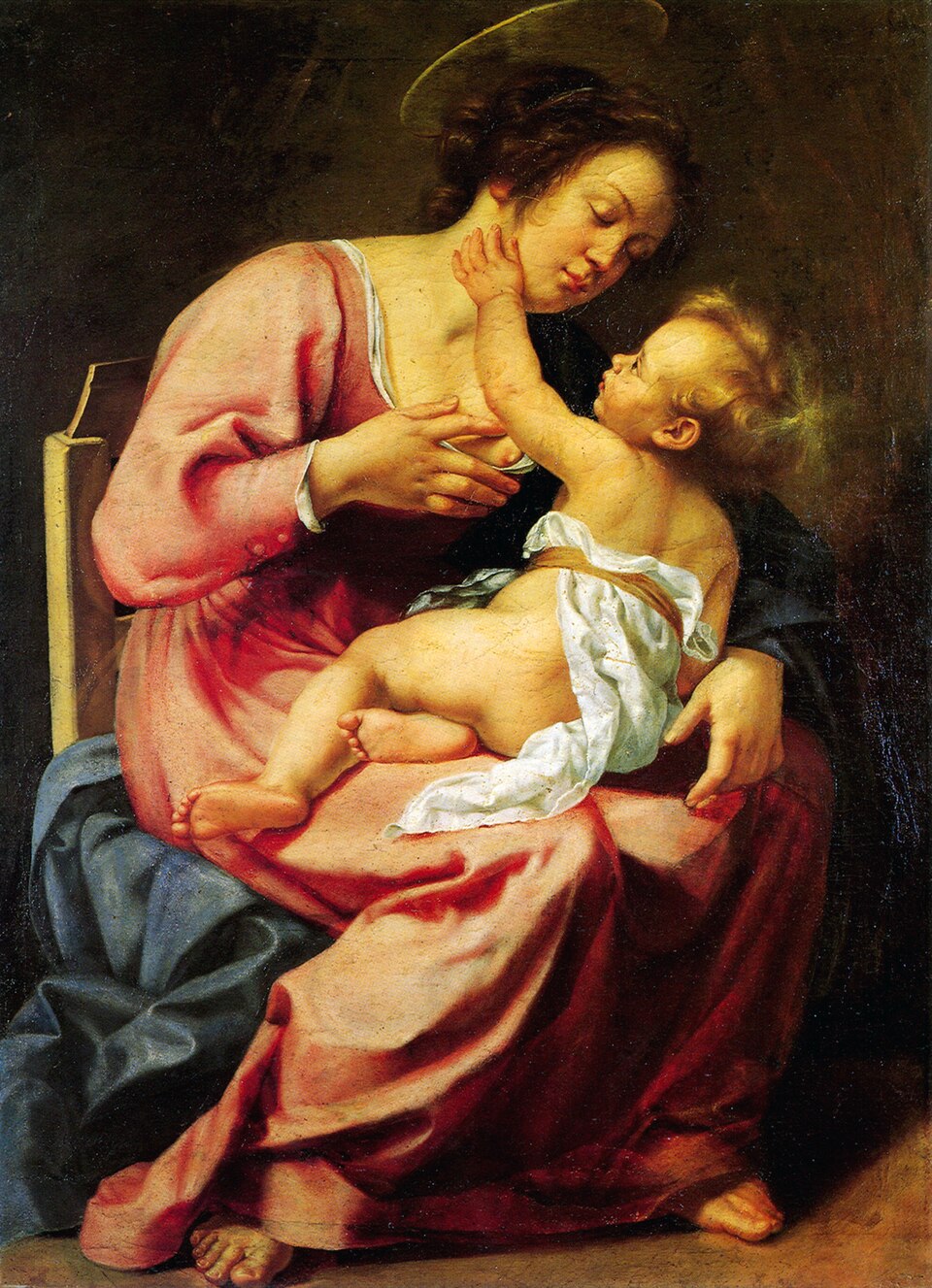
A young mother in pink sits on a plain wooden chair, about to nurse her son, and the child reaches up to touch her face. Artemisia Gentileschi painted it at about twenty, and for centuries no one knew it was hers.
The story behind the painting
Madonna and Child is an early work by the baroque painter Artemisia Gentileschi. Wikipedia says it was painted around 1613, when Artemisia was about twenty years old, while Wikidata gives the year as 1612. For centuries its author was forgotten, and the painting was attributed to a series of Italian artists. Only in 1992 did archival research uncover an inventory record from 1637 that brought its history to light. The document records the transfer of works of art from Alessandro Biffi to the Veralli family. A member of that family, Marchesa Maria Veralli, married Orazio Spada.
What to look for
The Virgin Mary wears a pink dress and sits on a simple wooden chair, about to nurse her son. The child turns and caresses her face with his left hand. Mary's figure fills the canvas and brings her very close to us, so the scene feels less like a distant icon and more like a real mother and child. The Christ Child, with his tousled blond hair, seems to have been modelled on a real child. Look at the dress: the pink with its deep maroon shadows, and the blue mantle, were revealed only by a modern restoration.
Meaning and intent
The question of authorship was complicated by an identically sized Madonna and Child in the Palazzo Pitti. For a long time scholars believed the Pitti picture was Artemisia's, partly because its Madonna is more conventionally beautiful. The art historian Mary Garrard attributes that preference to historic gender bias, the assumption that a woman painter would paint prettier, softer figures. In the end the Spada painting was judged the more assured of the two. Its plain chair and frank, tender gesture now count as signs of the young Artemisia's directness, not against her.
Legacy
An engraving of 1837 shows a more complicated arrangement of drapery than is visible today. A restoration in 1969 to 1970 removed a significant amount of retouching and overpaint, revealing the original pink dress, the deep maroon shadows and the blue mantle. The same transaction that brought this painting into the Veralli family also included Saint Cecilia Playing the Lute, another work by Artemisia. Both paintings are connected with the Spada collection, and this Madonna hangs today in the Galleria Spada in Rome, a quiet, intimate picture by an artist at the very start of her career.
豆知識
- Painted around 1612 to 1613, when Artemisia was about twenty.
- Identified as her work through archival research in 1992.
- A restoration in 1969 to 1970 revealed the pink dress and blue mantle.
- Hangs in the Galleria Spada in Rome.
画家について
アルテミジア・ジェンティレスキ (1593-1653)
宗教美術 · 女性 · 聖母マリア · イエスの幼少時代 · 少年 · 母
同じ画家の作品: アルテミジア・ジェンティレスキ
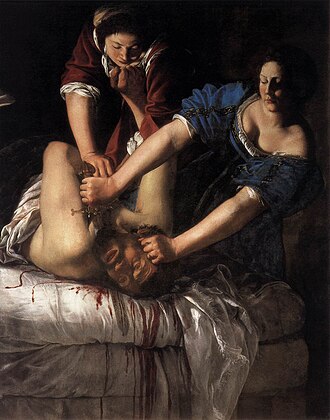 ホロフェルネスの首を斬るユディト - Artemisia Gentileschi (1613)
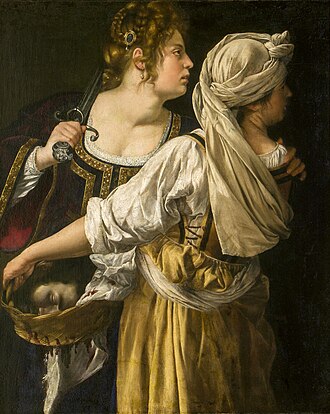 ユディトとその侍女 - Artemisia Gentileschi (1618)
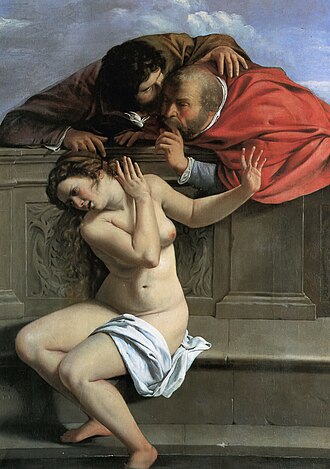 スザンナと長老たち - Artemisia Gentileschi (1610)
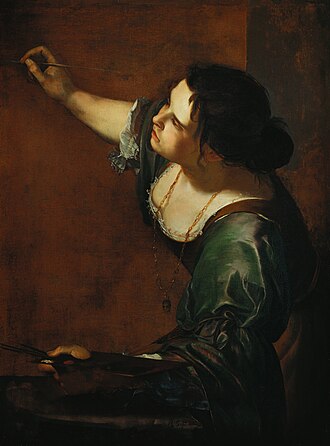 絵画の寓意としての自画像 - Artemisia Gentileschi (1638)
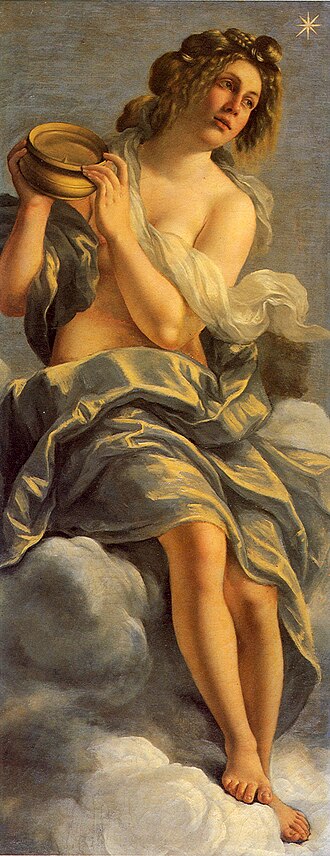 天性の素質の寓意 - Artemisia Gentileschi (1615)
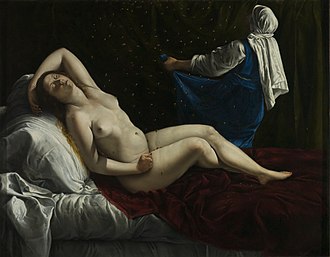 ダナエ - Artemisia Gentileschi (1612)
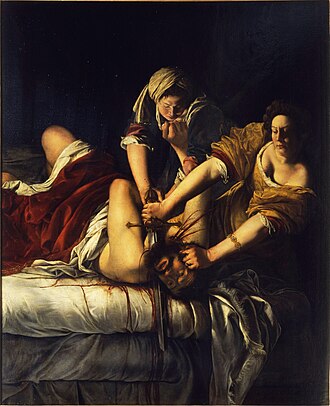 ホロフェルネスの首を斬るユディト - Artemisia Gentileschi (1620)
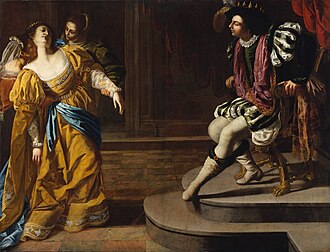 アハシュエロス王の前のエステル - Artemisia Gentileschi (1620s)
関連する画家の作品
 エマオの晩餐 - Caravaggio (1601)
 聖マタイの召命 - Caravaggio (1609)
 ラス・メニーナス - Diego Velázquez (1656)
 ブレダの開城 - Diego Velázquez (1635)
 Saint Francis in Meditation - Francisco de Zurbarán (1639)
 The Immaculate Conception - Francisco de Zurbarán (1661)
 チャールズ1世の三面肖像画 - Anthony van Dyck (1635)
 馬上のチャールズ1世とサン・アントワーヌの領主の肖像 - Anthony van Dyck (1636)
 キリスト昇架 - Peter Paul Rubens (1609)
 レウキッポスの娘たちの略奪 - Peter Paul Rubens (1618)
 夜警 - Rembrandt van Rijn (1642)
 自画像 - Rembrandt van Rijn (1659)