聖母子
アンソニー・ヴァン・ダイク · 1621
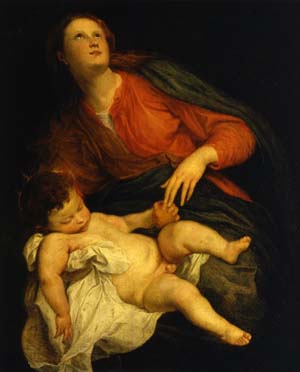
The Child has fallen into a deep sleep, yet his hand still holds his mother's. Anthony van Dyck painted this tender scene during his years in Italy, under the spell of Titian.
The story behind the painting
This painting belongs to a series of Madonnas that Anthony van Dyck made during his Italian period, between 1621 and 1625 according to his Notebook of Italian Drawings. Venetian art, and Titian's above all, was a great inspiration for him. He admired both its subjects and its technical skill, and he studied Titian's works often during two months in Venice, after stays in Genoa and Rome. The exact date is still uncertain. Larsen places it between 1621 and 1625, while Limentani Virdis believes it was made around 1627, because of the liberties Van Dyck takes with Titian's model.
What to look for
The picture shows the Virgin holding the sleeping Baby Jesus in her lap. Like most works in the series, it is a three-quarter-length image, close in iconography and colour to Titian's style of around 1550 to 1570. Look at Mary's elongated figure, her elegant gestures and the sense of movement in her body. Then look down at the Child: he is in a deep sleep, but his small hand still holds his mother's hand. The panel measures 62.5 by 52.5 cm.
Meaning and intent
The painting sets two things side by side. On one hand there is the grand, flowing elegance of Mary's figure, learned from Venice. On the other there is something very human: a mother's attachment to her sleeping child, and a child who does not let go even in sleep. Limentani Virdis sees in the work Baroque elements and the influence of Peter Paul Rubens, mixed into what Van Dyck took from Titian. The result is a devotional image that also reads as a quiet moment between a mother and her baby.
Legacy
The work is often compared with other paintings from Van Dyck's Palermo period, such as the Madonna and Child in the Galleria Nazionale di Sicilia and Saint Rosalie Interceding for the Plague-Stricken of Palermo in the Metropolitan Museum of Art. It entered the Galleria Nazionale di Parma in 1820, after Marie Louise bought it from the collection of Marianna Galli Baldrighi. It was already recognised as a Van Dyck when it arrived, and no later study has put that attribution in doubt.
豆知識
- Painted by Anthony van Dyck during his Italian period.
- Dated 1621 to 1625, or around 1627, depending on the scholar.
- 62.5 x 52.5 cm, in the Galleria Nazionale di Parma since 1820.
- Strongly inspired by Titian.
画家について
アンソニー・ヴァン・ダイク (1599-1641)
宗教美術 · 聖母マリア · イエスの幼少時代 · パルマ国立美術館
同じ画家の作品: アンソニー・ヴァン・ダイク
 チャールズ1世の三面肖像画 - Anthony van Dyck (1635)
 馬上のチャールズ1世とサン・アントワーヌの領主の肖像 - Anthony van Dyck (1636)
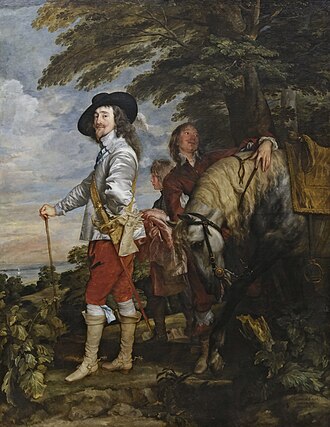 狩猟場のチャールズ1世 - Anthony van Dyck (1635)
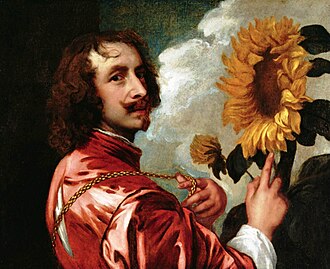 向日葵のある自画像 - Anthony van Dyck (1632)
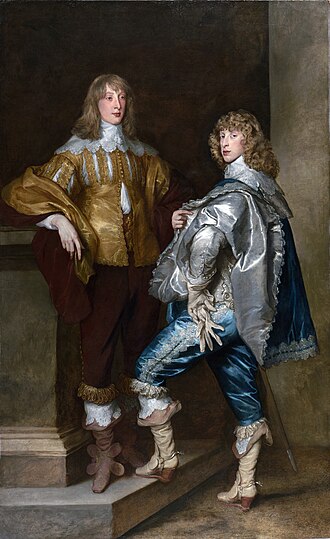 ジョン・ステュアート卿と弟バーナード・ステュアート卿の肖像 - Anthony van Dyck (1638)
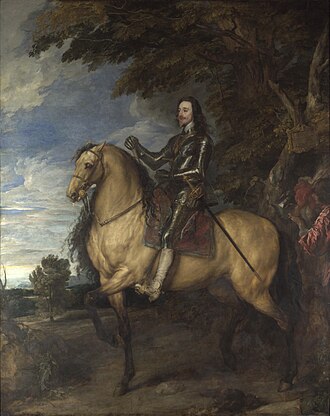 チャールズ1世騎馬像 - Anthony van Dyck (1637)
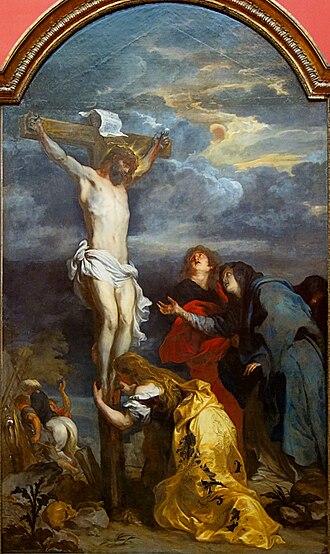 キリストの磔刑 - Anthony van Dyck
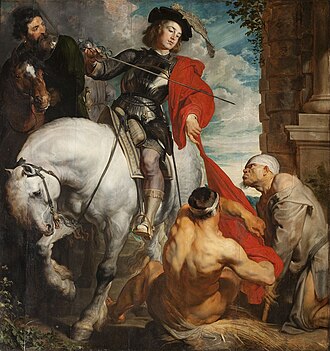 Saint Martin and the Beggar - Anthony van Dyck (1621)
関連する画家の作品
 エマオの晩餐 - Caravaggio (1601)
 聖マタイの召命 - Caravaggio (1609)
 ラス・メニーナス - Diego Velázquez (1656)
 ブレダの開城 - Diego Velázquez (1635)
 Saint Francis in Meditation - Francisco de Zurbarán (1639)
 The Immaculate Conception - Francisco de Zurbarán (1661)
 キリスト昇架 - Peter Paul Rubens (1609)
 レウキッポスの娘たちの略奪 - Peter Paul Rubens (1618)
 夜警 - Rembrandt van Rijn (1642)
 自画像 - Rembrandt van Rijn (1659)
 陽気な酒飲み - Frans Hals (1620s)
 微笑む騎士 - Frans Hals (1624)