ロトとその娘たち
アルテミジア・ジェンティレスキ · 1630s
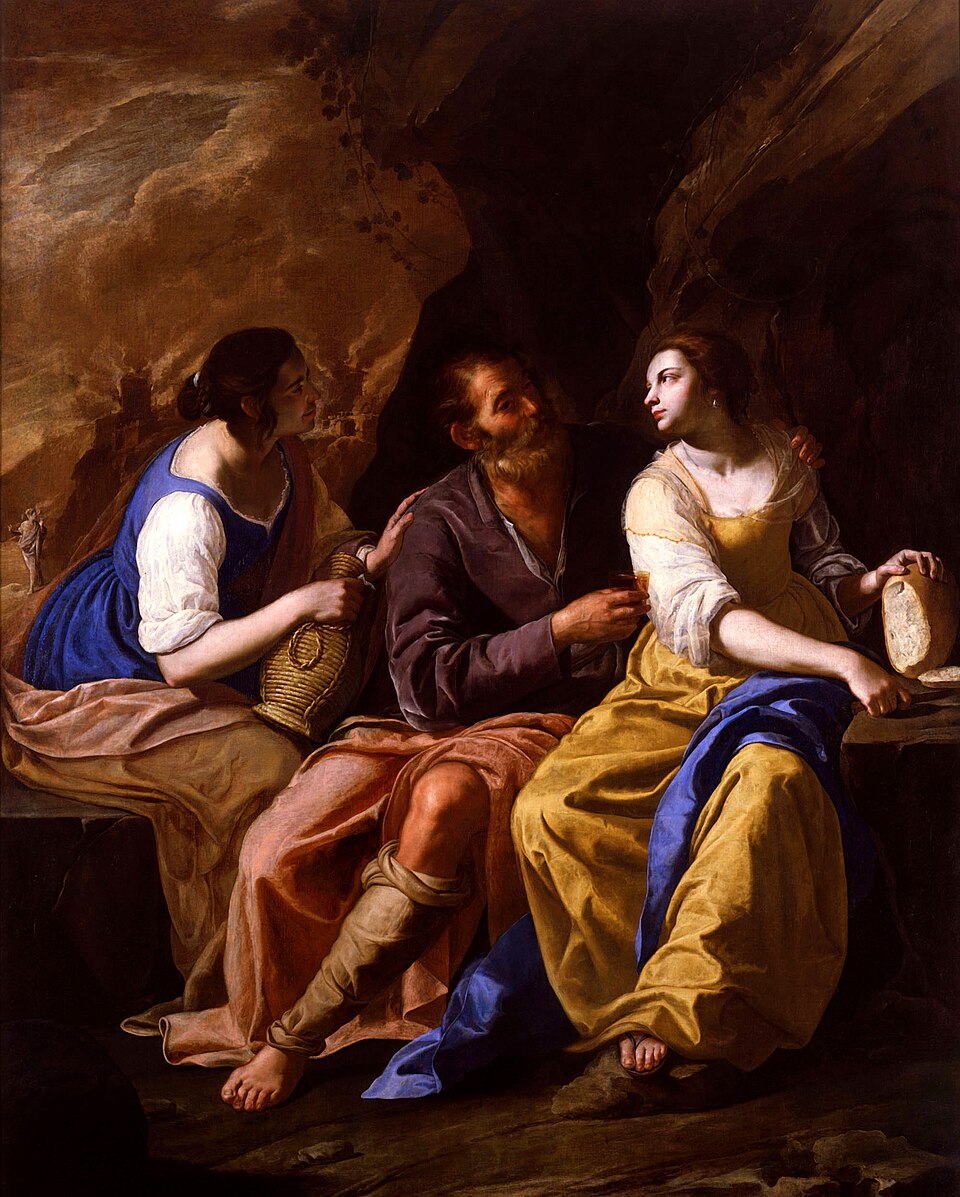
Sodom burns in the distance and a pillar of salt stands where Lot's wife looked back. In the dark foreground, his daughters pour wine. For years this painting was exhibited under another artist's name.
The story behind the painting
The story comes from the Book of Genesis. Lot and his family fled the city of Sodom as it was destroyed. His wife disobeyed the order not to look back and was turned into a pillar of salt. Lot and his daughters then hid in a cave, and the daughters, fearing the end of their family line, made their father drunk so that they could seduce him and continue the lineage. The theme was popular in art of the period, both for its moral lesson and for its scandalous potential. Wikipedia dates this version to 1636 to 1638, while Wikidata simply says the 1630s.
What to look for
Lot sits between his two daughters in a darkened landscape. He wears a purple garment with a pink cloak, and his left knee is bare where the cloth falls away. The daughters lean toward him, one in a gold gown with a blue cloak, the other in a blue gown with a gold cloak, their colours mirrored like a rhyme. One offers to refill his wine glass, the other prepares to slice bread. Look into the background: Sodom is burning, and at the left the form of Lot's wife as a pillar of salt is just visible. The canvas is large, 230.5 by 182.9 cm.
Meaning and intent
The painting holds two moments of the same story in one frame: the catastrophe far away and the quiet, troubling scene that follows in the foreground. The daughters are shown not as monsters but as active, purposeful figures, busy with wine and bread, while Lot is passive between them. The sources do not give Gentileschi's own intentions, but they explain why the subject appealed to painters and buyers of the time: it offered a moral warning and, at the same time, a scandal that drew the eye. The warm colours set against the dark make that tension visible.
Legacy
Scholars suspect that the painting was once in the collection of Luigi Romeo, Baron of San Luigi, in Naples during the eighteenth century. It was sold from a private collection in Switzerland in 1982 and bought the following year by the Toledo Museum of Art. When the museum first exhibited it in 1984, it was presented as the work of Bernardo Cavallini. Only relatively recently has the Toledo Museum changed the attribution to Artemisia Gentileschi, and the authorship has been debated by scholars. Some, such as Raymond Ward Bissell, have suggested that Domenico Gargiulo may have contributed to the background.
豆知識
- Painted around 1636 to 1638.
- First exhibited in 1984 as a work by Bernardo Cavallini.
- Now attributed to Artemisia Gentileschi by the Toledo Museum of Art.
- Domenico Gargiulo may have helped with the background.
画家について
アルテミジア・ジェンティレスキ (1593-1653)
同じ画家の作品: アルテミジア・ジェンティレスキ
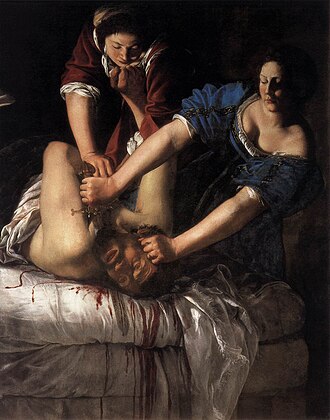 ホロフェルネスの首を斬るユディト - Artemisia Gentileschi (1613)
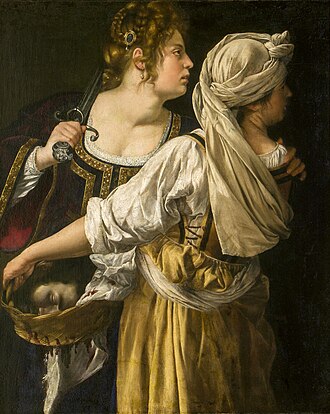 ユディトとその侍女 - Artemisia Gentileschi (1618)
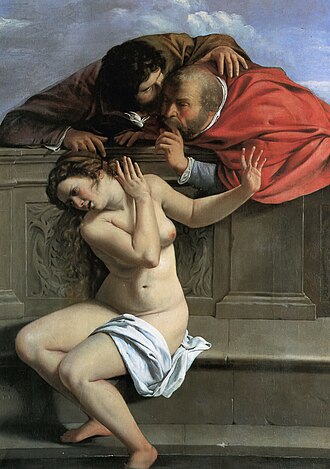 スザンナと長老たち - Artemisia Gentileschi (1610)
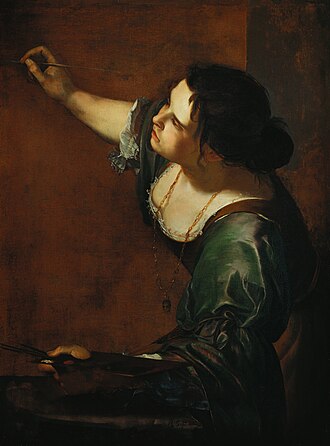 絵画の寓意としての自画像 - Artemisia Gentileschi (1638)
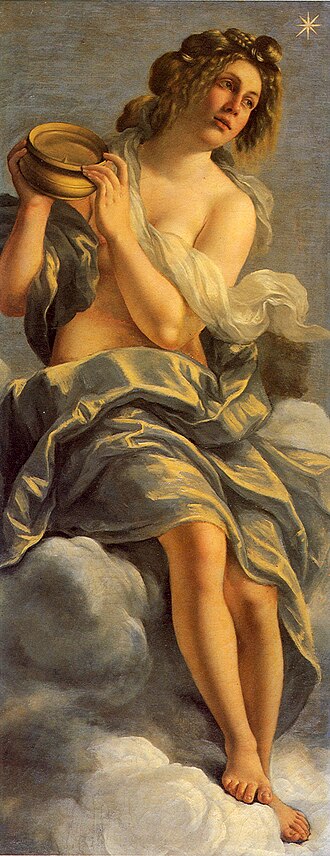 天性の素質の寓意 - Artemisia Gentileschi (1615)
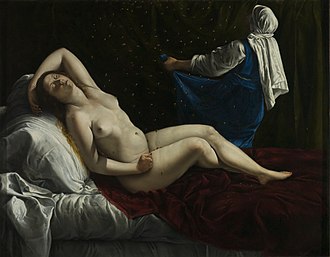 ダナエ - Artemisia Gentileschi (1612)
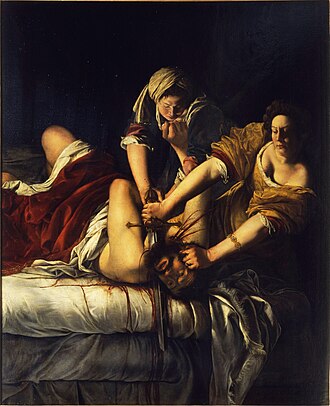 ホロフェルネスの首を斬るユディト - Artemisia Gentileschi (1620)
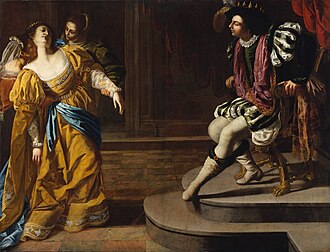 アハシュエロス王の前のエステル - Artemisia Gentileschi (1620s)
関連する画家の作品
 エマオの晩餐 - Caravaggio (1601)
 聖マタイの召命 - Caravaggio (1609)
 ラス・メニーナス - Diego Velázquez (1656)
 ブレダの開城 - Diego Velázquez (1635)
 Saint Francis in Meditation - Francisco de Zurbarán (1639)
 The Immaculate Conception - Francisco de Zurbarán (1661)
 チャールズ1世の三面肖像画 - Anthony van Dyck (1635)
 馬上のチャールズ1世とサン・アントワーヌの領主の肖像 - Anthony van Dyck (1636)
 キリスト昇架 - Peter Paul Rubens (1609)
 レウキッポスの娘たちの略奪 - Peter Paul Rubens (1618)
 夜警 - Rembrandt van Rijn (1642)
 自画像 - Rembrandt van Rijn (1659)