École vénitienne
The Venetian school is the painting of Renaissance Venice, a rich sea city where artists put colour before line.
Titian · Jacopo Tintoretto · Paolo Veronese
 Vénus d'Urbin - Titian (1538)
 Les Noces de Cana - Paolo Veronese (1560s)
 L'Assomption de la Vierge - Titian (1510s)
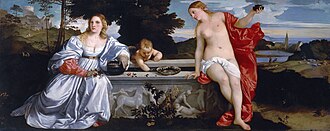 Amour sacré et Amour profane - Titian (1510s)
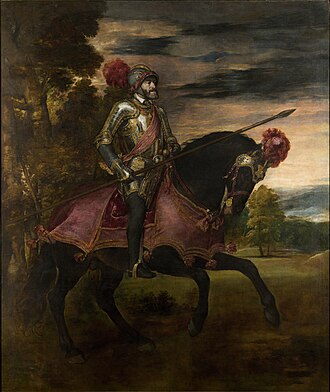 Charles Quint à cheval à Mühlberg - Titian (1548)
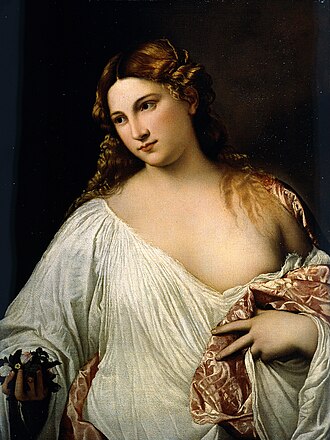 Flore - Titian (1517)
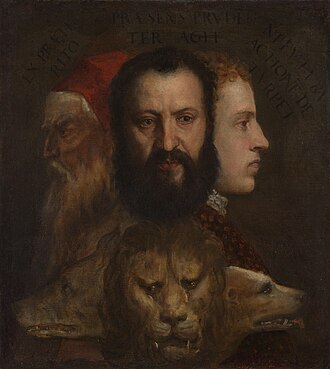 Allégorie du Temps gouverné par la Prudence - Titian (1550)
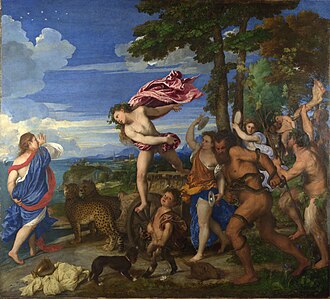 Bacchus et Ariane - Titian (1520s)
 La Cène - Jacopo Tintoretto (1563)
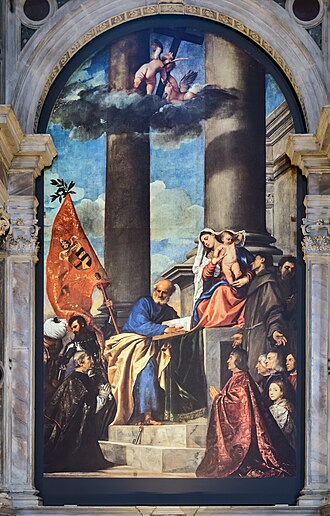 Madonna di Ca' Pesaro - Titian
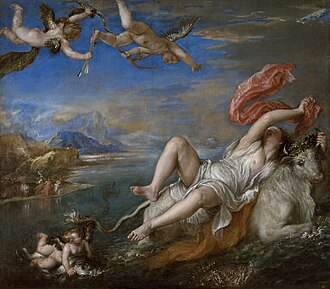 Le Rapt d'Europe - Titian
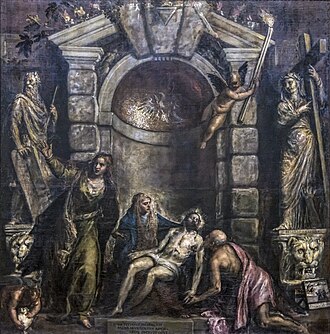 Pietà - Titian (1570s)
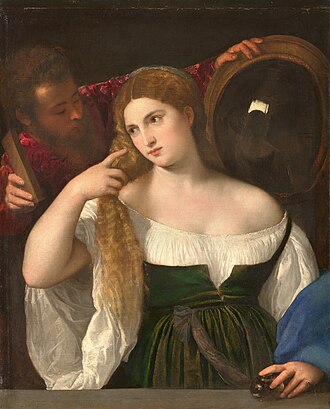 La Femme au miroir - Titian (1515)
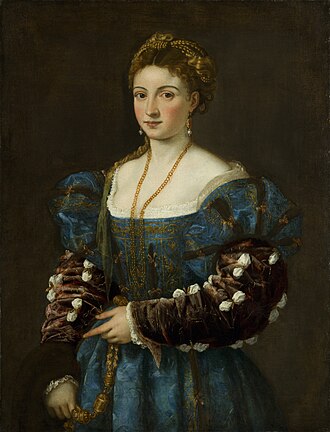 La Bella - Titian (1530s)
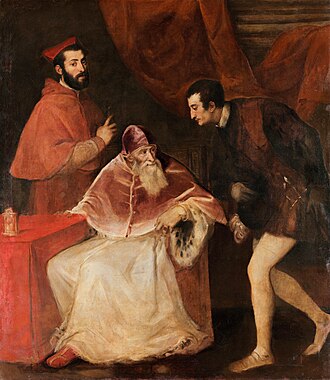 Portrait de Paul III avec ses petits-fils - Titian (1546)
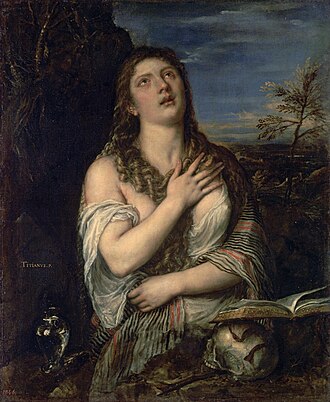 Madeleine pénitente - Titian (1560s)
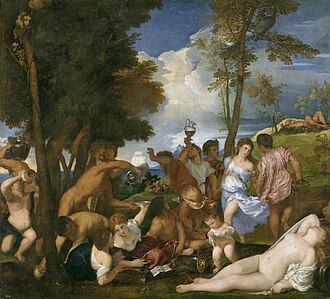 La Bacchanale des Andriens - Titian (1520s)
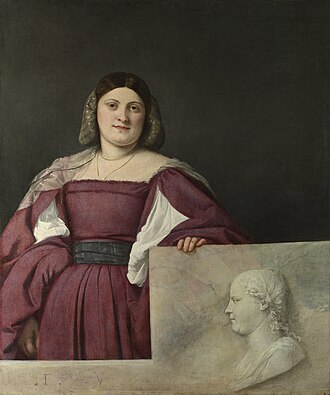 La Schiavona - Titian (1510s)
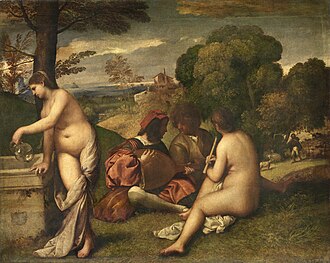 Le Concert champêtre - Titian (1510s)
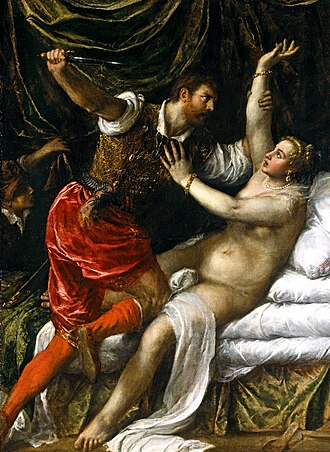 Tarquin et Lucrèce - Titian (1571)
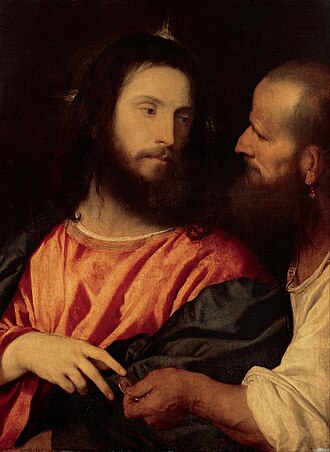 Le Christ au denier - Titian (1516)
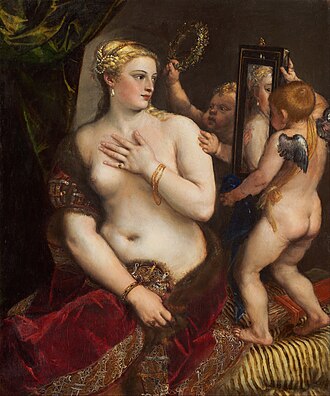 Vénus au miroir - Titian (1555)
 Miracle de l'esclave - Jacopo Tintoretto (1540s)
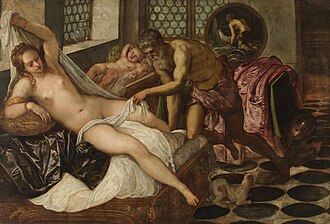 Vénus, Mars et Vulcain - Jacopo Tintoretto (1555)
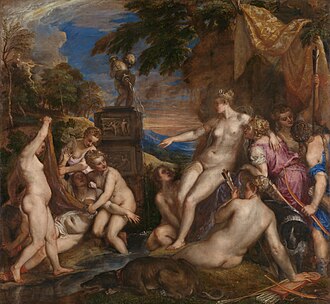 Diane et Callisto - Titian (1550s)
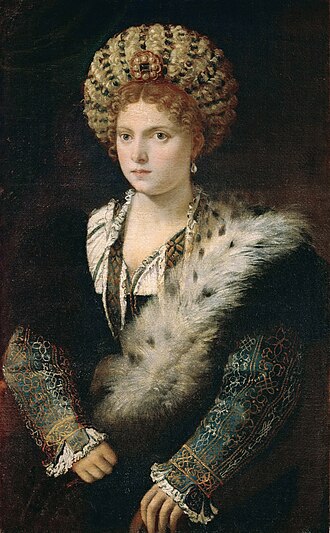 Portrait of Isabella d'Este - Titian (1530s)
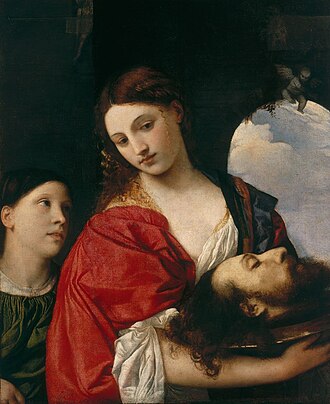 Salomé - Titian (1515)
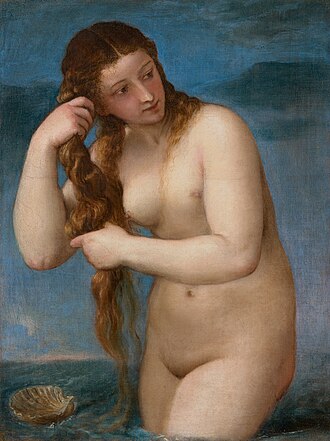 Vénus Anadyomène - Titian (1520)
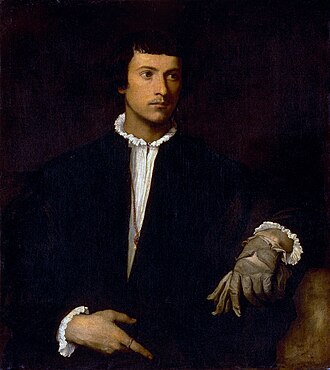 L'Homme au gant - Titian (1520)
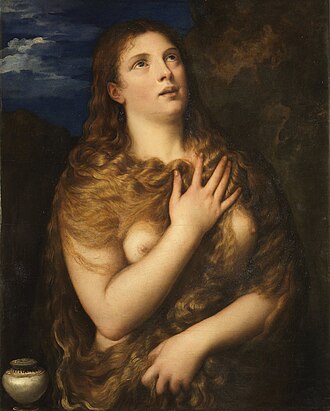 Madeleine pénitente - Titian (1533)
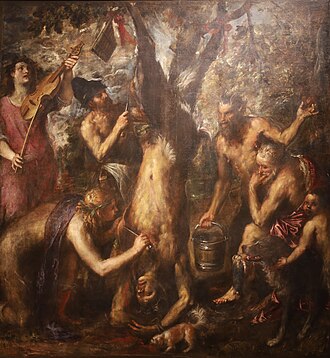 Le Supplice de Marsyas - Titian (1570s)
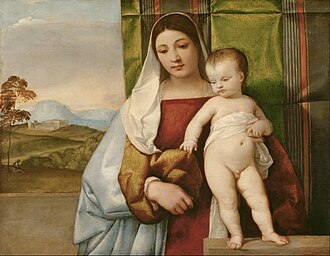 La Vierge au parapet - Titian (1510)
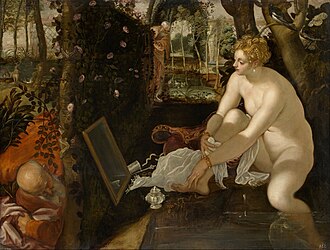 Suzanne et les Vieillards - Jacopo Tintoretto (1550s)
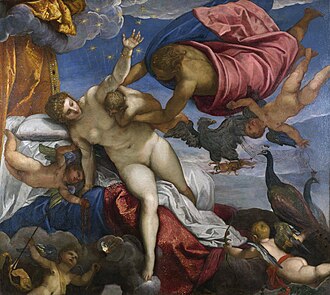 L'Origine de la Voie lactée - Jacopo Tintoretto (1575)
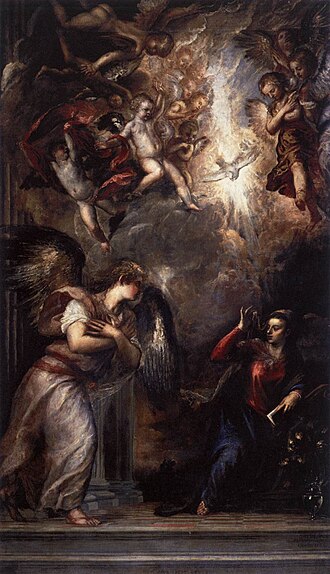 Annonciation - Titian
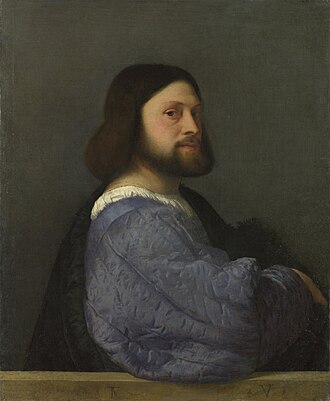 Portrait de L'Arioste - Titian (1510)
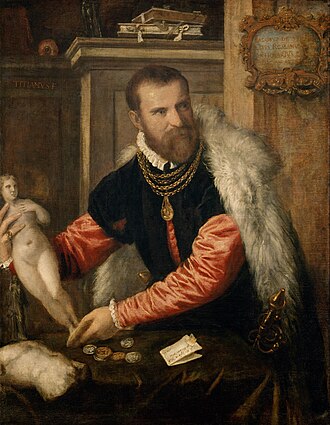 Portrait de Jacopo Strada - Titian (1560s)
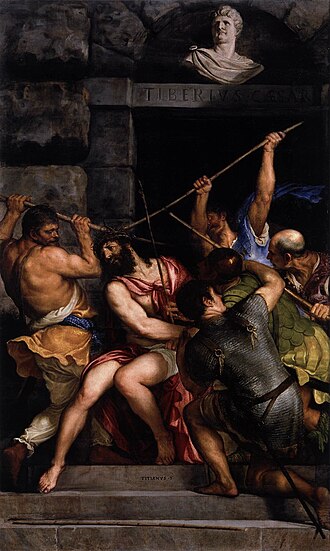 Le Couronnement d'épines - Titian (1540s)
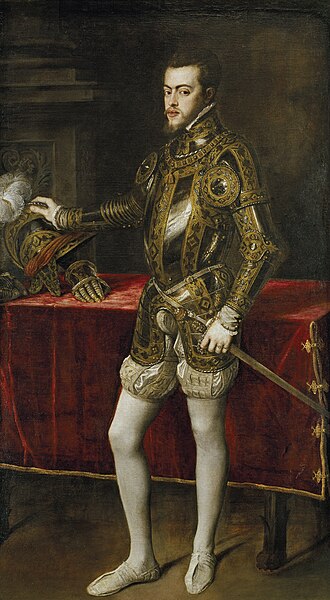 Portrait de Philippe II en armure - Titian (1551)
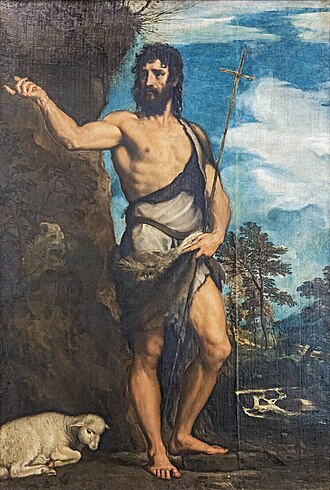 Saint Jean-Baptiste au désert - Titian (1540s)
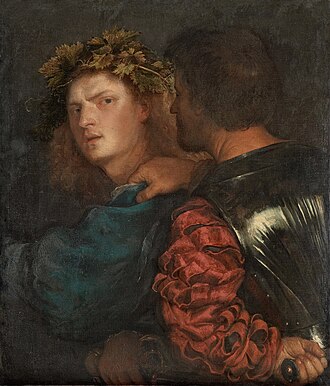 Le Bravo - Titian
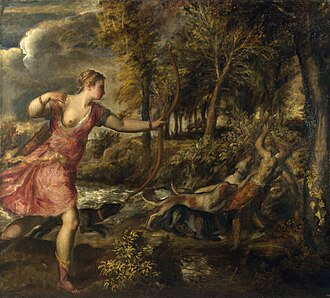 La Mort d'Actéon - Titian
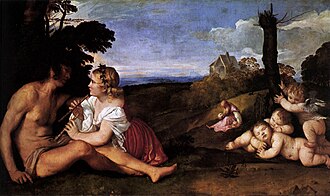 Les Trois Âges de l'Homme - Titian (1510s)
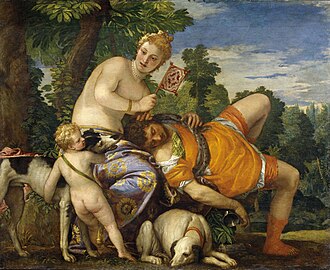 Vénus et Adonis - Paolo Veronese (1580)
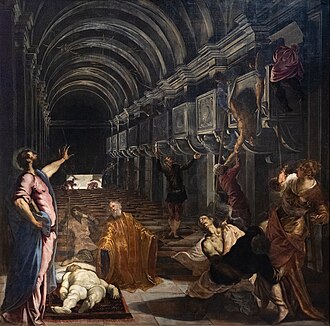 La Découverte du corps de saint Marc - Jacopo Tintoretto (1562)
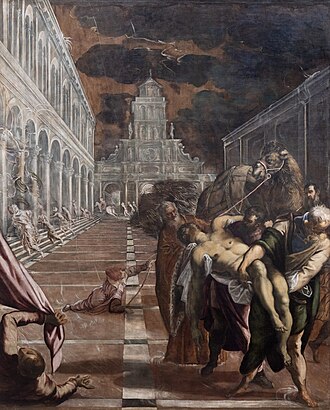 Le corps de saint Marc ramené à Venise - Jacopo Tintoretto (1560s)
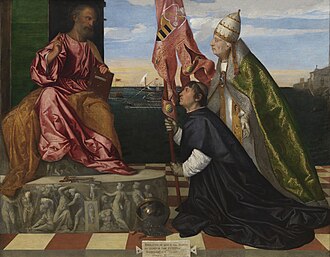 Jacopo Pesaro présentant le pape Alexandre VI à saint Pierre - Titian (1500s)
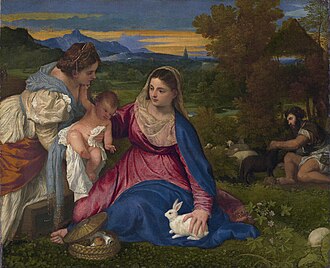 La Vierge au lapin - Titian (1530)
Envie d'en savoir plus sur École vénitienne ?
The Venetian school is the painting of Renaissance Venice, a rich sea city where artists put colour before line. From Giovanni Bellini to Titian and Tintoretto, its painters filled canvases with glowing light, warm reds and golds, and soft landscapes that changed Western painting.
What is the Venetian school, in simple words?
It is the tradition of painting in Venice that became a major force in Italian Renaissance art and beyond. It began with Giovanni Bellini, his brother Gentile and their workshops, and its great names include Giorgione, Titian, Tintoretto, Paolo Veronese and Jacopo Bassano. Venetian painters are said to give primacy to colour over line, which set them apart from the Mannerism found in the rest of Italy.
When did it flourish?
The main phases fit neatly into centuries. The 16th century was the age of glory, the 17th a great fall-off, and the 18th an unexpected revival, when Venetian painters enjoyed success around Europe as Baroque turned into Rococo. The tradition ended completely with the extinction of the Republic of Venice in 1797. Since then Venice has been painted by many others but has had no continuing style of its own.
Why was colour so important to the Venetians?
From Giovanni Bellini on, Venetian painters used glowing colours to build form and suggest an atmospheric haze, rather than relying on crisp outlines. Titian made colour a tool of composition: in his Pesaro Madonna a large red flag on the left balances the red of the Madonna, tying the picture together. Such skilful, sumptuous use of colour became a hallmark of the Venetian style.
Why did they paint on canvas?
Venetian painters were among the first Italians to use oil paint and to paint on canvas instead of wooden panels. As a maritime power, Venice always had good canvas, and it was starting to run short of timber. Many Venetian altarpieces were very large, and big panels were expensive and hard to build. Canvas also made paintings easy to transport, which helped Titian's fame spread abroad.
Who created the Venetian style?
Giovanni Bellini is credited with creating it during his long career. His early works followed the linear approach of Andrea Mantegna, but he later developed a softer manner in which colour models form. Outside influences helped too: Antonello da Messina brought the oil technique of Early Netherlandish painting, and a visit by Leonardo da Vinci strongly influenced Giorgione. Both Giorgione and Titian trained in Bellini's workshop.
Why is Titian so important?
Through a long and productive life, Titian became the most influential and greatest of the Venetian painters. He gave a traditional subject a bold new layout in the Pesaro Madonna, setting the Madonna off centre on a steep diagonal. He is credited with making the reclining female nude an important subgenre, as in the Venus of Urbino (1538), and he worked for Emperor Charles V and Philip II of Spain.
What role did landscape play?
Giorgione specialised in idyllic, Arcadian scenes, such as his Three Philosophers. Bellini then gave more space to landscape in his many Madonnas, and Titian took up the idea in works like Pastoral Concert and Sacred and Profane Love. This emphasis on nature as a setting for figures is counted as a major contribution of the Venetian school to Western painting.
Is Tintoretto Venetian or Mannerist?
Both. Tintoretto is sometimes classed as a Mannerist, and his Miracle of the Slave (1548) has Mannerist traits: a crowded scene, twisting linked figures and dramatic gestures. But its warm reds, golds and greens are Venetian, and the figures stand in real three-dimensional space rather than a compressed one. With its theatrical, stage-like display, his painting is also seen as a forerunner of the Baroque.
What happened in the 17th and 18th centuries?
The 17th century was a low point: many painters simply repeated the styles of the previous century, and the strongest artists in the city were immigrants. Around 1700 things changed. Sebastiano Ricci, drawing on Veronese, developed a light, airy style, and for much of the 18th century Venetian painters such as the Tiepolos and Canaletto were in great demand across Europe, often working abroad.
Which works should I see first?
Good starting points on this site are Titian's Pesaro Madonna, Venus of Urbino, Sacred and Profane Love, Bacchus and Ariadne and Assumption of the Virgin, which show his colour and bold compositions. Then compare Tintoretto's Miracle of the Slave and his Last Supper, where Venetian colour meets drama and movement. Seen side by side, they show how the school moved from calm harmony toward theatre.