Portrait of Isabella d'Este
Titien · 1530s
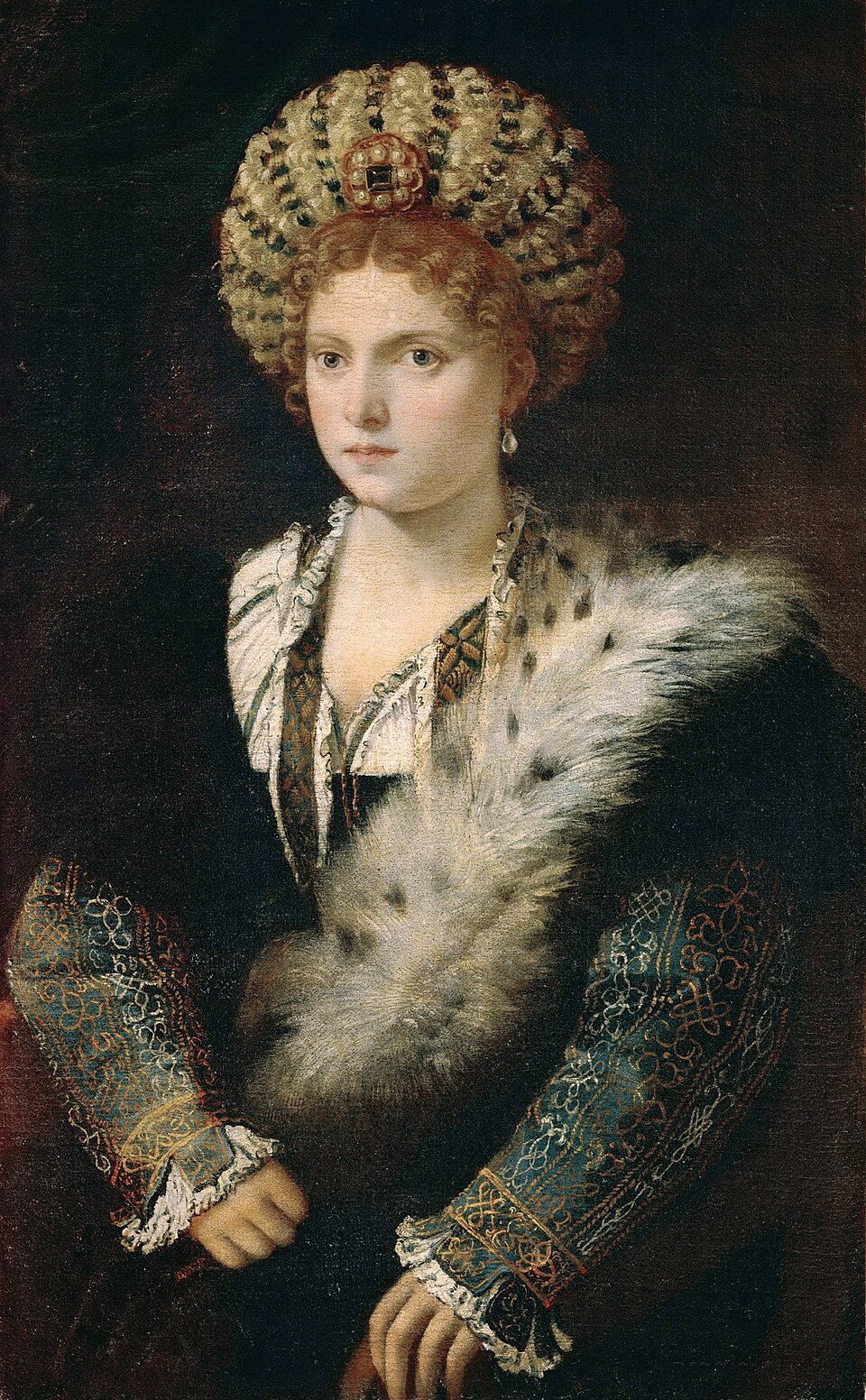
A young woman in black and fur stares out with grey-blue eyes and a stiff, commanding posture. She is usually called Isabella d'Este, but the woman Titian painted in the 1530s may not be her at all, and that mystery is part of the picture's pull.
The story behind the painting
Isabella d'Este, Marquess of Mantua, was one of the most important cultural and political women of the Italian Renaissance, a collector and patron. Letters record that in 1534 Titian was asked to paint her, then about sixty, from a lost 1511 portrait by Francesco Francia, which had itself been made without her present. Isabella said of the result in 1536 that she doubted she had ever, at the age shown, been so beautiful. Titian's earlier portrait of her in red, known today only from a Rubens copy, had probably not pleased her.
What to look for
She sits in a chair with an armrest against a dark background, in three-quarter view, looking slightly to the left. Notice the light blond curls, the rare light grey eyes, the flat eyebrows and the snub nose, features that did not match the ideal beauty of the time. She wears a balzo headdress, green patterned sleeves, a gold shirt, a fur that is probably lynx and a large pearl earring. Her soft face contrasts with a stiff, upright body that gives her an imperious air. The canvas was trimmed at left and right.
Meaning and intent
The painting stresses high rank, a forceful personality, intelligence and youth. Yet the identification is disputed. In the 1659 inventory of Archduke Leopold Wilhelm the picture is listed as Catherine Cornaro, Queen of Cyprus. The name Isabella comes from an inscription on a later engraving, written in Amsterdam generations afterwards. In the 1930s Wilhelm Suida and Leandro Ozzola rejected the name. Critics note the lack of likeness and of idealised beauty, and point to Margherita Paleologa, who also commissioned Titian in 1531, as matching features.
Legacy
Only the artist and the date are accepted by experts. Even so, a 1994 exhibition in Vienna presented it as clearly showing Isabella, while a review asked why Titian would use so coarse a canvas for such a face-lift. The work probably came from the Gonzaga collection in Mantua to Archduke Leopold Wilhelm, and it is now in the Kunsthistorisches Museum in Vienna. It is still widely shown as the most famous portrait of Isabella d'Este, perhaps because it is an original Titian, whatever the truth about the sitter.
Le saviez-vous ?
- Dated to the mid-1530s and held in Vienna.
- Listed in 1659 as Catherine Cornaro, Queen of Cyprus.
- The identification as Isabella d'Este is disputed.
- She wears a balzo, the headdress Isabella made fashionable.
À propos de l'artiste
Titien (1488-1576)
portrait · École vénitienne · musée d'Histoire de l'art de Vienne · Painting collection of Archduke Leopold Wilhelm of Austria · Isabelle d'Este
Autres œuvres de Titien
.jpg) Vénus d'Urbin - Titian (1538)
Vénus d'Urbin - Titian (1538)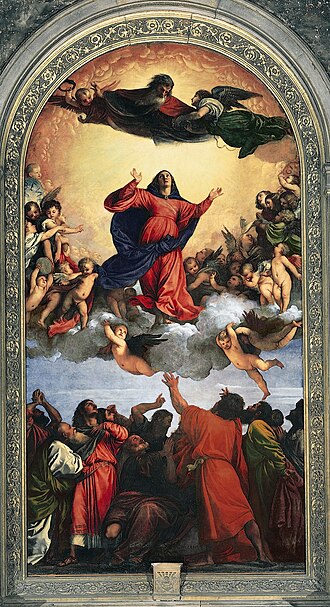 L'Assomption de la Vierge - Titian (1510s)
FXD.jpg) Amour sacré et Amour profane - Titian (1510s)
Amour sacré et Amour profane - Titian (1510s)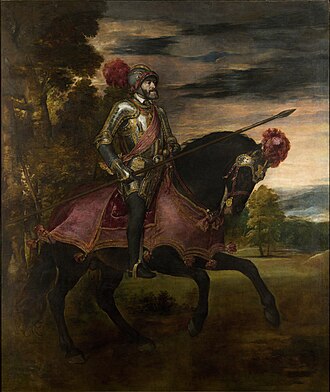 Charles Quint à cheval à Mühlberg - Titian (1548)
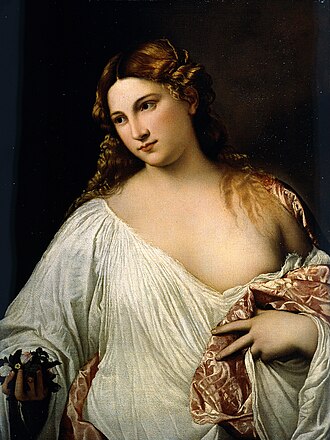 Flore - Titian (1517)
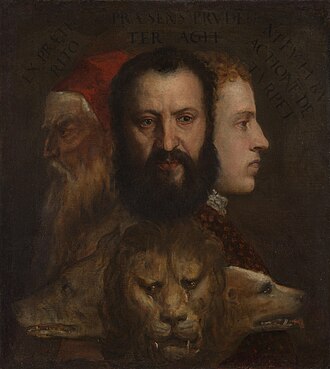 Allégorie du Temps gouverné par la Prudence - Titian (1550)
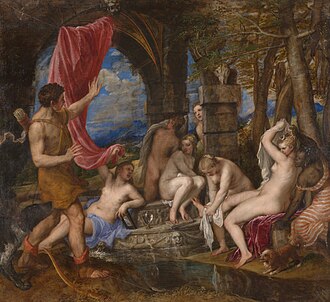 Diane et Actéon - Titian (1550s)
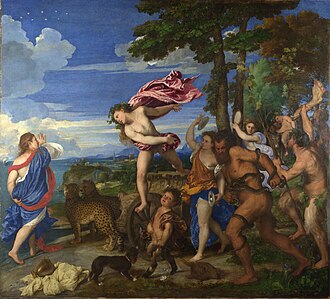 Bacchus et Ariane - Titian (1520s)
Œuvres d'artistes liés
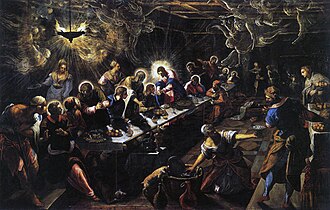 La Cène - Jacopo Tintoretto (1563)
 Miracle de l'esclave - Jacopo Tintoretto (1540s)