Saint Jean-Baptiste au désert
Titien · 1540s
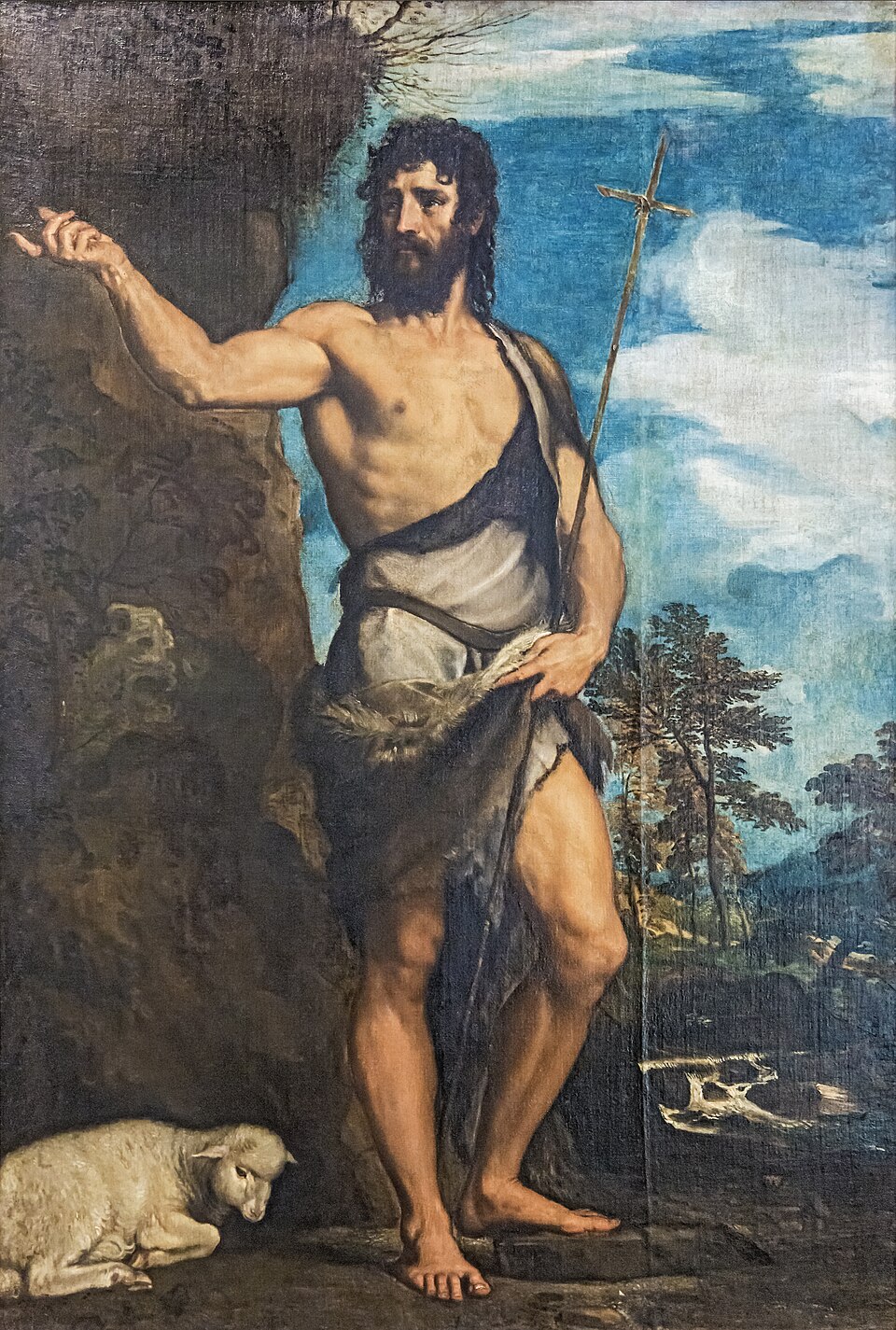
A half-naked hermit stands like a statue against a wild landscape, one arm raised, a lamb at his feet. Titian painted this Saint John the Baptist for a Venetian altar, and for centuries it pointed toward something the viewer could no longer see.
The story behind the painting
The painting once adorned the altar of San Giovanni in the church of Santa Maria Maggiore in Venice, a church that no longer exists. In 1807 it was removed and transferred to the Gallerie dell'Accademia, where it still hangs. No document records when Titian made it. Scholars place it between the 1530s, on grounds of style, and 1557, when Ludovico Dolce described it. Giorgio Vasari also mentioned it in 1568, writing that Titian painted Saint John the Baptist in the desert among certain rocks for Santa Maria Maggiore. A date around 1540 is considered plausible, and Wikidata gives the 1540s.
What to look for
The Baptist stands at the centre, statuesque, raising his arm in his typical gesture. He wears his hermit's animal skin, holds a staff of reeds tied into a cross, and is accompanied by the lamb. On the left a dark cliff cuts vertically through the canvas and throws his figure forward. On the right the view opens toward a waterfall, leafy trees, mountains and heavy clouds, and the stream recalls the river Jordan where Jesus was baptised. Titian set the horizon very low so the saint towers over everything. Notice the muscular torso, the contracted arm and the powerful legs, and the dense, vibrant colour, brightened by a restoration in 1981.
Meaning and intent
The raised arm is the gesture of John pointing to Jesus. In the church, it pointed to the Sacrament on the central altar, so the painting was part of a larger act of devotion. The heroic body comes from a reinterpretation of classical art and a long-distance dialogue with Michelangelo and his followers, who shaped Italian art in those years. Titian was seeking a synthesis between the Tuscan tradition of drawing and sculptural form and the Venetian tradition of rich colour. In this single figure, the two traditions meet: Florentine muscle wrapped in Venetian light.
Legacy
The very qualities that Vasari and Dolce admired have divided later critics. Roberto Longhi in 1946 criticised a certain academicism in the figure, and Rodolfo Pallucchini spoke of stagnation in that muscular and evidently posed image. Yet the painting remains a clear record of a moment when Titian was most intensely engaged with the Tuscan-Roman manner. It has outlived the church it was made for, and the 1981 restoration brought back the brilliance of its tones, so visitors to the Accademia can still see the colour that made it famous.
Le saviez-vous ?
- Painted for Santa Maria Maggiore in Venice, a church that no longer exists.
- Moved to the Gallerie dell'Accademia in 1807.
- Described by Ludovico Dolce in 1557 and by Vasari in 1568.
- Restored in 1981.
À propos de l'artiste
Titien (1488-1576)
art religieux · École vénitienne · paysage · Jean le Baptiste · Galeries de l'Académie · fleuve ou rivière · agneau
Autres œuvres de Titien
.jpg) Vénus d'Urbin - Titian (1538)
Vénus d'Urbin - Titian (1538)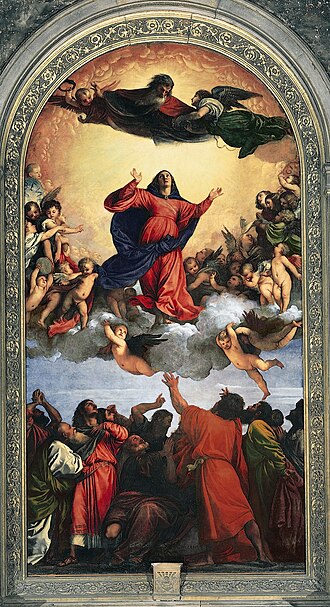 L'Assomption de la Vierge - Titian (1510s)
FXD.jpg) Amour sacré et Amour profane - Titian (1510s)
Amour sacré et Amour profane - Titian (1510s)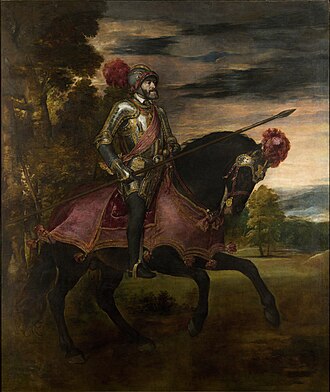 Charles Quint à cheval à Mühlberg - Titian (1548)
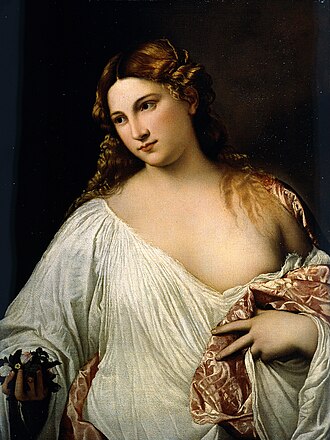 Flore - Titian (1517)
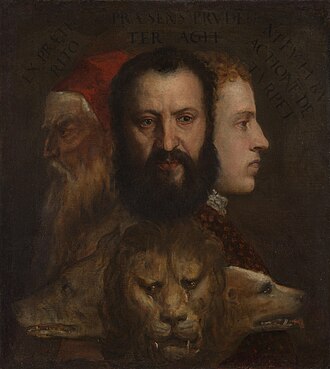 Allégorie du Temps gouverné par la Prudence - Titian (1550)
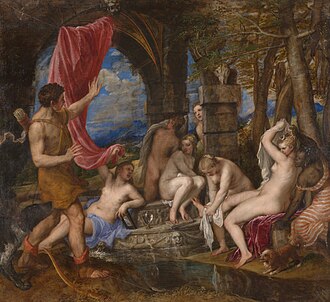 Diane et Actéon - Titian (1550s)
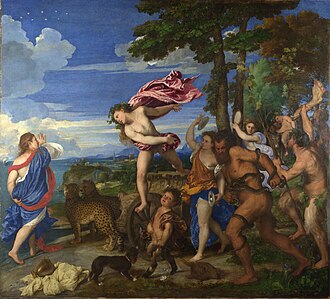 Bacchus et Ariane - Titian (1520s)
Œuvres d'artistes liés
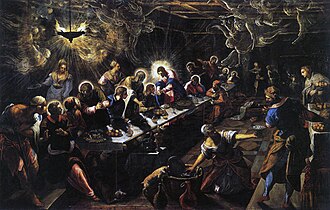 La Cène - Jacopo Tintoretto (1563)
 Miracle de l'esclave - Jacopo Tintoretto (1540s)