El jardín de las delicias
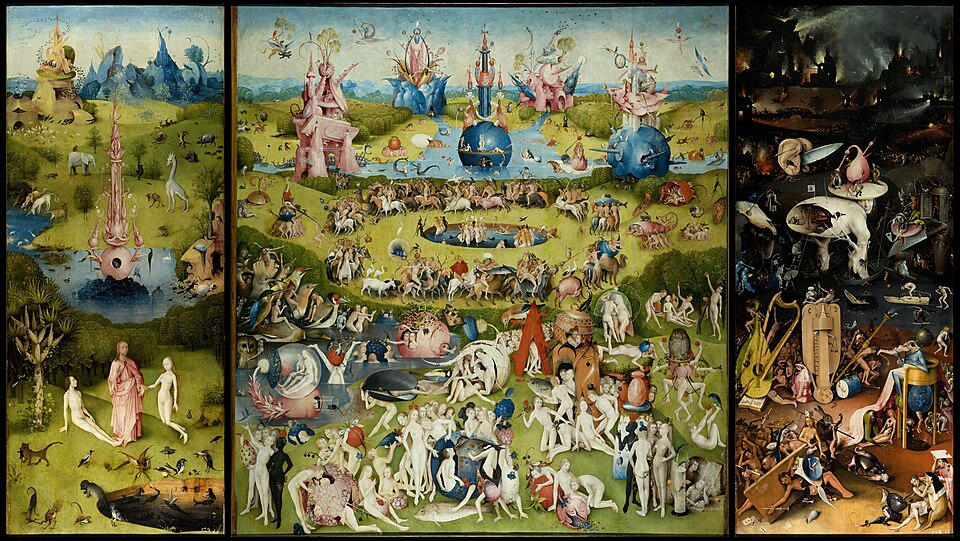
Close the wings and you see a grey, silent world on the third day of Creation. Open them and Bosch's Garden of Earthly Delights bursts into colour, from Eden to a crowd of pleasure-seekers to Hell.
The story behind the painting
The Garden of Earthly Delights is the modern title of a triptych by Hieronymus Bosch, painted between 1490 and 1510, when he was between 40 and 60 years old; Wikidata records no single date. In Dutch it is De tuin der lusten, the garden of lusts. It has five painted surfaces: three oil panels when open, and two oak panels when closed. It is one of three large triptychs by Bosch, with The Last Judgment and The Haywain, meant to be read from left to right. Whether it was intended as an altarpiece is not known, but the general view is that the extreme subject matter makes a church or monastery unlikely. It has been in the Museo del Prado since 1939.
What to look for
Start with the closed wings, painted in green-grey grisaille. A globe hangs in darkness, the earth clothed in early greenery, with no people or animals yet: the third day of Creation. God is a tiny figure at upper left, a Bible on his lap, above a line from Psalm 33. Now open them. The left panel shows God, young-looking with golden curls, holding Eve by the wrist and presenting her to the waking Adam. Behind Eve rabbits play; a dragon tree stands opposite. Look for exotic animals, a giraffe, a monkey riding an elephant, a lion with its prey, and odd creatures emerging from a pool, including a duck-billed figure reading a book. At 205.5 by 384.9 cm, there is much to discover.
Meaning and intent
Because of Bosch's beliefs, interpretations usually assume the work warns against the perils of temptation, yet twentieth-century historians are divided over whether the central panel is a moral warning or a panorama of paradise lost. The panels are read in sequence: Eden, the garden of earthly delights, and Hell. Unlike Bosch's other two triptychs, God is absent from the centre, where naked men and women pursue pleasure with apparent free will; the right panel is often read as a hellscape of punishment. Charles de Tolnay saw God's influence already waning in Adam's gaze, while Hans Belting suggested that, before the Fall, humanity knew no boundary between good and evil.
Legacy
The intricacy of its symbolism, especially in the central panel, has produced a wide range of scholarly interpretations over the centuries, which is itself part of the painting's legacy. Its most controversial interpreter, the folklorist and historian Wilhelm Fraenger, saw a closed circuit of divine energy linking God, Adam and Eve. Belting noted that many animals come from travel literature, appealing to a learned, aristocratic audience; the elephant and giraffe were long linked to Erhard Reuwich's prints of 1486, though newer research points to the travelogues of Cyriac of Ancona. Today it draws viewers in Madrid who come to decode it detail by detail.
¿Sabías que…?
- Painted between 1490 and 1510; in the Museo del Prado since 1939.
- The closed wings show the earth on the third day of Creation in green-grey grisaille.
- The Dutch title, De tuin der lusten, means the garden of lusts.
- It is one of three large triptychs by Bosch, with The Last Judgment and The Haywain.
Sobre el artista
Jerónimo Bosch (1450-1516)
arte religioso · Museo del Prado · ser humano
Más obras de Jerónimo Bosch
 La nave de los locos - Hieronymus Bosch (1500s)
 Mesa de los pecados capitales - Hieronymus Bosch (1500)
.jpg) El carro de heno - Hieronymus Bosch (1510s)
El carro de heno - Hieronymus Bosch (1510s) Cristo con la Cruz a cuestas - Hieronymus Bosch (1510s)
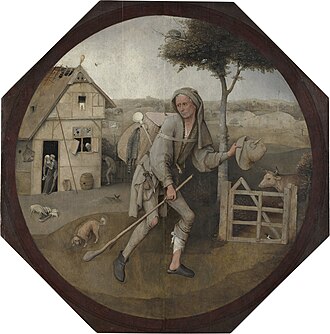 El vendedor ambulante - Hieronymus Bosch (1500)
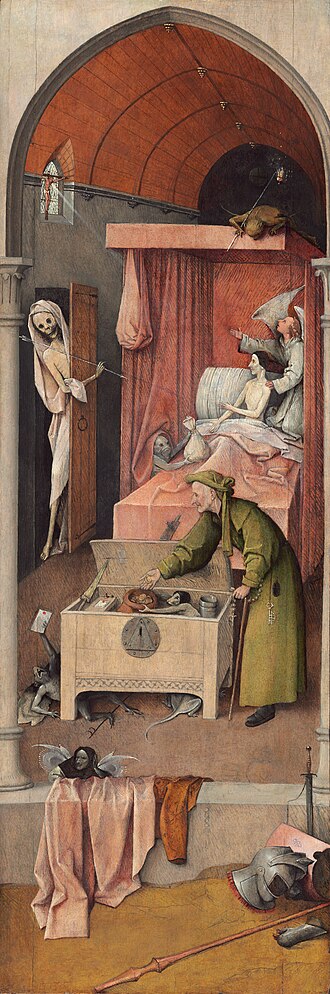 La muerte de un avaro - Hieronymus Bosch (1500s)
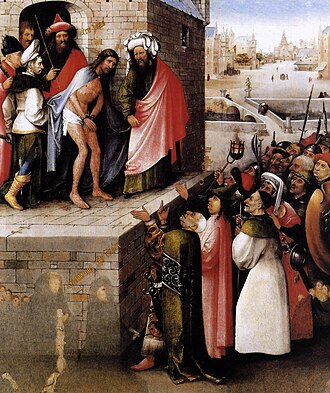 Ecce Homo - Hieronymus Bosch (1490s)
.jpg) Extracción de la piedra de la locura - Hieronymus Bosch (1500s)
Extracción de la piedra de la locura - Hieronymus Bosch (1500s)
Obras de artistas relacionados
 La Gioconda - Leonardo da Vinci (1503-1519)
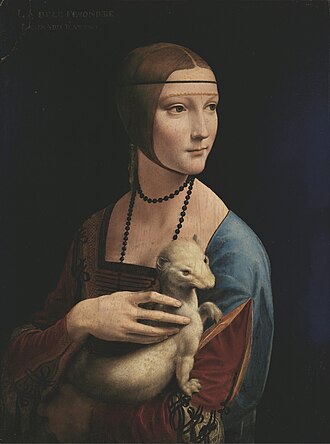 La dama del armiño - Leonardo da Vinci (1490)
.jpg) Venus de Urbino - Titian (1538)
Venus de Urbino - Titian (1538)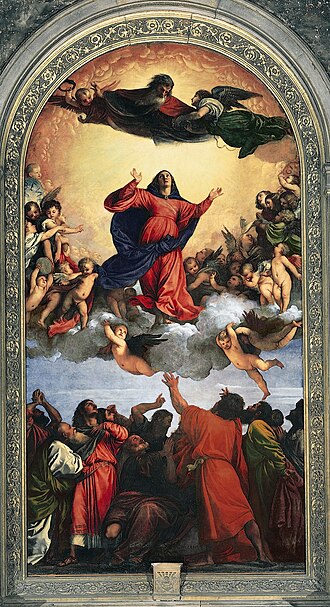 La Asunción de la Virgen - Titian (1510s)
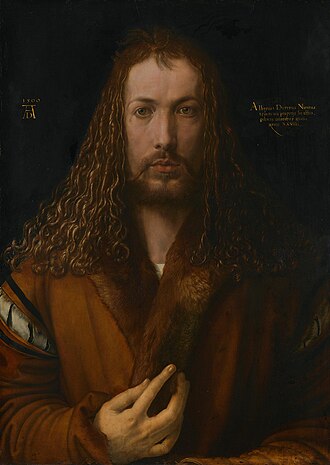 Autorretrato de Durero - Albrecht Dürer (1500)
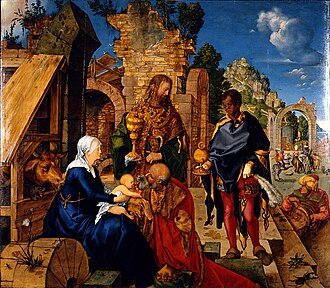 Adoración de los Magos - Albrecht Dürer (1504)
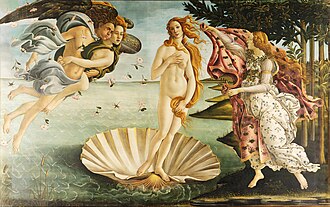 El nacimiento de Venus - Sandro Botticelli (c. 1485)
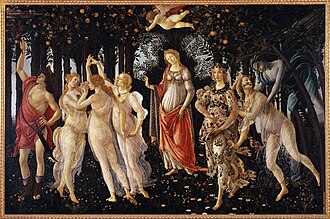 La primavera - Sandro Botticelli (1480s)
%20-%20Google%20Art%20Project.jpg) Cazadores en la nieve - Pieter Bruegel the Elder (1565)
Cazadores en la nieve - Pieter Bruegel the Elder (1565)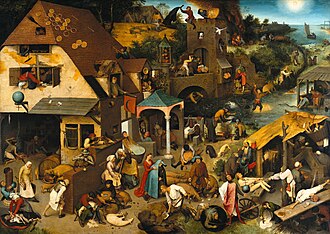 Los proverbios flamencos - Pieter Bruegel the Elder (1551)