Los proverbios flamencos
Pieter Bruegel the Elder · 1551
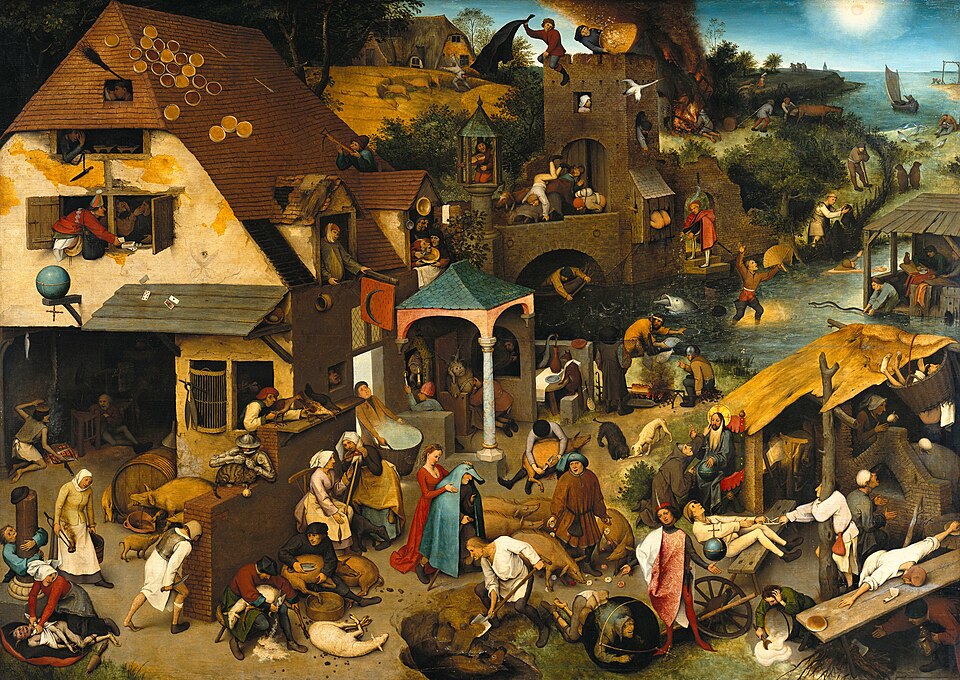
A man bangs his head against a wall, another is armed to the teeth, a wife hangs a blue cloak on her husband. Every figure in this crowded village is a saying come to life, and there are around 126 of them.
The story behind the painting
Pieter Bruegel the Elder painted Netherlandish Proverbs in oil on an oak panel, dated 1559. Proverbs were hugely popular in his time: a century earlier they had decorated Flemish books of hours, and the humanist Erasmus had gathered them in his Adagia. Bruegel had already explored the theme in prints and drawings such as Big Fish Eat Little Fish (1556) and Twelve Proverbs (1558), but this is thought to be his first large-scale painting on the subject. Around the same time, the Flemish artist Frans Hogenberg made an engraving of 43 proverbs with a strikingly similar composition, titled to say that what is often called The Blue Cloak would better be called The World's Follies. That idea, folly rather than mere wordplay, shaped Bruegel's picture.
What to look for
Step close and the scene becomes a game. Bruegel spreads a whole village across the panel, from houses and a riverbank to open fields, and fills it with people, animals and objects each acting out a saying literally. Critics have praised how ordered and integrated the composition is despite its crowd. Some sayings are still familiar today: look for someone swimming against the tide, someone banging his head against a brick wall, and someone armed to the teeth. The painting carries no inscriptions, so it invites us to guess, just as viewers did in Bruegel's day. Notice too the faces: many figures have the blank, empty features Bruegel used to show fools, a quiet visual signal of what he thought of their behaviour.
Meaning and intent
The work's original title, The Blue Cloak or The Folly of the World, reveals Bruegel's aim. He was not simply illustrating proverbs but cataloguing human folly. Absurdity, wickedness and foolishness are recurring themes in his art, and here they meet in one teeming scene. By showing sayings acted out literally in a peasant setting, he and Hogenberg both presented a world turned upside down, which is why the painting is also known as The Topsy Turvy World. There are about 126 identifiable proverbs and idioms, though there may be more that we can no longer recognise because the language has changed. Each one is a small moral lesson, delivered with wit rather than a sermon.
Legacy
The original hangs in the Gemäldegalerie in Berlin. Its success is visible in its copies: Bruegel's son, Pieter Brueghel the Younger, who specialised in reproducing his father's work, painted at least 16 versions, and they differ in which proverbs appear and in other small details. X-rays of the underdrawing suggest these versions share a life-size cartoon with the Berlin panel, and scholars regard the composition as the elder Bruegel's invention, with the Berlin painting considered the best of the series. Later printmakers kept the Blue Cloak idea alive, including the Doetecum brothers in 1577. Nearly five centuries on, the painting still works as Bruegel intended: a mirror in which every viewer can find someone familiar, perhaps even themselves.
¿Sabías que…?
- About 126 proverbs and idioms have been identified in the scene.
- Pieter Brueghel the Younger painted at least 16 copies.
- It is also called The Blue Cloak and The Topsy Turvy World.
- It is painted on an oak panel.
Sobre el artista
Pieter Bruegel the Elder (1525-1569)
escena de género · Gemäldegalerie de Berlín · cesta
Más obras de Pieter Bruegel the Elder
%20-%20Google%20Art%20Project.jpg) Cazadores en la nieve - Pieter Bruegel the Elder (1565)
Cazadores en la nieve - Pieter Bruegel the Elder (1565) El triunfo de la muerte - Pieter Bruegel the Elder (1560s)
%20-%20Blind%20leading%20the%20blind%20Google%20Art%20Project.jpeg) La parábola de los ciegos - Pieter Bruegel the Elder (1568)
La parábola de los ciegos - Pieter Bruegel the Elder (1568) La boda campesina - Pieter Bruegel the Elder (1560s)
 La urraca sobre el cadalso - Pieter Bruegel the Elder (1568)
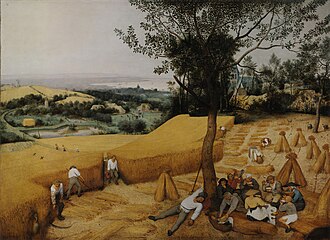 La cosecha - Pieter Bruegel the Elder (1565)
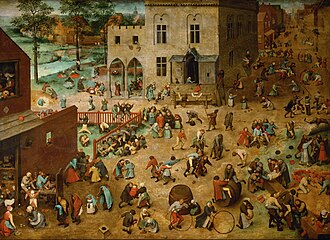 Juego de niños - Pieter Bruegel the Elder (1560)
%20-%20Christ%20and%20the%20woman%20taken%20in%20adultery.jpg) Cristo y la adúltera - Pieter Bruegel the Elder (1565)
Cristo y la adúltera - Pieter Bruegel the Elder (1565)
Obras de artistas relacionados
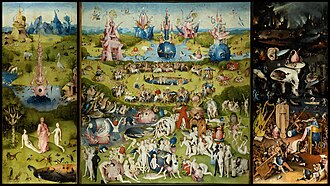 El jardín de las delicias - Hieronymus Bosch
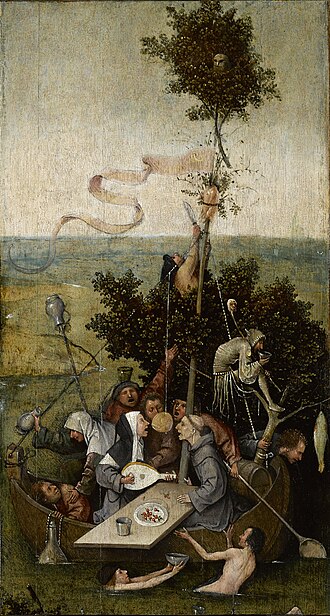 La nave de los locos - Hieronymus Bosch (1500s)