El Greco
1541-1614
El Greco, the Cretan icon painter who crossed Venice and Rome to settle in Toledo, stretched his figures toward heaven and lit them with colours no one had seen before. His contemporaries were puzzled; three centuries later he was hailed as a forerunner of modern art.
Origins
Doménikos Theotokópoulos was born on 1 October 1541 on Crete, then part of the Republic of Venice. The source says he was born either in the village of Fodele or in Candia, today's Heraklion, so his exact birthplace is uncertain. His family was prosperous and urban; his father Geórgios was a merchant and tax collector, and his older brother Manoússos, also a merchant, spent his last years in the painter's home in Toledo. He trained as an icon painter in the Cretan school, a leading centre of post-Byzantine art, in a city where some two hundred painters were active. In 1563, at twenty-two, a document already called him maestro, a master of the guild. Scholars disagree about his faith: most archival research points to a Greek Orthodox family, while some Catholic sources claim him from birth, and in his Spanish will he called himself a devout Catholic.
Life and turning points
Around 1567, at about twenty-six, he went to Venice, where his friend the miniaturist Giulio Clovio described him as a disciple of Titian and a rare talent in painting. In 1570 he moved to Rome and, on Clovio's recommendation, was received at the Palazzo Farnese among the city's intellectual elite. His outspoken views soon made enemies, and after a quarrel Cardinal Farnese obliged him to leave the palace; at the end of 1572 he opened his own workshop. In 1577 he went to Madrid and then Toledo, then the religious capital of Spain. He hoped to win the favour of Philip II, and received two royal commissions, but the king disliked them and gave him no more. So he stayed in Toledo, where in 1586 he received the commission for The Burial of the Count of Orgaz. The decade from 1597 to 1607 was one of intense activity. He died on 7 April 1614.
Style and technique
Unlike other Cretan painters in Venice, El Greco changed his style deeply and set out to invent new and unusual readings of traditional religious subjects. From Tintoretto he took agile, elongated figures; from Titian, a framework of colour; and from the Venetians, the habit of setting crowded compositions in landscapes alive with atmospheric light. Rome added the elements of Mannerism: violent perspective, figures twisting and turning, tempestuous gestures. In Toledo these strands joined his Byzantine roots in the manner he is known for, with tortuously elongated figures and often fantastic, phantasmagorical colour. Modern scholars describe him as so individual that he belongs to no conventional school. He usually signed his paintings with his full name in Greek letters, often adding the word for Cretan. Philip II's dislike of his royal works may have come from the inclusion of living persons, or from style seeming to outweigh content.
Stories and anecdotes
Clovio once visited El Greco in Rome on a summer's day and found him sitting in a darkened room, because he found darkness better for thinking than daylight, which disturbed his inner light. In Rome he dared to dismiss Michelangelo's Last Judgment and offered Pope Pius V to paint over the whole work in a stricter spirit. Asked later what he thought of Michelangelo, he replied that he was a good man, but he did not know how to paint. Yet Michelangelo's influence shows in his later Allegory of the Holy League, and in The Purification of the Temple he painted portraits of Michelangelo, Titian, Clovio and presumably Raphael, a gesture of both gratitude and rivalry. The architect Pirro Ligorio called him a foolish foreigner. At his death he left a working library of 130 volumes, including a Greek Bible and an annotated copy of Vasari.
Legacy
Mostly ignored or met with puzzlement in his own time, El Greco is now counted among the greatest painters in the history of art, praised for his originality, his power of expression and his inventive use of form and colour. He is regarded as a precursor of both Expressionism and Cubism. His work touched generations of later artists, including Goya, Velázquez, Delacroix, Manet, Dalí and Picasso, and his life and art inspired writers such as Rainer Maria Rilke and Nikos Kazantzakis. The Spanish preacher and poet Hortensio Félix Paravicino wrote that Crete gave him life and the painter's craft, and Toledo a better homeland, where through death he began to achieve eternal life. Today View of Toledo, Opening of the Fifth Seal and The Burial of the Count of Orgaz still draw viewers into a world where earth and spirit seem to flicker together.
Did you know?
- El Greco means The Greek; he signed his works with his full name in Greek letters.
- His birthplace is given as either the village of Fodele or Candia on Crete.
- The scholar Fulvio Orsini owned seven of his paintings.
- He left a library of 130 volumes, including an annotated copy of Vasari.
Mannerism · Cretan school · Byzantine art
Related artists
Paolo Veronese · Jacopo Tintoretto · Titian · Caravaggio · Hans Holbein the Younger
Paintings by El Greco
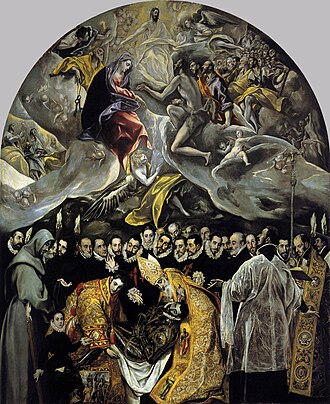 The Burial of the Count of Orgaz - El Greco (1586)
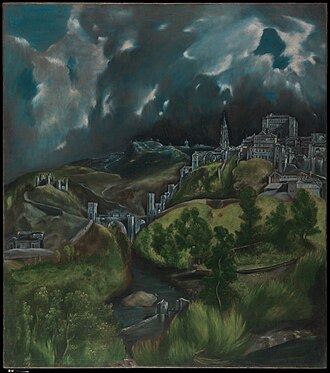 View of Toledo - El Greco (1596)
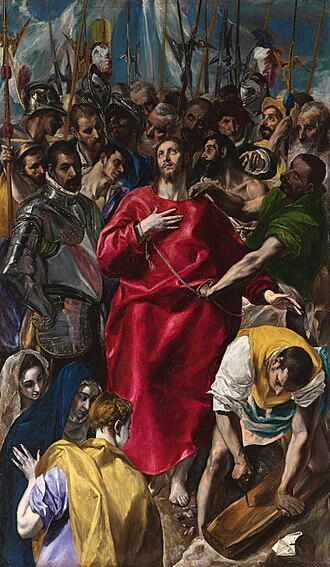 The Disrobing of Christ - El Greco (1570s)
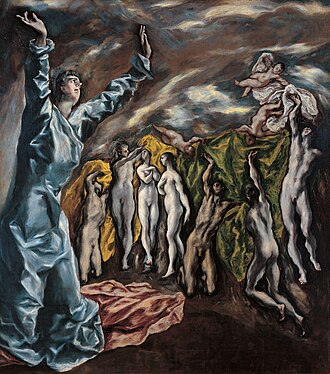 Opening of the Fifth Seal - El Greco (1610)
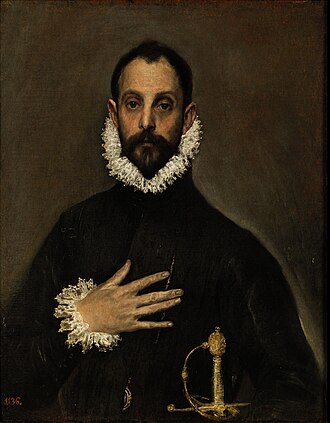 The Nobleman with his Hand on his Chest - El Greco (1580)
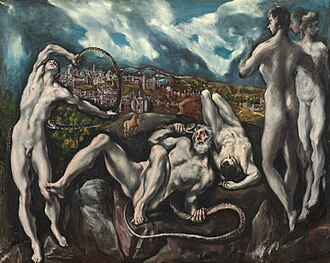 Laocoön - El Greco (1610s)
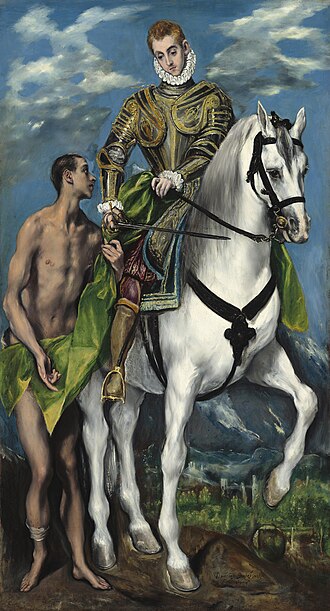 Saint Martin and the Beggar - El Greco (1597)
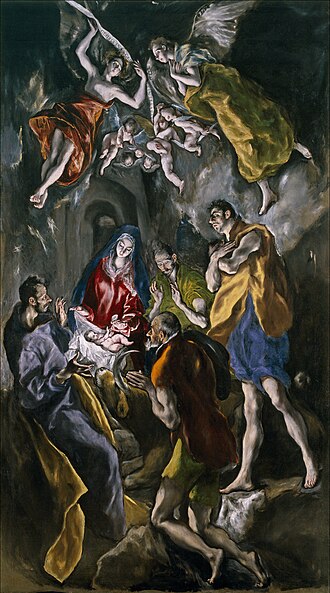 Adoration of the Shepherds - El Greco (1612)
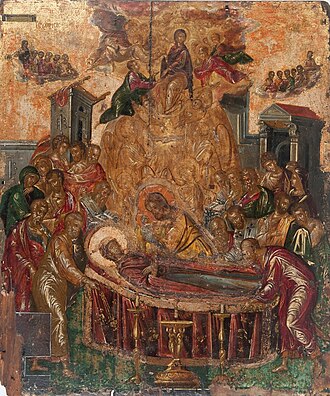 Dormition of the Virgin - El Greco (1565)
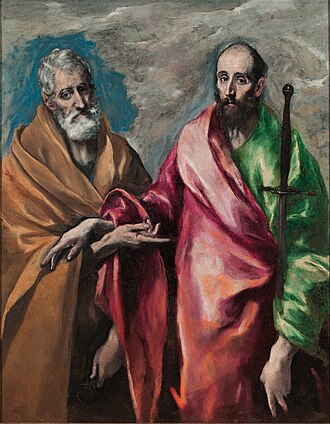 Saint Peter and Saint Paul - El Greco (1595)
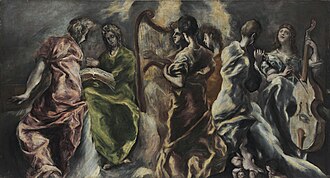 The Concert of the Angels - El Greco (1600s)
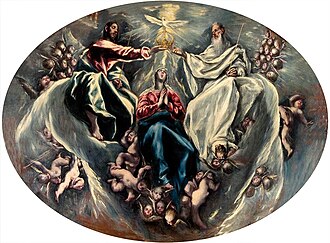 The Coronation of the Virgin - El Greco (1597)
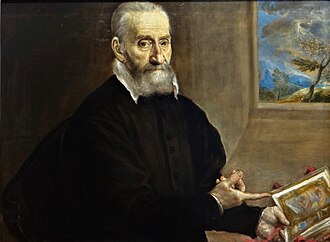 Portrait of Giulio Clovio - El Greco (1571)
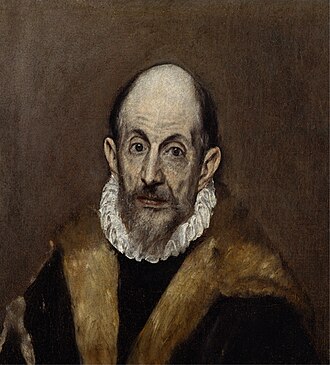 Self-Portrait - El Greco (1595)
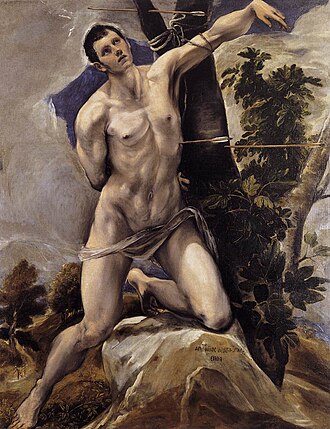 The Martyrdom of Saint Sebastian - El Greco (1577)
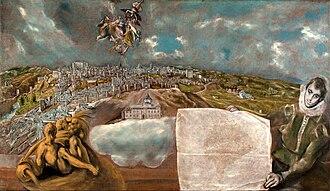 View and Plan of Toledo - El Greco (1610s)
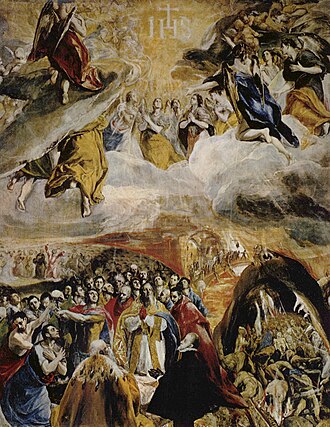 Adoration of the name of Jesus - El Greco (1577)
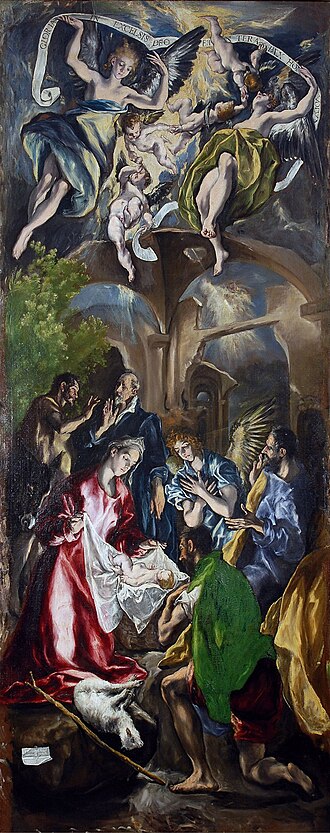 Adoration of the Shepherds - El Greco (1596)
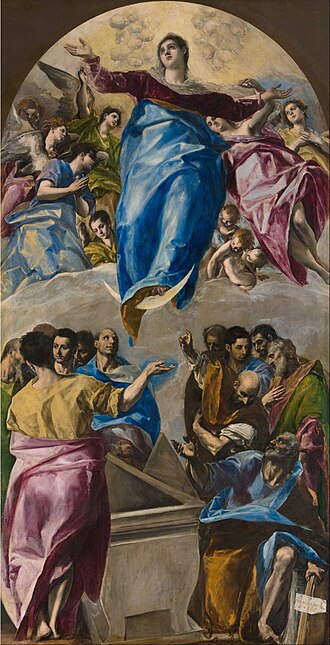 The Assumption of the Virgin - El Greco (1577)
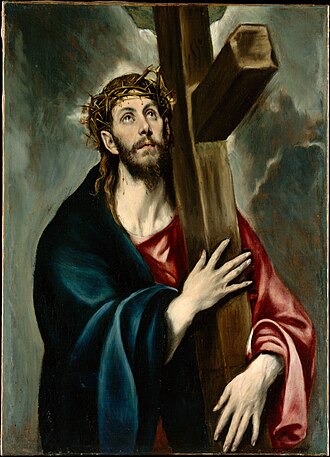 Christ Carrying the Cross - El Greco (1580)
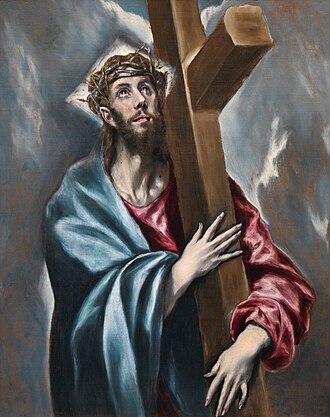 Christ Holding the Cross - El Greco (1602)
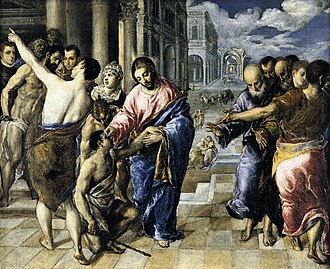 Healing of the Man Born Blind - El Greco (1570s)
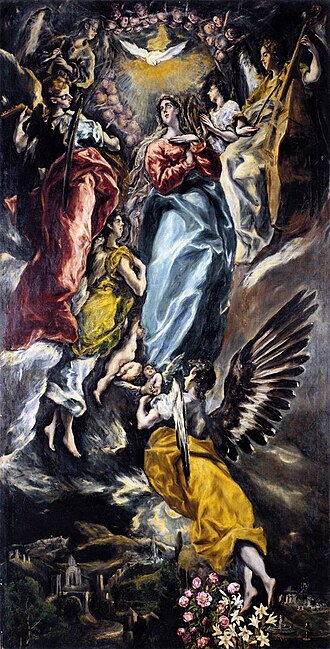 Immaculate Conception - El Greco (1608)
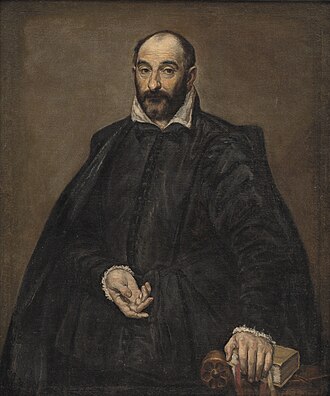 Portrait of a Man - El Greco (1570)
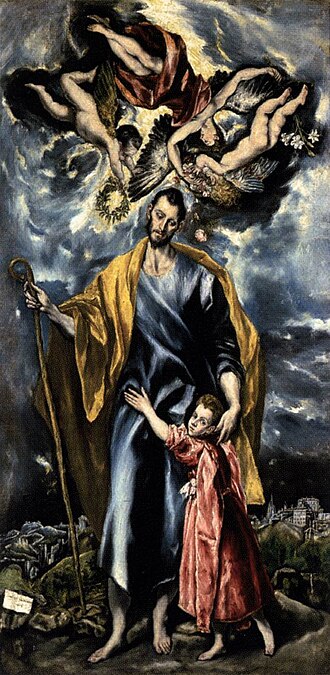 St Joseph and the Christ Child - El Greco (1600)
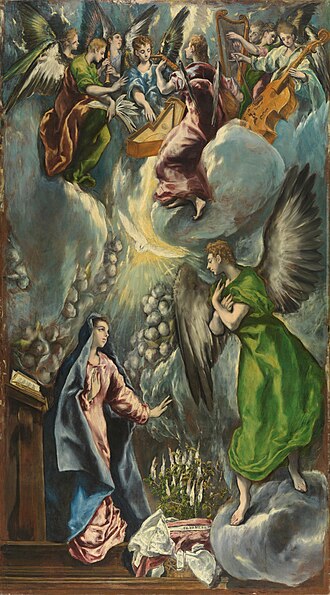 The Annunciation - El Greco (1590s)
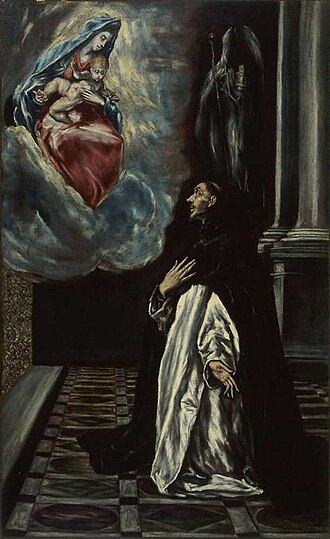 The Apparition of the Virgin to Saint Hyacinth - El Greco (1605)
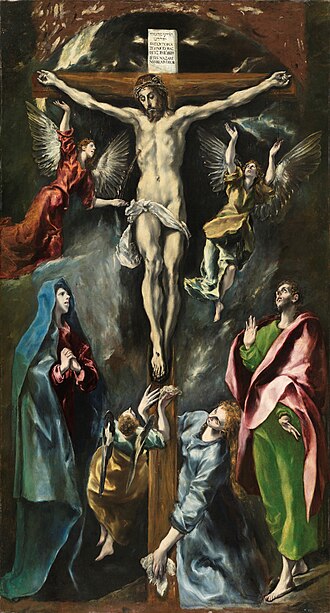 The Crucifixion - El Greco (1590s)
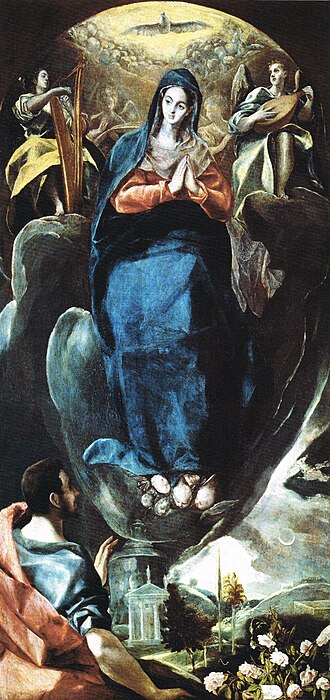 The Immaculate Conception with Saint John the Evangelist - El Greco (1580s)
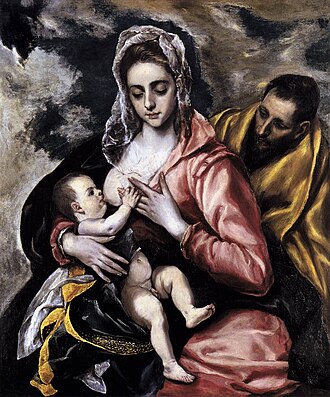 Holy Family - El Greco (1582)
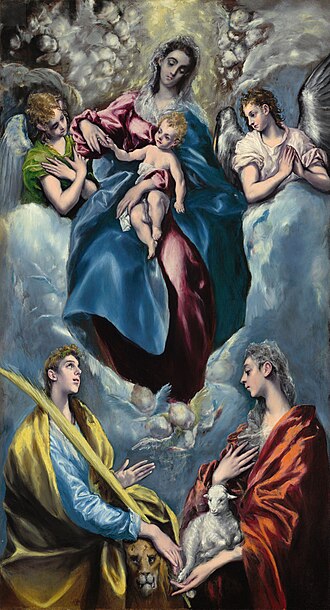 Madonna and Child with Saint Martina and Saint Agnes - El Greco (1590s)
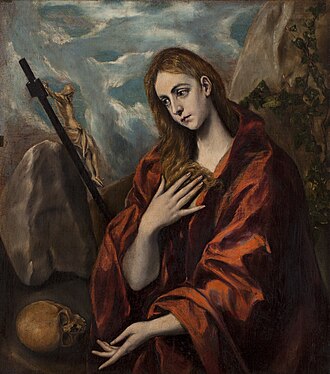 Pentitent Mary Magdalen - El Greco (1585)
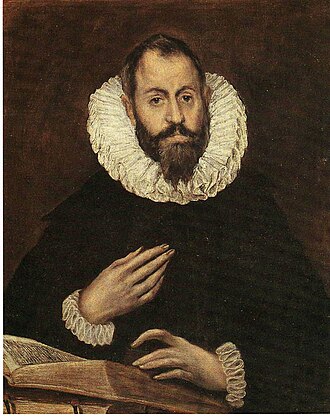 Portrait of a man, possibly Alonso de Herrera - El Greco (1600s)
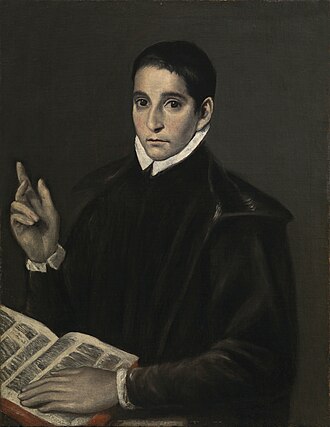 Portrait of Luís Gonzaga - El Greco (1583)
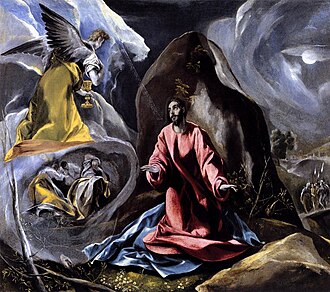 The Agony in the Garden - El Greco (1590)
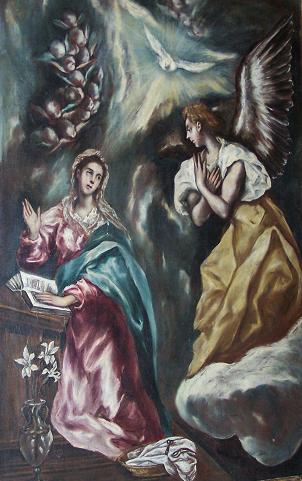 The Annunciation - El Greco (1610)
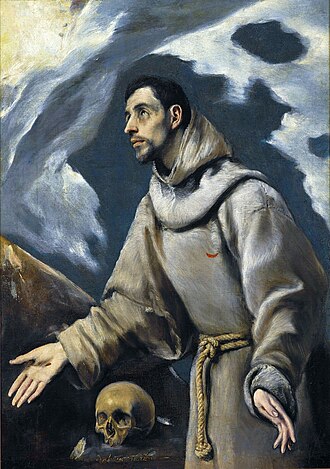 The Ecstasy of Saint Francis of Assisi - El Greco (1575)
The Holy Family with Mary Magdalen - El Greco (1590s)
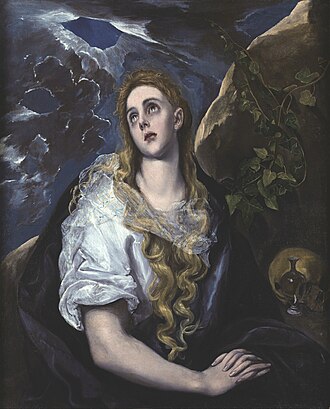 The Penitent Magdalene - El Greco (1580)
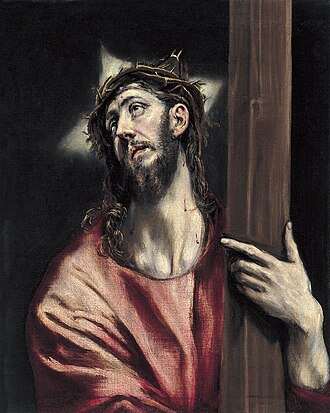 Christ with the Cross - El Greco (1590)
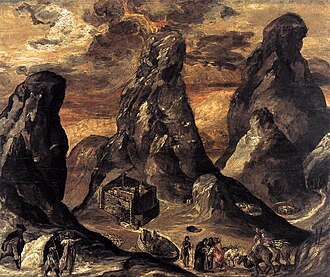 Mount Sinai - El Greco (1570s)
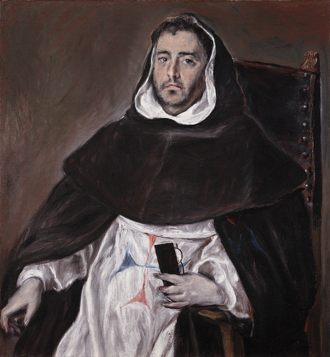 Portrait of a Trinitarian Friar - El Greco (1609)
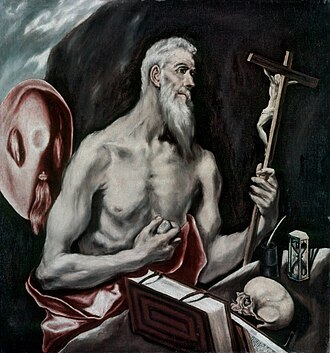 Saint Jerome in Penitence - El Greco (1590s)
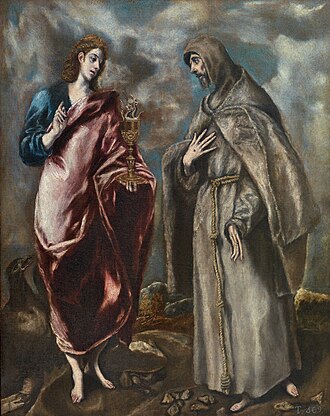 Saint John the Evangelist and Saint Francis of Assisi - El Greco (1597)
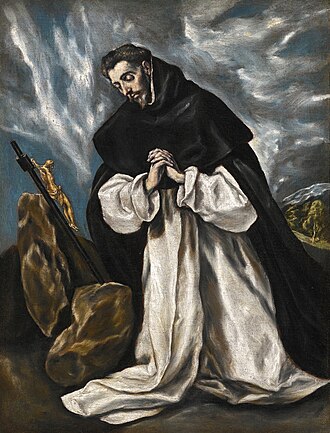 St Dominic in Prayer - El Greco (1600s)
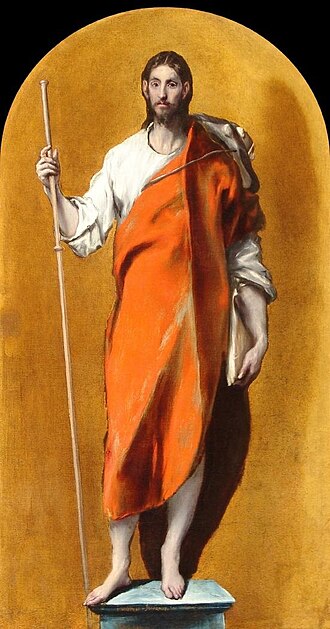 St James as a pilgrim - El Greco (1590s)
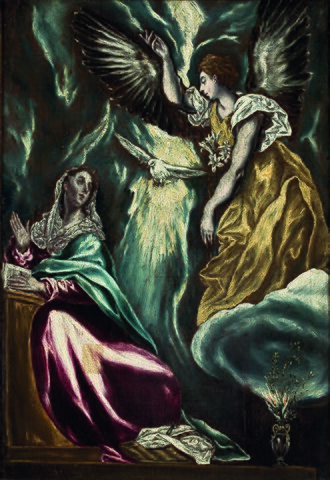 The Annunciation - El Greco (1600)
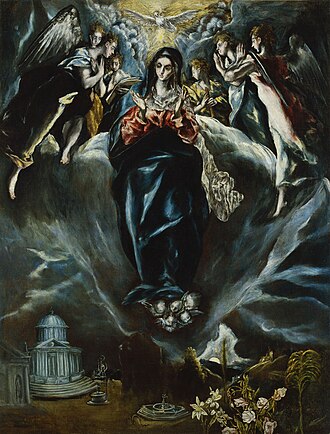 The Immaculate Conception - El Greco (1611)