Healing of the Man Born Blind
El Greco · 1570s
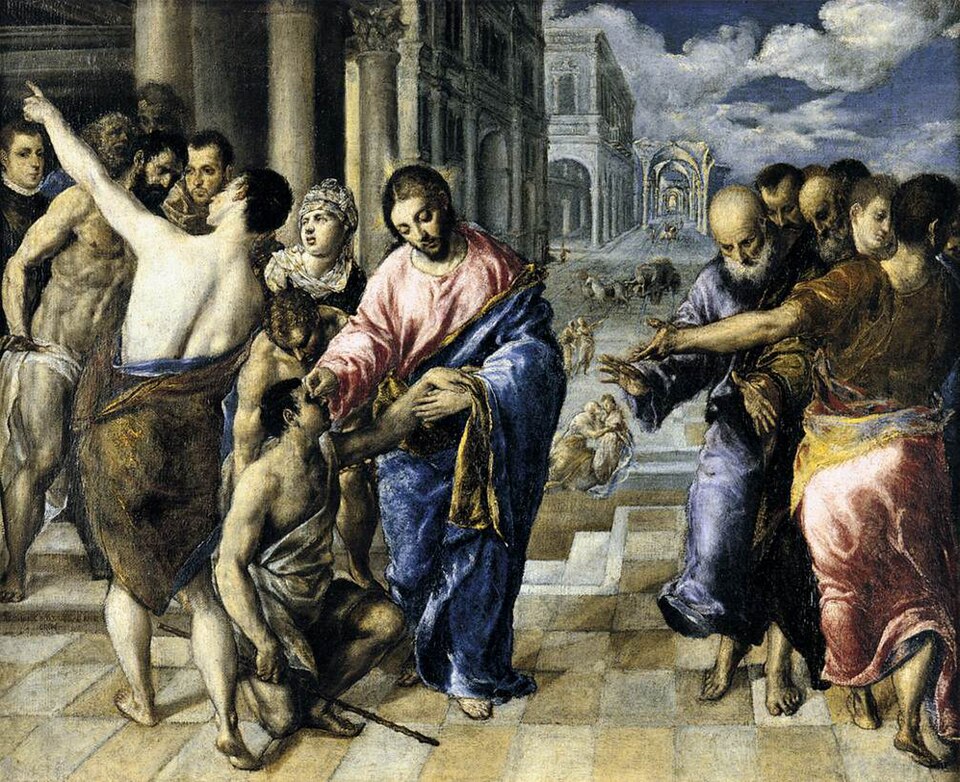
Christ restores sight to a man blind from birth, while members of the powerful Farnese family look on from the crowd. The young El Greco painted this signed canvas in Italy, years before Spain.
The story behind the painting
This Healing of the Man Born Blind dates from around 1573 and is signed at the bottom right. It shows El Greco returning to a subject he had first painted about five years earlier, in a picture now in Dresden. He had come from Rome to Venice in 1570, says the source, and was recommended to Cardinal Alessandro Farnese by the miniaturist Giulio Clovio, then in the family's service. The cardinal's librarian Fulvio Orsini admired him, and the painting was most probably commissioned directly by the cardinal.
What to look for
The scene is the gospel miracle of Christ healing a man blind from birth. What sets this version apart are the portraits in the background, which do not appear in El Greco's other two paintings of the subject, in Dresden and in New York. In the group on the left, one figure seems to be Alexander Farnese, Duke of Parma, and in the middle of the line stands Cardinal Ranuccio Farnese, painted after his death. The canvas is small, about 50 by 61 cm, so look closely at those faces.
Meaning and intent
Placing living and recently dead members of the patron's family inside a sacred story was a way to honour them, and it is one reason scholars think the picture was a direct commission. A miracle of sight becomes, in this telling, also a gathering of a great Roman house. Painting the same theme three times, in Venice, in Rome and later in Spain, El Greco kept returning to this moment of healing as he moved across Europe, each version tied to a different stage of his life.
Legacy
In the seventeenth century the picture was recorded in the Palazzo Farnese in Rome, as a seal on its back shows. In 1662 it was sent to Parma to hang in the Farnese palace known as the Palazzo del Giardino, at that time wrongly attributed to Tintoretto. In 1862 it moved to its present home, the Galleria nazionale di Parma. Its two sister paintings remain in Dresden's Gemäldegalerie, from El Greco's first stay in Venice, and in the Metropolitan Museum of Art in New York, from his arrival in Spain.
Did you know?
- Painted around 1573 and signed at bottom right.
- Includes portraits of members of the Farnese family.
- Once wrongly attributed to Tintoretto.
- In the Galleria nazionale di Parma since 1862.
About the artist
El Greco (1541-1614)
religious art · Mannerism · Galleria nazionale di Parma
More by El Greco
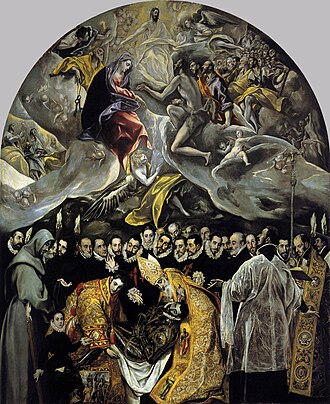 The Burial of the Count of Orgaz - El Greco (1586)
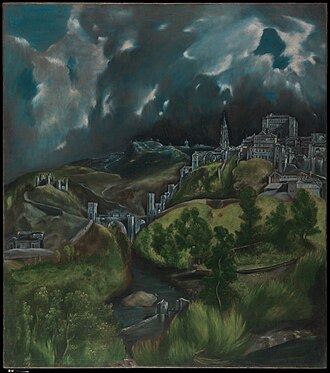 View of Toledo - El Greco (1596)
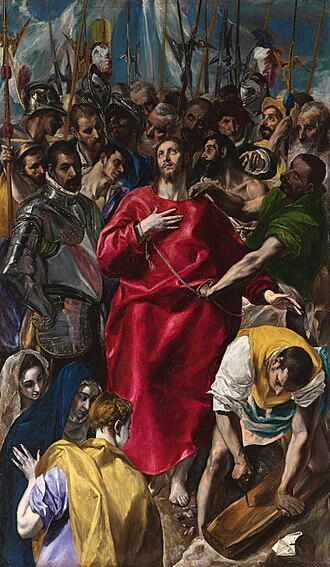 The Disrobing of Christ - El Greco (1570s)
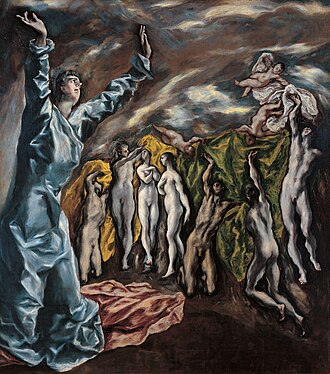 Opening of the Fifth Seal - El Greco (1610)
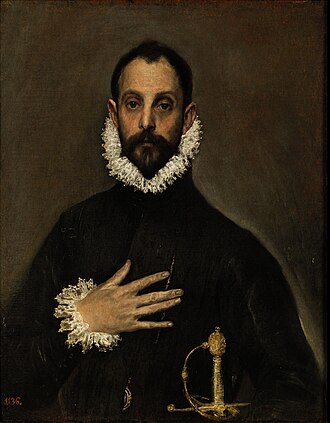 The Nobleman with his Hand on his Chest - El Greco (1580)
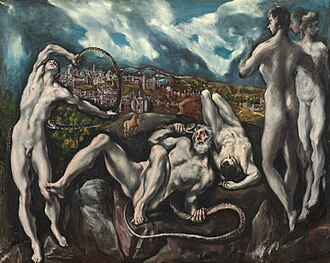 Laocoön - El Greco (1610s)
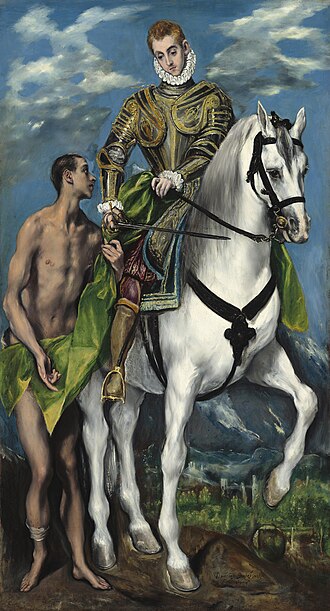 Saint Martin and the Beggar - El Greco (1597)
 Adoration of the Shepherds - El Greco (1612)
Paintings by related artists
 The Wedding at Cana - Paolo Veronese (1560s)
 The Feast in the House of Levi - Paolo Veronese (1573)
 Last Supper - Jacopo Tintoretto (1563)
 Miracle of the Slave - Jacopo Tintoretto (1540s)
 Venus of Urbino - Titian (1538)
 Assumption of the Virgin - Titian (1510s)
 Supper at Emmaus - Caravaggio (1601)
 The Calling of Saint Matthew - Caravaggio (1609)
 The Ambassadors - Hans Holbein the Younger (1533)
 The Body of the Dead Christ in the Tomb - Hans Holbein the Younger (1520s)