Adoration of the Shepherds
El Greco · 1596
.jpg)
An unusually tall canvas, more than three and a half metres high, where shepherds kneel on earth below and angels crowd the sky above. El Greco painted it for a Madrid college altar, and it is the one piece of that lost altarpiece that travelled all the way to Romania.
The story behind the painting
El Greco painted this Adoration of the Shepherds in 1596 as part of a commission now known as the Doña María de Aragón Altarpiece, made for the Colegio de Doña María de Aragón in Madrid, in a building that today houses the Palacio del Senado. Doña María de Aragón, a lady-in-waiting to Queen Ana de Austria, negotiated the work in 1596 but died before the final payment. El Greco had promised delivery by Easter 1599; the papers show it was shipped from Toledo to Madrid only in 1600, and payment for the high altar was made in September of that year.
What to look for
The canvas measures about 364 by 137 cm, a narrow, towering format shared by the other paintings of the group. Like El Greco's earlier designs of the same subject, it is split into two worlds: the earthly scene of the shepherds and the Christ Child in the lower half, and the heavenly world of angels in the upper half. Bodies are stretched and distorted, as in many of his altarpieces. Look at the paper in the lower left corner: El Greco signed it there, in Greek.
Meaning and intent
The original commission brought together six paintings and six sculptures that gave visual form to one idea, the Incarnation of the Son of God. That theme matched the title of the chapel and was the subject of many theological debates in Spain at the time. Because such altarpieces were sometimes hung at floor level and sometimes high above the viewer, it is not known whether El Greco planned the distortions for a particular viewing height. Today almost nothing is known about his design for the high altar or who commissioned the individual paintings.
Legacy
The altarpiece stayed intact until 1808 and was taken apart during the French occupation of Spain under Joseph Bonaparte; its sculptures are lost and five paintings went to the Prado. This one, perhaps the most popular subject, followed its own road. In 1836 Baron Taylor bought it for King Louis Philippe, then it passed to the brothers Émile and Isaac Péreire in Paris, to Félix Bamberg, consul of Messina, and in 1879 to the Royal Palace of Sinaia. It is now in the National Museum of Art of Romania, and a smaller copy from 1598 is in Rome's Galleria Nazionale d'Arte Antica.
Did you know?
- Painted in 1596 for the Doña María de Aragón Altarpiece in Madrid.
- About 364 x 137 cm, signed in Greek on a paper at lower left.
- Delivered in 1600, a year after the promised date.
- Now in the National Museum of Art of Romania, Bucharest.
About the artist
El Greco (1541-1614)
religious art · Christ Child · Mannerism · angel · lamb
More by El Greco
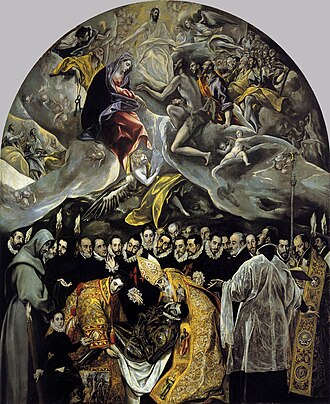 The Burial of the Count of Orgaz - El Greco (1586)
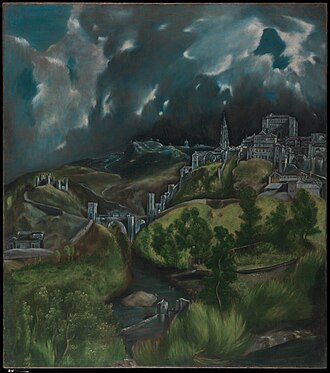 View of Toledo - El Greco (1596)
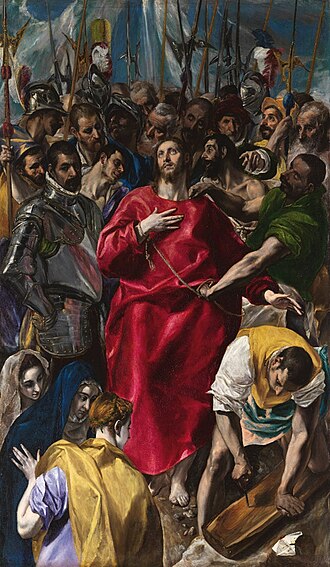 The Disrobing of Christ - El Greco (1570s)
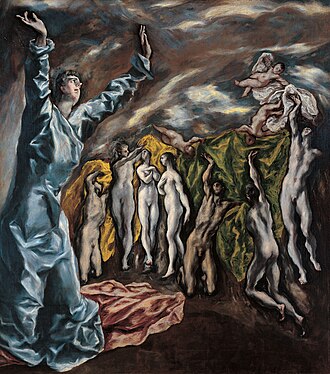 Opening of the Fifth Seal - El Greco (1610)
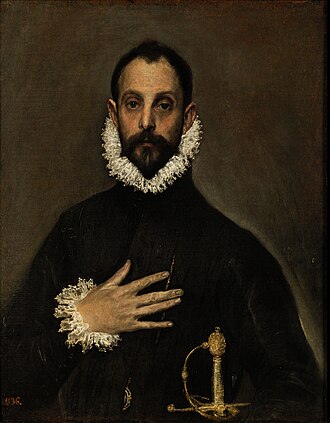 The Nobleman with his Hand on his Chest - El Greco (1580)
%20-%20Laoco%C3%B6n%20-%20Google%20Art%20Project.jpg) Laocoön - El Greco (1610s)
Laocoön - El Greco (1610s)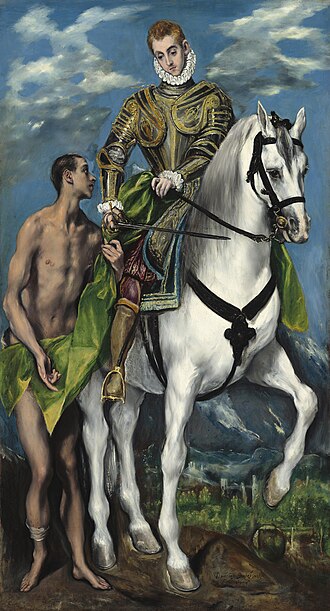 Saint Martin and the Beggar - El Greco (1597)
.jpg) Adoration of the Shepherds - El Greco (1612)
Adoration of the Shepherds - El Greco (1612)
Paintings by related artists
 Last Supper - Jacopo Tintoretto (1563)
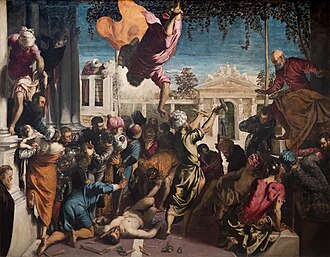 Miracle of the Slave - Jacopo Tintoretto (1540s)
.jpg) Venus of Urbino - Titian (1538)
Venus of Urbino - Titian (1538)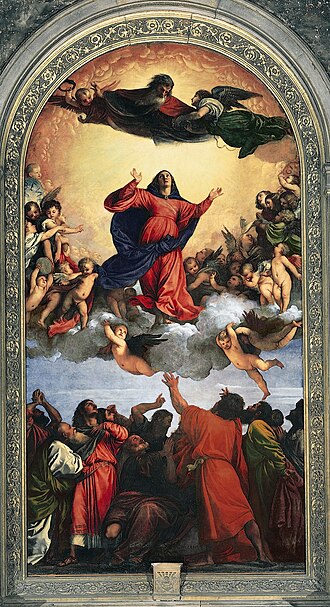 Assumption of the Virgin - Titian (1510s)
 Supper at Emmaus - Caravaggio (1601)
 The Calling of Saint Matthew - Caravaggio (1609)
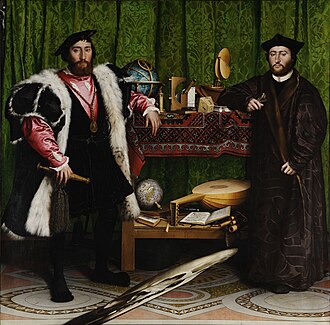 The Ambassadors - Hans Holbein the Younger (1533)
 The Body of the Dead Christ in the Tomb - Hans Holbein the Younger (1520s)