Titian
1488-1576
Titian came down from the mountains of Cadore to Venice as a boy and became, in a contemporary's words, the sun amidst small stars. For some sixty years the undisputed master of Venetian painting, he changed how painters everywhere use colour.
Origins
Tiziano Vecellio was born in Pieve di Cadore, near Belluno, in a mountain region ruled by Venice. His birth date is uncertain. As an old man he told Philip II of Spain he had been born in 1474, which seems most unlikely; other writers of his late years suggest dates between 1473 and after 1482, and most modern scholars favour 1488 to 1490. He was the son of Gregorio Vecellio, a soldier who worked mainly as a timber merchant and managed mines, and his wife Lucia, of whom little is known. The family was well established; his grandfather Conte was a prominent notary. According to Ludovico Dolce, who knew him, the boy was sent to Venice at nine with his brother Francesco to live with an uncle.
Life and turning points
Dolce says Titian had four masters: Sebastiano Zuccato, Gentile Bellini, Giovanni Bellini and Giorgione, while Vasari says he first studied under Giovanni Bellini. No documents confirm either account. Around 1509 he painted a facade of the Fondaco dei Tedeschi beside Giorgione, and many critics found his work more impressive. After Giorgione died in 1510 and Giovanni Bellini in 1516, Titian stood unrivalled in Venice. In 1513 he asked the Council of Ten for a state commission and a broker's patent; it was granted, withdrawn and finally given in 1523, making him almost the official painter of the republic. His patrons grew from Venice to the princes of northern Italy, the Habsburgs and the papacy. He died on 27 August 1576.
Style and technique
Titian was one of the most versatile Italian painters, equally adept with portraits, landscape backgrounds, and mythological and religious subjects. His methods, especially in the use of colour, deeply influenced the late Italian Renaissance and later generations of Western artists. Along with Giorgione he is considered a founder of the Venetian school. His manner changed drastically over his long life, but he kept a lifelong interest in colour; his mature works lose some of the vivid tints of his youth, yet are remarkable for loose brushwork and subtle tone. The Assumption of the Virgin, finished in 1516 for the Frari, unites apostles on earth, the rising Madonna and God the Father into one coherent whole, on a scale rarely seen in Italy.
Stories and anecdotes
A Man with a Quilted Sleeve, an early portrait, was long thought to show the poet Ariosto but is now believed to depict Gerolamo Barbarigo. Rembrandt saw it at auction and sketched it, and it inspired his own self-portraits of 1639 and 1640. Telling Titian's early work from Giorgione's is still debated, and in the 20th century many attributions moved from Giorgione to Titian, with little traffic the other way. The Assassination of Saint Peter Martyr, a dramatic work that seemed to foretell the Baroque, was destroyed by fire in 1867 and survives only in copies. His mythologies for Alfonso d'Este, including Bacchus and Ariadne, were said to be many times imitated but never surpassed, even by Rubens.
Legacy
In 1590 the painter and theorist Giovanni Paolo Lomazzo called Titian the sun amidst small stars, not only among the Italians but among all the painters of the world. For sixty years he was the undisputed master of Venetian painting, and his career was successful from the start. The Assumption still stands where it was made to be seen, on the high altar of the Frari, his largest single panel. His free, expressive handling of paint in later years pointed the way for painters long after him, from Rubens to Rembrandt, both of whom studied his work. To stand before one of his canvases is to feel how colour itself can carry warmth, drama and life.
Did you know?
- He also painted frescoes in Padua in 1511, some of which survive.
- His brother Francesco Vecellio was also a painter, known in Cadore and around Belluno.
- Christ Carrying the Cross in the Scuola Grande di San Rocco was long thought to be by Giorgione.
- Into the 20th century it was still believed that he died aged 99.
Venetian school · High Renaissance · Mannerism
Related artists
Jacopo Tintoretto · Paolo Veronese
Paintings by Titian
 Venus of Urbino - Titian (1538)
 Assumption of the Virgin - Titian (1510s)
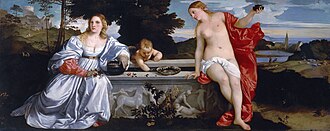 Sacred and Profane Love - Titian (1510s)
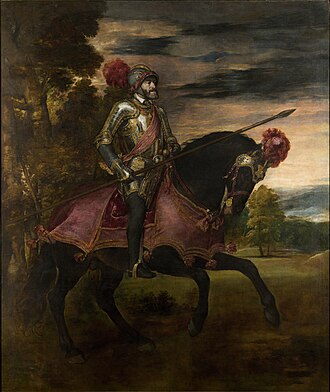 Equestrian Portrait of Charles V - Titian (1548)
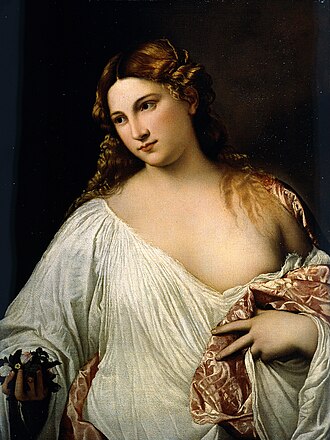 Flora - Titian (1517)
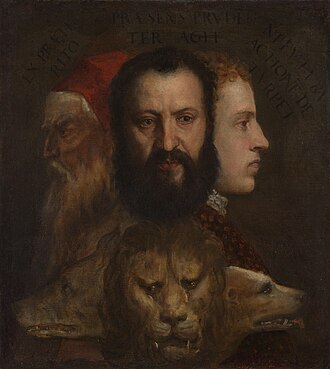 Allegory of Prudence - Titian (1550)
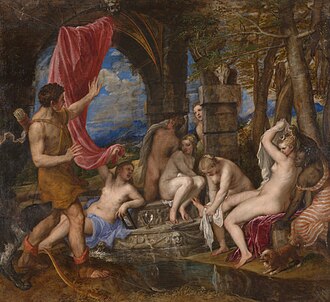 Diana and Actaeon - Titian (1550s)
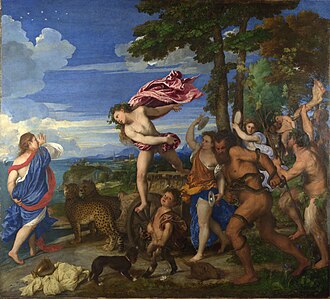 Bacchus and Ariadne - Titian (1520s)
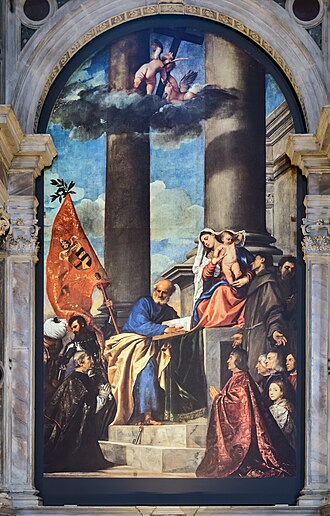 Pesaro Madonna - Titian
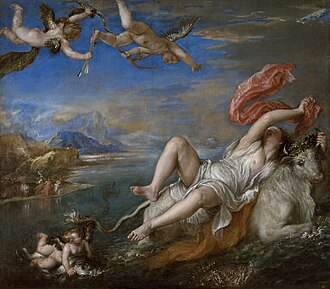 The Rape of Europa - Titian
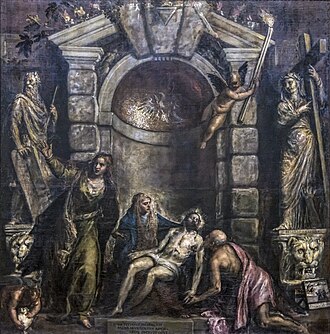 Pietà - Titian (1570s)
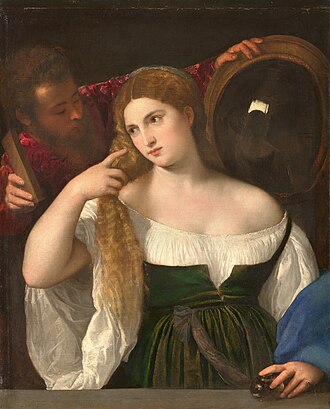 Woman with a Mirror - Titian (1515)
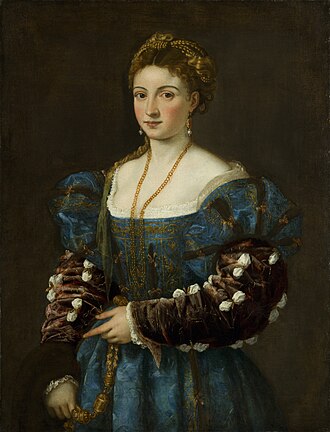 La Bella - Titian (1530s)
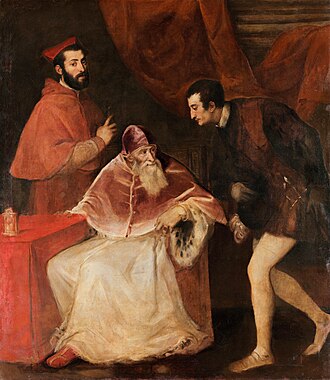 Pope Paul III and His Grandsons - Titian (1546)
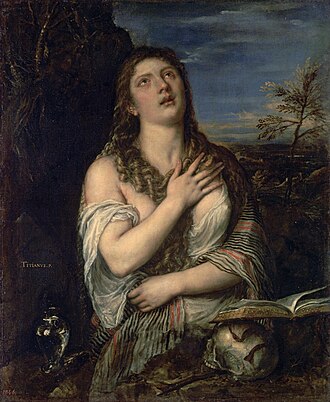 Penitent Magdalene - Titian (1560s)
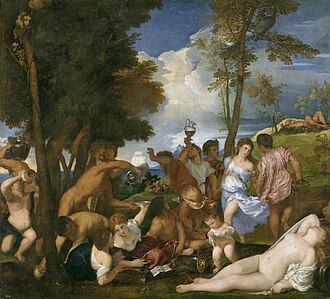 The Bacchanal of the Andrians - Titian (1520s)
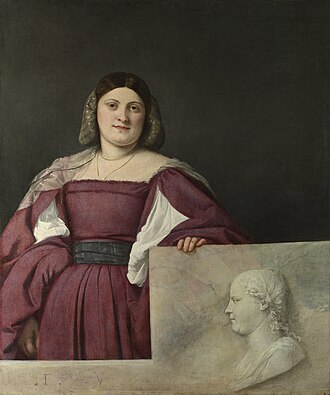 La Schiavona - Titian (1510s)
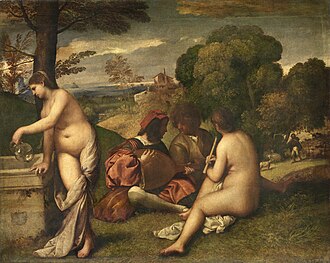 Pastoral Concert - Titian (1510s)
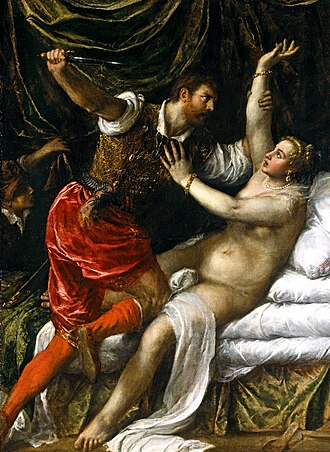 Tarquin and Lucretia - Titian (1571)
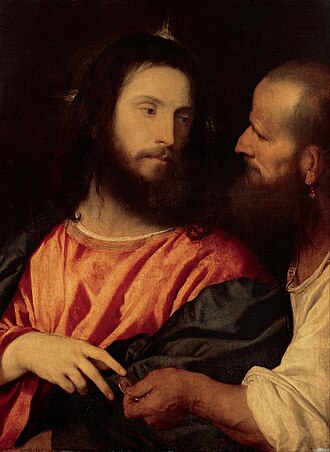 The Tribute Money - Titian (1516)
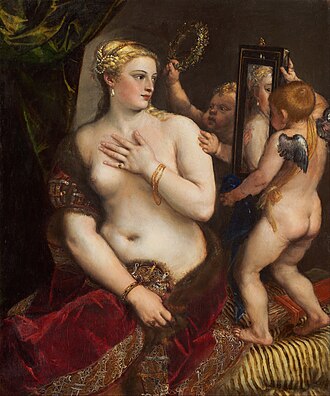 Venus with a Mirror - Titian (1555)
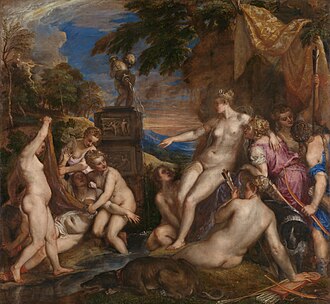 Diana and Callisto - Titian (1550s)
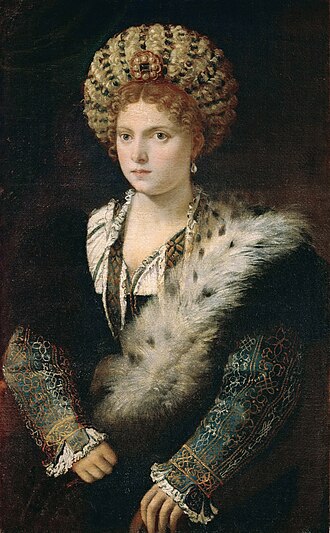 Portrait of Isabella d'Este - Titian (1530s)
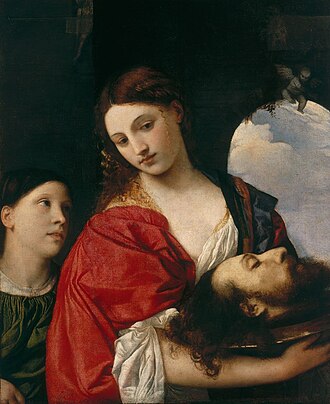 Salome with the Head of John the Baptist - Titian (1515)
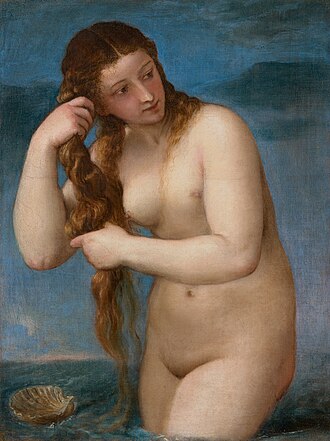 Venus Anadyomene - Titian (1520)
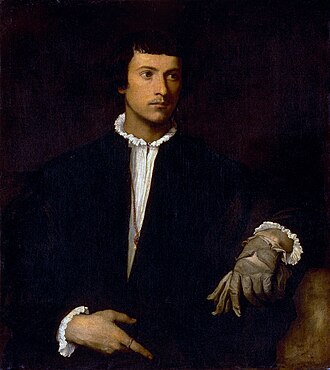 Man with a Glove - Titian (1520)
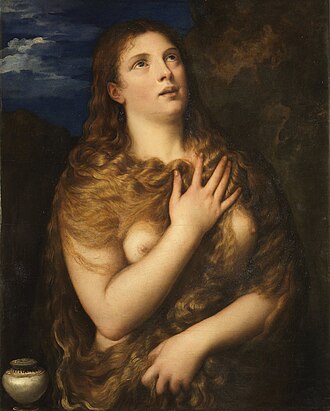 Penitent Magdalene - Titian (1533)
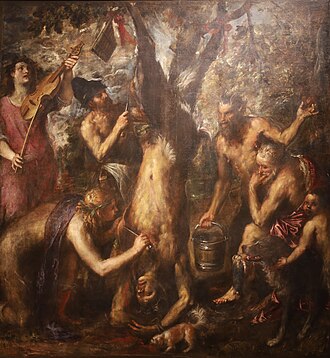 The Flaying of Marsyas - Titian (1570s)
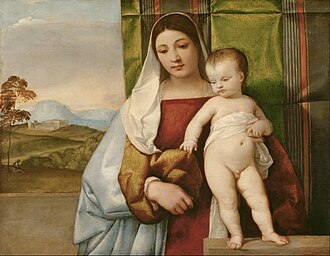 The Gypsy Madonna - Titian (1510)
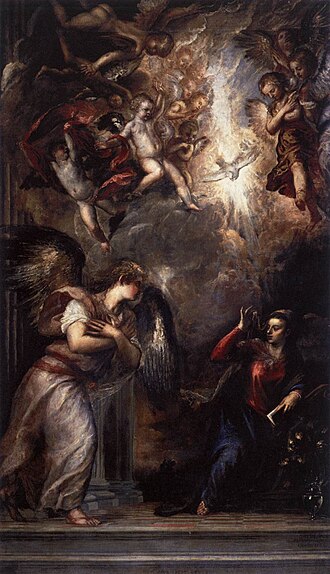 Annunciation - Titian
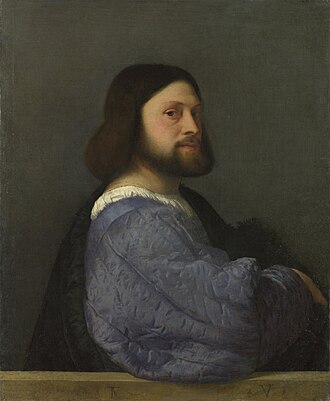 Portrait of Gerolamo (?) Barbarigo - Titian (1510)
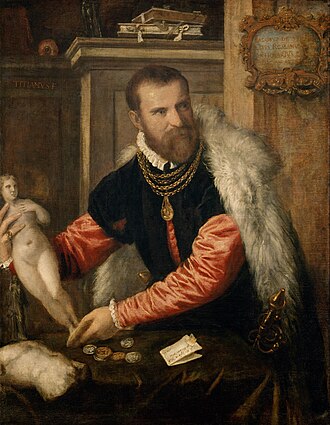 Portrait of Jacopo Strada - Titian (1560s)
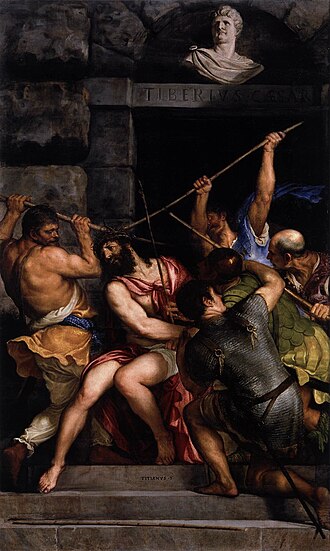 The Crowning with Thorns - Titian (1540s)
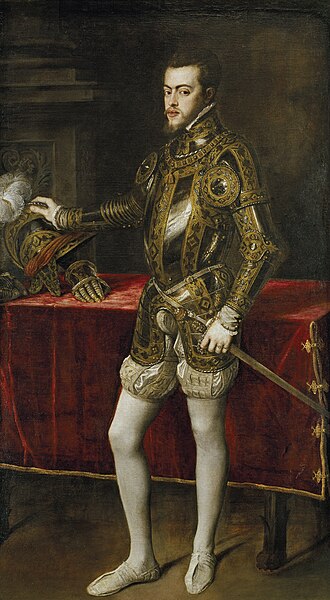 Philip II in Armour - Titian (1551)
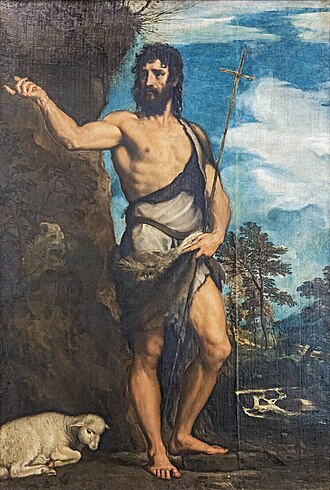 Saint John the Baptist - Titian (1540s)
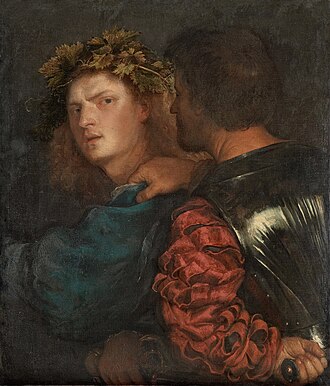 The Bravo - Titian
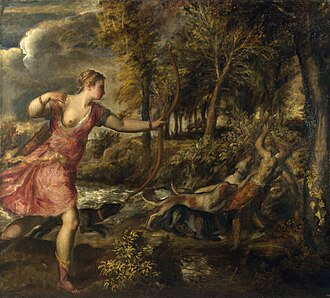 The Death of Actaeon - Titian
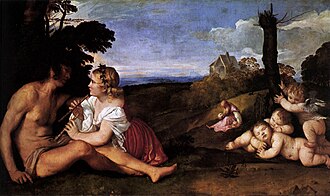 The Three Ages of Man - Titian (1510s)
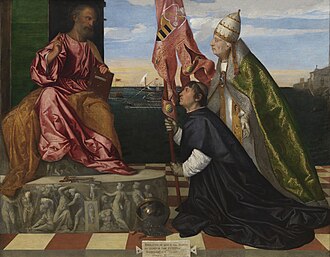 Jacopo Pesaro, Bishop of Paphos, being presented by Pope Alexander VI to Saint Peter - Titian (1500s)
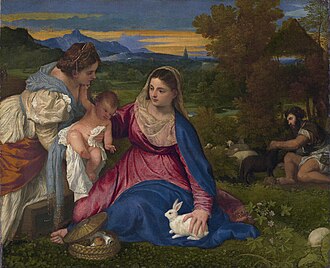 Madonna of the Rabbit - Titian (1530)
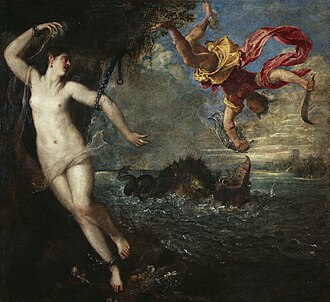 Perseus and Andromeda - Titian (1550s)
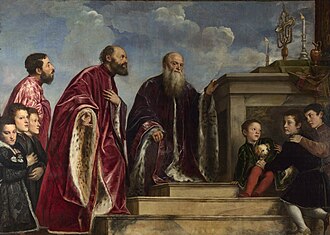 Portrait of the Vendramin Family - Titian (1540s)
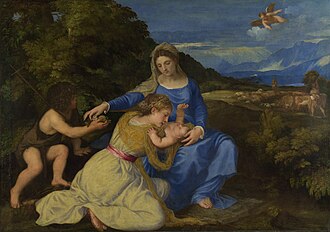 Aldobrandini Madonna - Titian (1532)
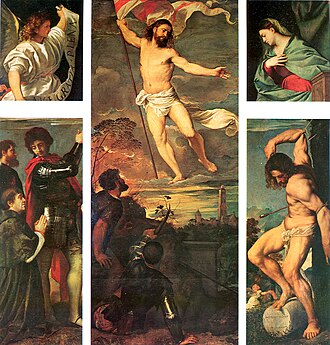 Averoldi Polyptych - Titian
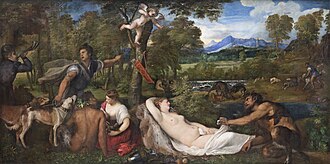 Jupiter and Antiope - Titian
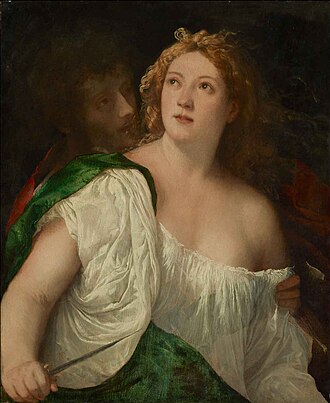 Lucretia and her Husband Lucius Tarquinius Collatinus - Titian (1515)
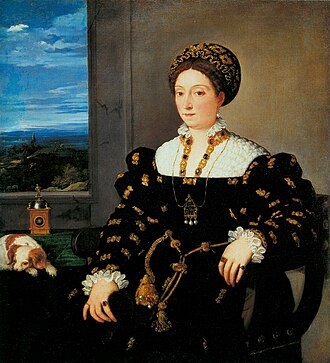 Portrait of Eleonora Gonzaga della Rovere - Titian (1530s)
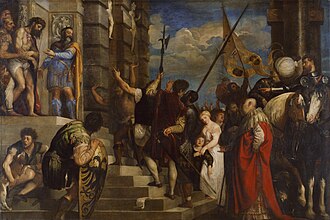 Ecce Homo - Titian (1543)