The Assumption of the Virgin
El Greco · 1577
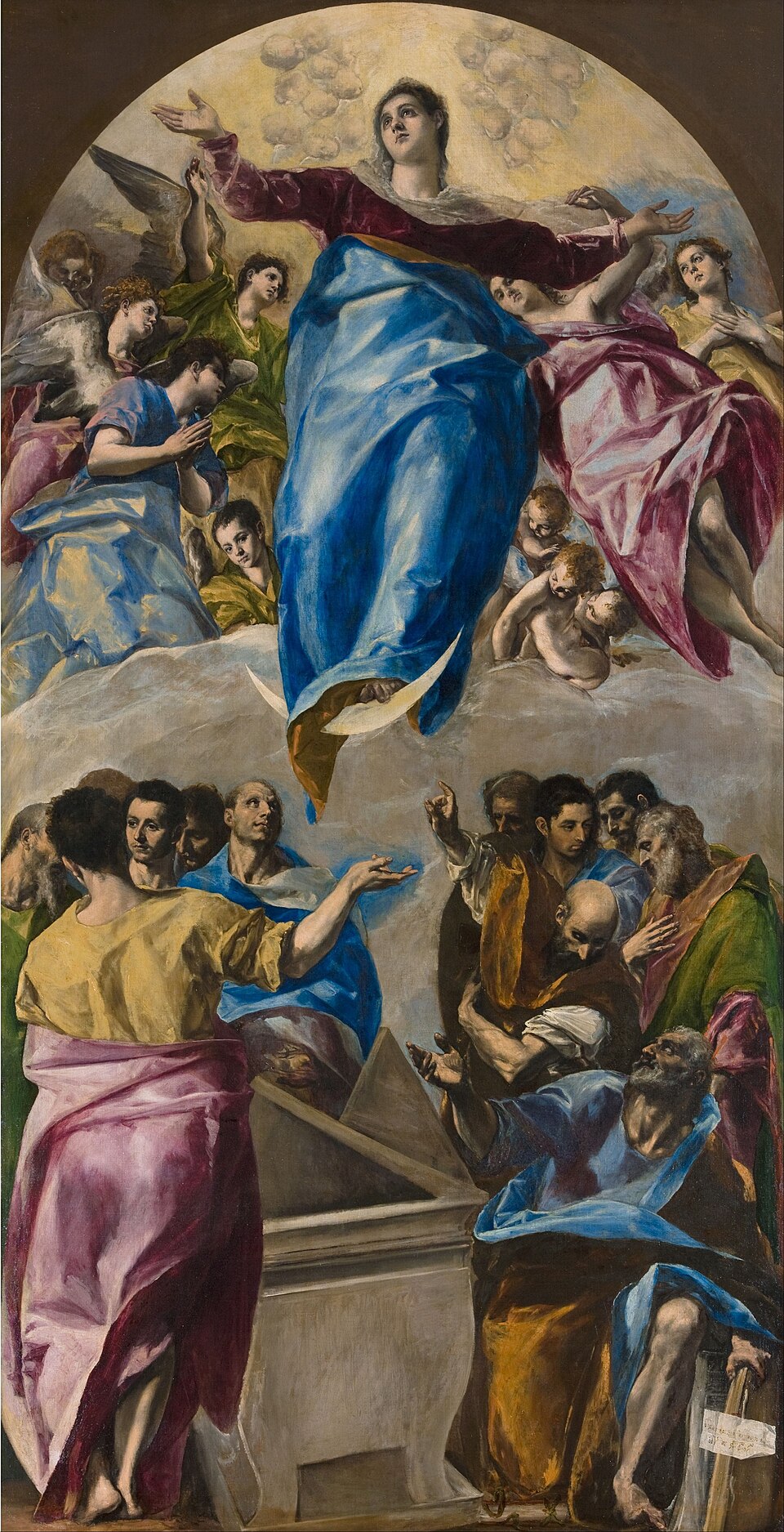
Mary rises above her empty tomb while the apostles below stare up in amazement. This was El Greco's very first work in Toledo, the start of a 37-year career there, and it later crossed the Atlantic thanks to Mary Cassatt.
The story behind the painting
In 1577 Don Diego de Castilla commissioned El Greco to paint for the convent church of Santo Domingo el Antiguo in Toledo. The Assumption of the Virgin was the first of nine paintings for that church and the central element of its altarpiece. It was also El Greco's first work in Toledo, the beginning of the 37 years he would spend there. Wikipedia dates it 1577 to 1579, while Wikidata gives 1577, the year of the commission. Over 4 metres tall, about 403 by 212 cm, it was made to be seen from below.
What to look for
The composition resembles Titian's Assumption in the Frari in Venice, with the Virgin and angels above and the apostles below. Mary floats upward, a sign of her purity, while the apostles gathered around her empty tomb show amazement and concern. Under the influence of Michelangelo, El Greco made a picture that is essentially Italian: a naturalistic style, monumental figures and a Roman school palette. Look at the contrast between the crowded earth, full of turning bodies and raised faces, and the open heavenly zone where she rises.
Meaning and intent
The Assumption does not appear in the New Testament but in apocryphal writings of the third and fourth centuries. By the year 1000 it was widely believed in the Western Church, though it only became formal Catholic dogma in 1950. It became a popular subject in the twelfth century, promoted especially by the Cistercians and Saint Bernard of Clairvaux, and later accounts like the Golden Legend added the apostles. Large altarpieces let painters show off composition, colour and poses. After the Reformation, the subject was used to assert the Catholic position that Protestants rejected, which gave this Toledo altarpiece a clear purpose.
Legacy
The painting stayed in Santo Domingo el Antiguo for over 200 years. Around 1830 it went to the Infante Don Sebastián Gabriel de Borbón y Braganza in Madrid. The Spanish government confiscated it in 1835 for the Museo Nacional de la Trinidad, but returned it in 1861. After his death in 1875 it remained with his widow, Infanta María Cristina, until 1902, and her heirs lent it to the Prado from 1902 to 1904. In 1904 the American painter Mary Cassatt persuaded the Paris dealer Paul Durand-Ruel to acquire it, with financing from H. O. Havemeyer, and in 1906 it went to the Art Institute of Chicago.
Did you know?
- El Greco's first work in Toledo, commissioned in 1577.
- Central painting of the Santo Domingo el Antiguo altarpiece.
- Composition recalls Titian's Assumption in the Frari.
- In the Art Institute of Chicago since 1906.
About the artist
El Greco (1541-1614)
religious art · Art Institute of Chicago · Monastery of Saint Dominic of Silos
More by El Greco
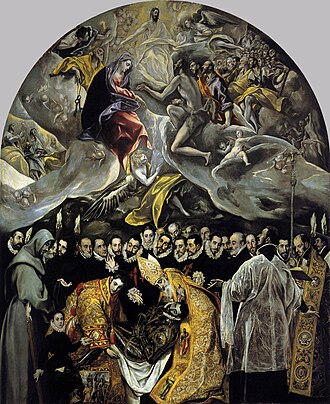 The Burial of the Count of Orgaz - El Greco (1586)
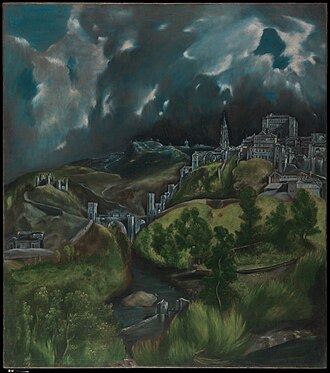 View of Toledo - El Greco (1596)
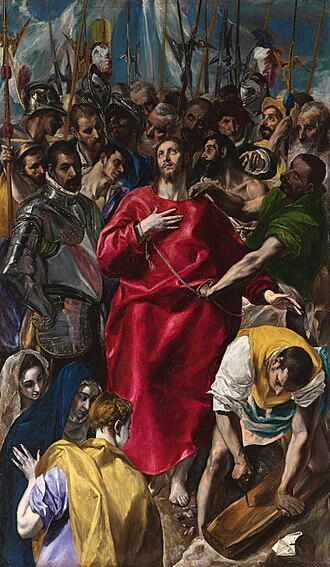 The Disrobing of Christ - El Greco (1570s)
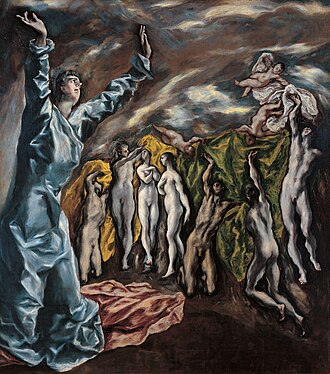 Opening of the Fifth Seal - El Greco (1610)
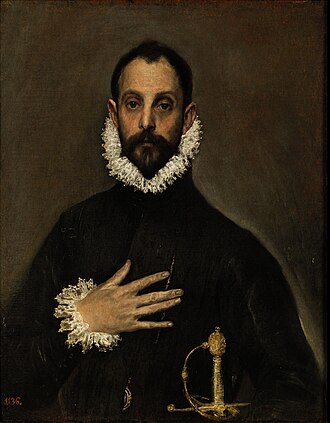 The Nobleman with his Hand on his Chest - El Greco (1580)
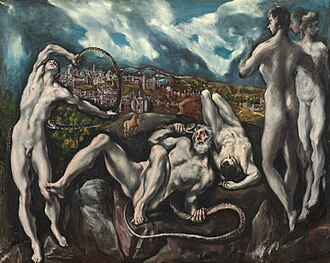 Laocoön - El Greco (1610s)
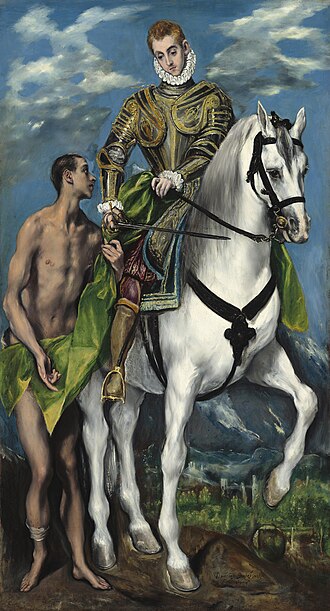 Saint Martin and the Beggar - El Greco (1597)
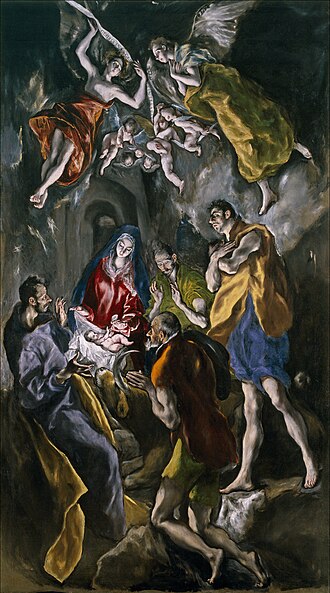 Adoration of the Shepherds - El Greco (1612)
Paintings by related artists
 The Wedding at Cana - Paolo Veronese (1560s)
 The Feast in the House of Levi - Paolo Veronese (1573)
 Last Supper - Jacopo Tintoretto (1563)
 Miracle of the Slave - Jacopo Tintoretto (1540s)
 Venus of Urbino - Titian (1538)
 Assumption of the Virgin - Titian (1510s)
 Supper at Emmaus - Caravaggio (1601)
 The Calling of Saint Matthew - Caravaggio (1609)
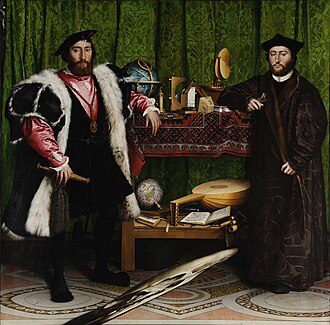 The Ambassadors - Hans Holbein the Younger (1533)
 The Body of the Dead Christ in the Tomb - Hans Holbein the Younger (1520s)