Pentitent Mary Magdalen
El Greco · 1585
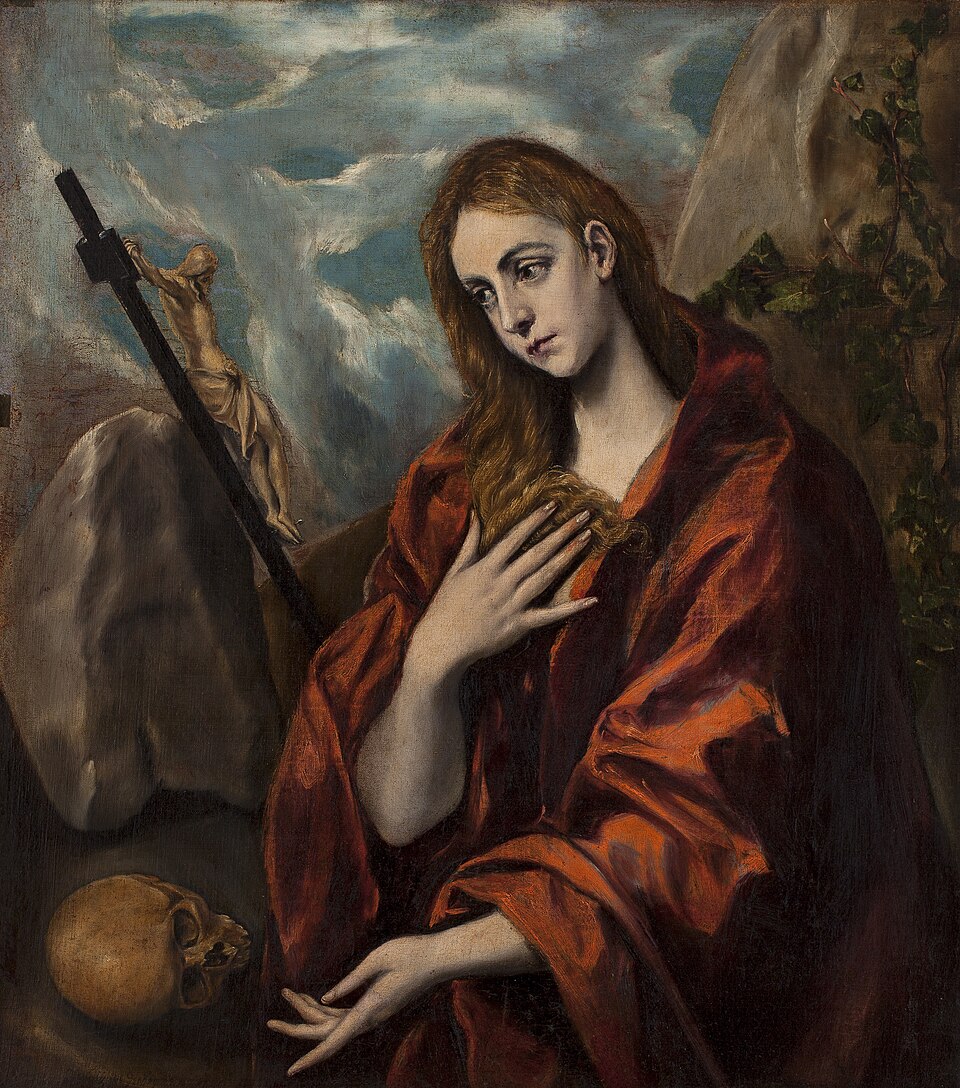
Mary Magdalene, young and still beautiful, turns not toward the sky but toward a small crucifix on a rock, one hand on her heart and the other on a skull. A procession of artists carried this painting to its home in Sitges.
The story behind the painting
In his catalogue, Harold Wethey distinguishes five models of the Penitent Magdalene by El Greco, with only one certain example of each. This canvas in Sitges is the prototype of Type IV, of which three copies are known. Mary Magdalene, as Pope Gregory the Great defined her, merges three gospel women: Mary of Bethany, the woman who anointed Jesus's feet and dried them with her hair, and the woman at the cross who was first to see him risen. The Spanish Counter-Reformation promoted her as a model of repentance and meditation.
What to look for
The painting, 109 by 96 cm, dates from about 1585 to 1590; Wikidata gives 1585. El Greco signed it in Greek cursive at left, below the skull. Here he leaves Titian's model of the Magdalene behind. She wears a beautifully modelled orange-red tunic, her right hand on her breast in contrition, her left with two fingers joined pointing to the skull. Her hair is reddish chestnut, not blond. Ivy remains, but the ointment jar, sign of worldliness, has gone. The dark red dress stands out against a blue and white sky, and the light falls most vividly on her left arm.
Meaning and intent
In the first two types she appeared as an elegant lady, and in the third with a touch of eroticism unusual for El Greco. Type IV is austere, stressing stoicism and meditation. She does not cast a theatrical glance upward but looks at the crucifix resting on a rock. The landscape is reduced to a cloudy sky and a rock wall with ivy, grey tones cool the composition, and the Venetian-style light brightens where it falls. Some asymmetries and distortions, especially in the face, already announce El Greco's later style.
Legacy
Only lightly restored, the painting is in excellent condition. In the late nineteenth century the painter Santiago Rusiñol, advised by Ignacio Zuloaga, acquired it together with a version of The Tears of Saint Peter through the painter Laureano Barrau, an example of how modernist painters were drawn to El Greco. To carry the two pictures from Sitges station to Rusiñol's house, the Cau Ferrat, artists and writers organised a procession. The house is now the Cau Ferrat Museum. Wethey lists seventeenth-century copies in Toledo's Museum of Santa Cruz and the Hispanic Society of America, and another in the Masaveu collection.
Did you know?
- Prototype of El Greco's Type IV Penitent Magdalene.
- 109 x 96 cm, about 1585-1590, signed in Greek below the skull.
- Bought by Santiago Rusiñol and carried in procession to the Cau Ferrat.
- In excellent condition, in the Cau Ferrat Museum, Sitges.
About the artist
El Greco (1541-1614)
religious art · woman · Mannerism · waist-length hair · Mary Magdalene · human skull · mortification of the flesh
More by El Greco
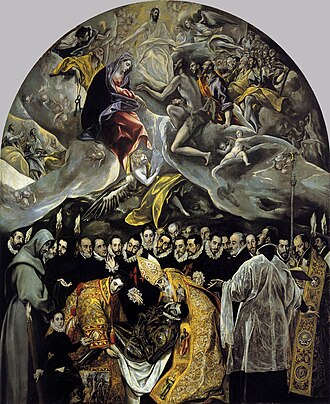 The Burial of the Count of Orgaz - El Greco (1586)
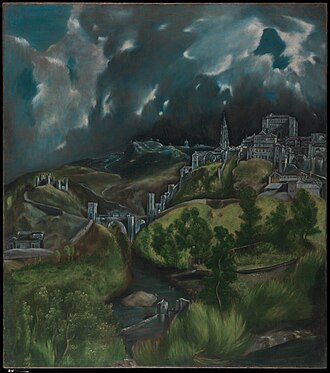 View of Toledo - El Greco (1596)
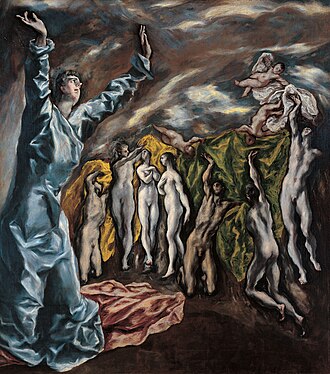 Opening of the Fifth Seal - El Greco (1610)
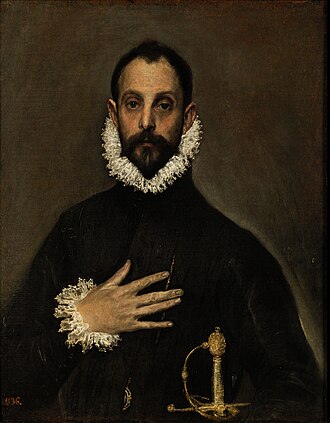 The Nobleman with his Hand on his Chest - El Greco (1580)
%20-%20Laoco%C3%B6n%20-%20Google%20Art%20Project.jpg) Laocoön - El Greco (1610s)
Laocoön - El Greco (1610s)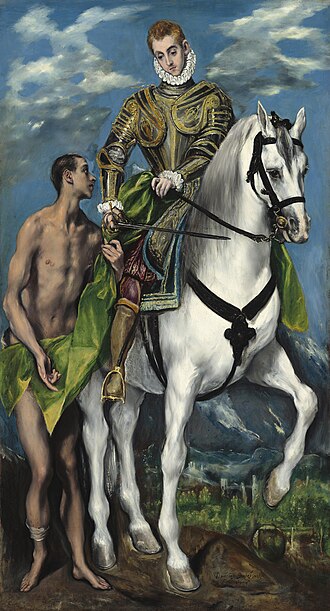 Saint Martin and the Beggar - El Greco (1597)
.jpg) Adoration of the Shepherds - El Greco (1612)
Adoration of the Shepherds - El Greco (1612) The Concert of the Angels - El Greco (1600s)
Paintings by related artists
.jpg) Venus of Urbino - Titian (1538)
Venus of Urbino - Titian (1538)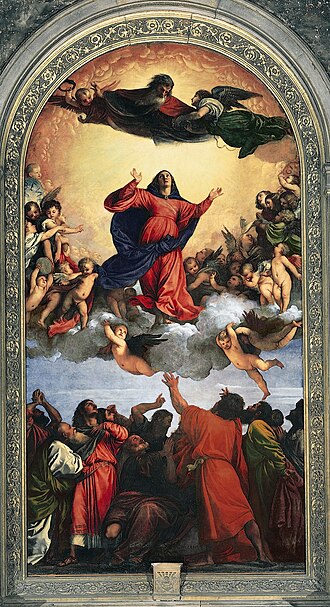 Assumption of the Virgin - Titian (1510s)
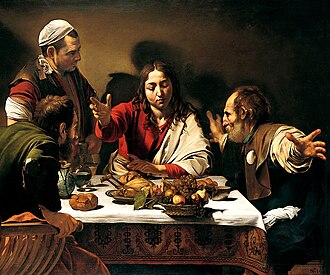 Supper at Emmaus - Caravaggio (1601)
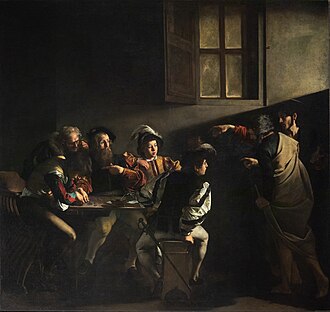 The Calling of Saint Matthew - Caravaggio (1609)
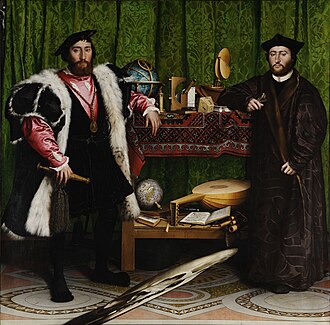 The Ambassadors - Hans Holbein the Younger (1533)
 The Body of the Dead Christ in the Tomb - Hans Holbein the Younger (1520s)