マニエリスム
Mannerism is what happened when young artists, after Leonardo, Michelangelo and Raphael, felt everything had already been done and set out to do something diff…
El Greco · Paolo Veronese · Jacopo Tintoretto · Titian · Hans Holbein the Younger · Caravaggio
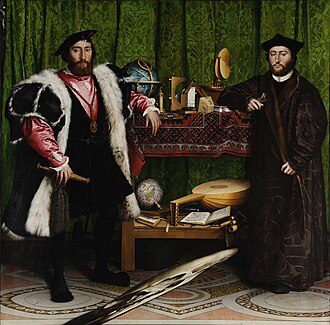 大使たち - Hans Holbein the Younger (1533)
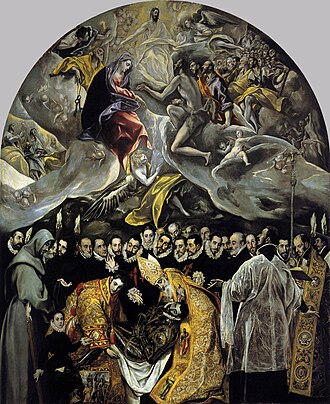 オルガス伯の埋葬 - El Greco (1586)
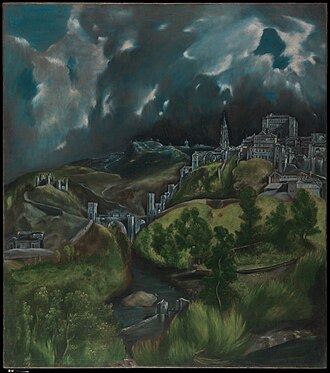 トレドの風景 - El Greco (1596)
 カナの婚礼 - Paolo Veronese (1560s)
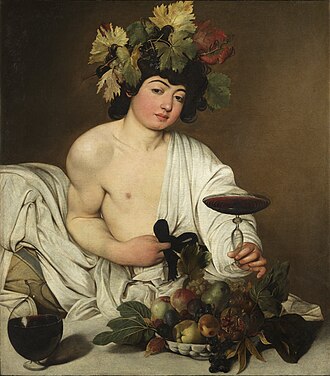 バッカス - Caravaggio (1593)
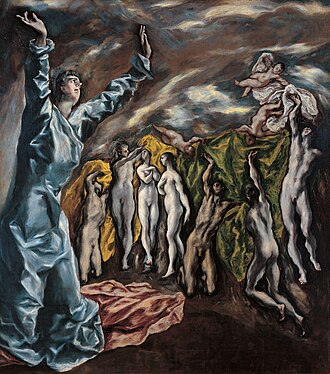 黙示録第5の封印 - El Greco (1610)
 レヴィ家の饗宴 - Paolo Veronese (1573)
 最後の晩餐 - Jacopo Tintoretto (1563)
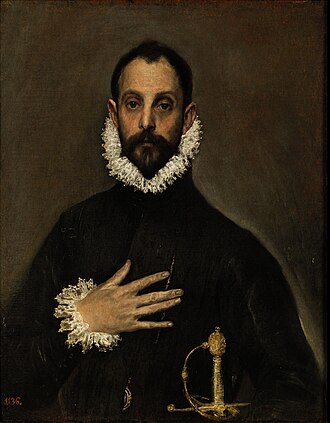 胸に手を置く騎士 - El Greco (1580)
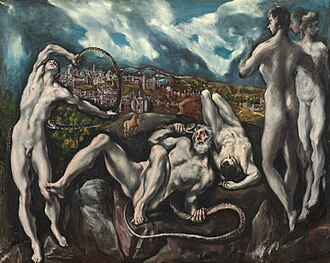 ラオコーン - El Greco (1610s)
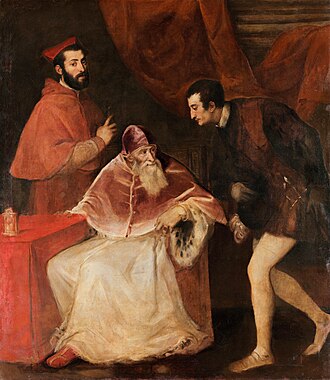 パウロ3世と甥たち - Titian (1546)
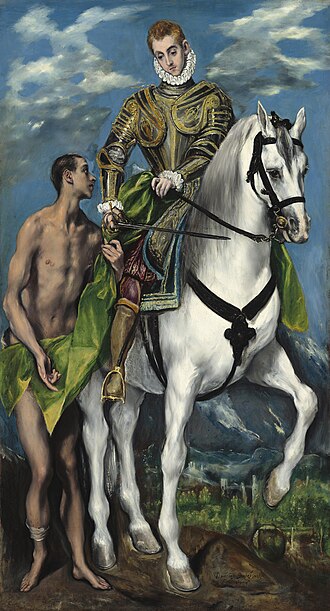 聖マルティヌスと乞食 - El Greco (1597)
 奴隷を解放する聖マルコ - Jacopo Tintoretto (1540s)
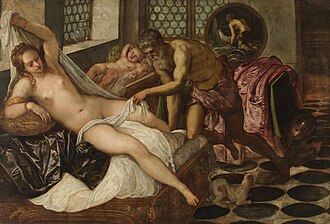 ウルカヌスに驚かされるヴィーナスとマルス - Jacopo Tintoretto (1555)
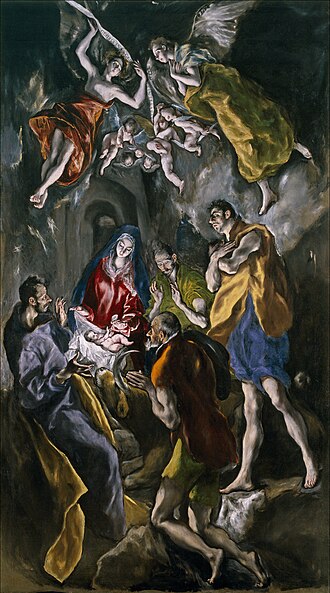 羊飼いの礼拝 - El Greco (1612)
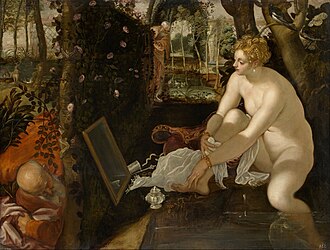 スザンナと長老たち - Jacopo Tintoretto (1550s)
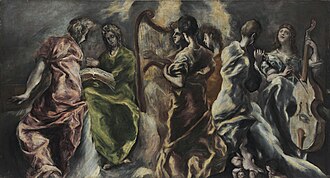 The Concert of the Angels - El Greco (1600s)
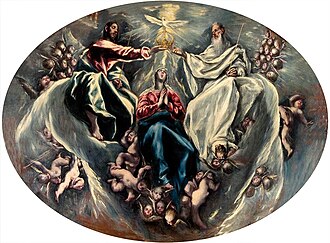 聖母戴冠 - El Greco (1597)
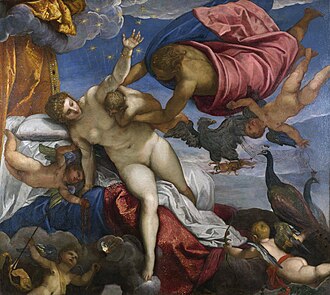 天の川の起源 - Jacopo Tintoretto (1575)
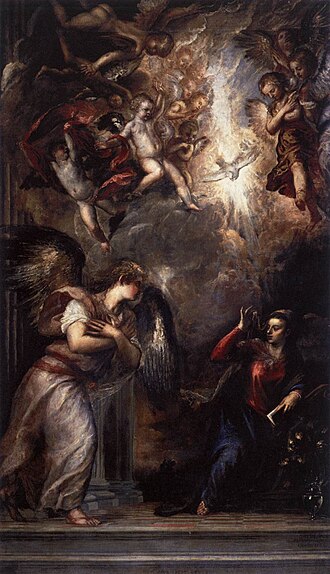 受胎告知 - Titian
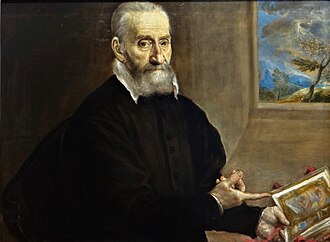 ジュリオ・クローヴィオの肖像 - El Greco (1571)
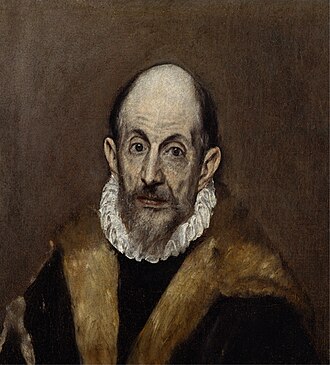 男の肖像 - El Greco (1595)
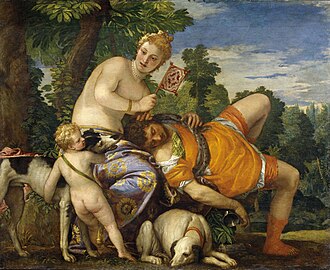 ヴィーナスとアドニス - Paolo Veronese (1580)
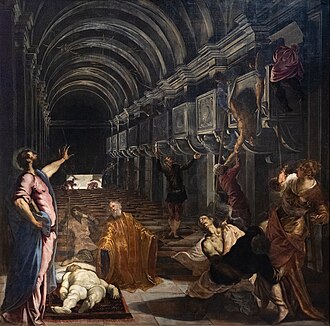 聖マルコの遺骸の発見 - Jacopo Tintoretto (1562)
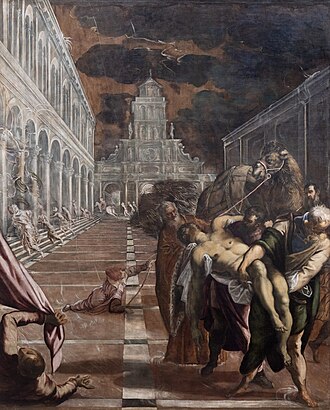 聖マルコの遺骸の運搬 - Jacopo Tintoretto (1560s)
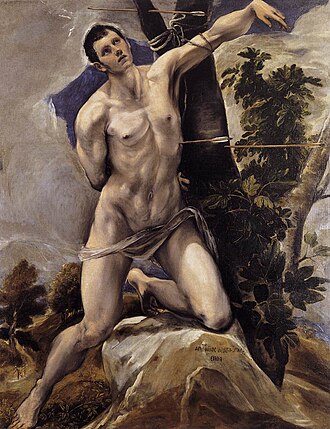 聖セバスティアヌス - El Greco (1577)
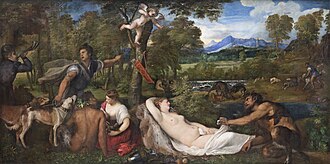 パルドのヴィーナス - Titian
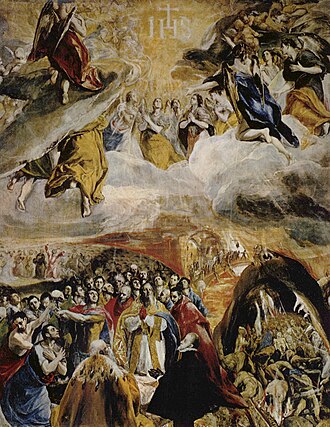 イエスの御名の礼拝 - El Greco (1577)
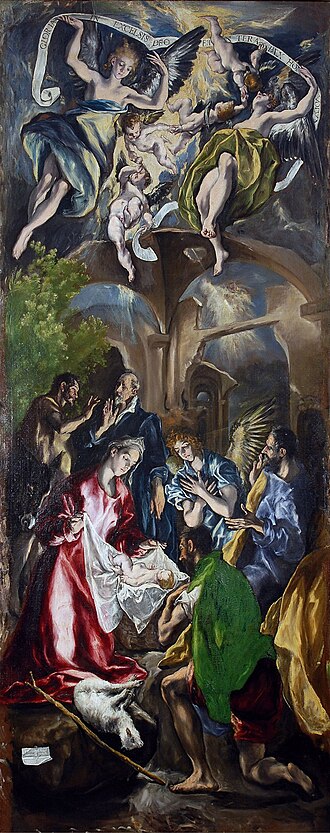 羊飼いの礼拝 - El Greco (1596)
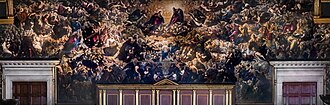 天国 - Jacopo Tintoretto
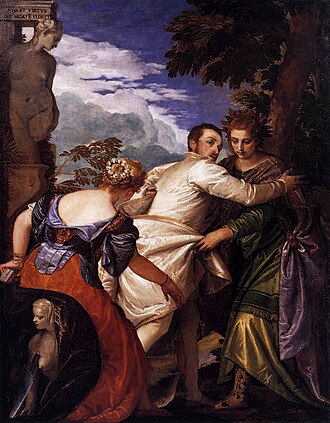 美徳と悪徳の間の選択 - Paolo Veronese (1565)
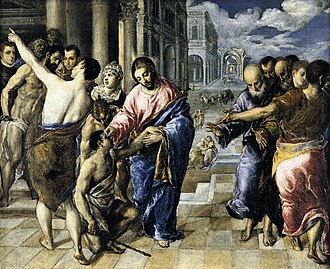 検索盲人の治癒 - El Greco (1570s)
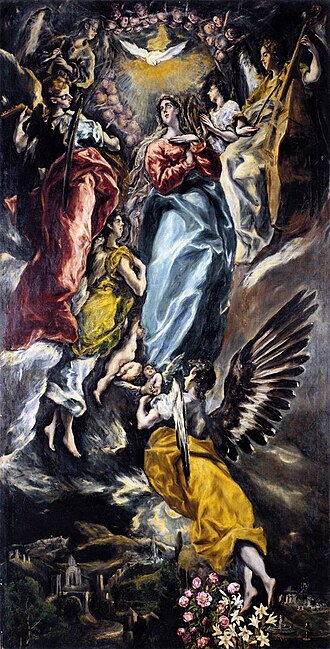 無原罪の御宿り - El Greco (1608)
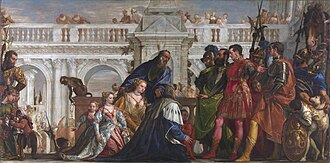 アレクサンドロス大王の前に出たダレイオスの家族 - Paolo Veronese (1565)
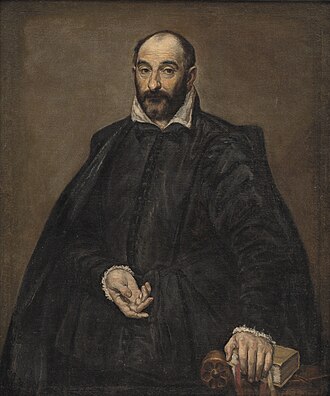 男の肖像 - El Greco (1570)
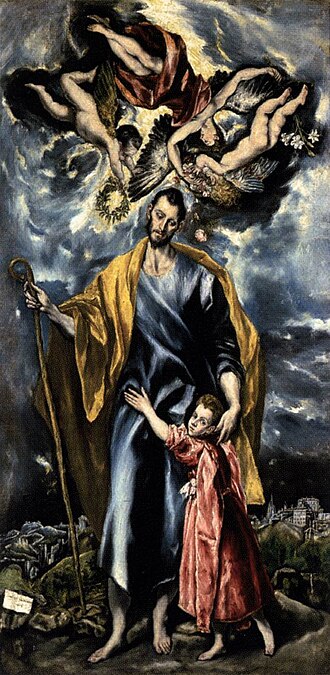 聖ヨセフと幼子イエス - El Greco (1600)
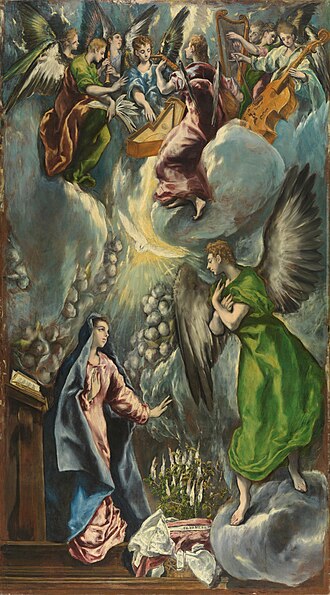 プラド美術館所蔵のグレコによる受胎告知 - El Greco (1590s)
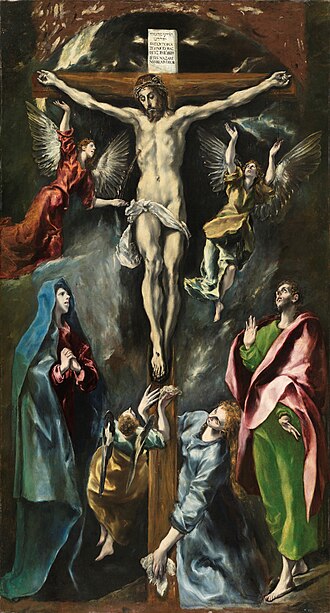 キリストの磔刑 - El Greco (1590s)
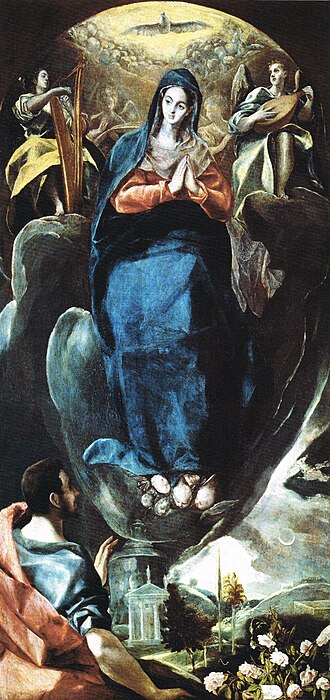 無原罪の御宿りと福音書記者聖ヨハネ - El Greco (1580s)
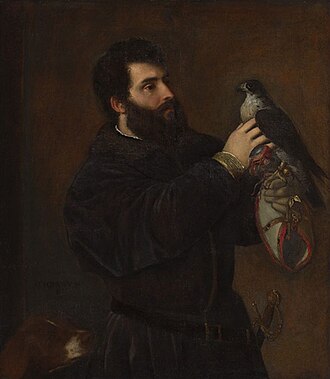 ハヤブサを持つ男の肖像 - Titian (1537)
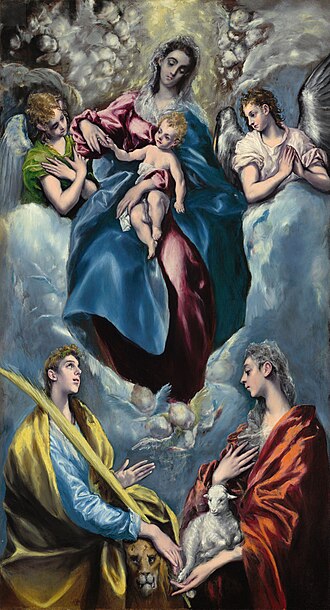 聖母子と聖アグネスと聖マルティナ - El Greco (1590s)
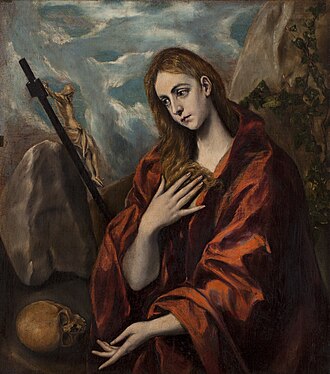 悔悛するマグダラのマリア - El Greco (1585)
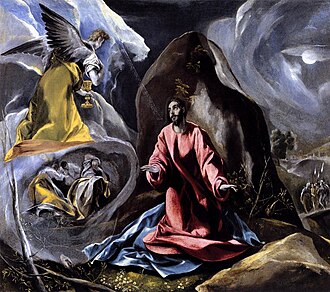 ゲッセマネの祈り - El Greco (1590)
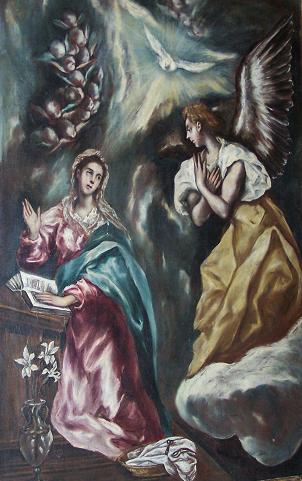 トレド美術館所蔵のグレコによる受胎告知 - El Greco (1610)
The Holy Family with Mary Magdalen - El Greco (1590s)
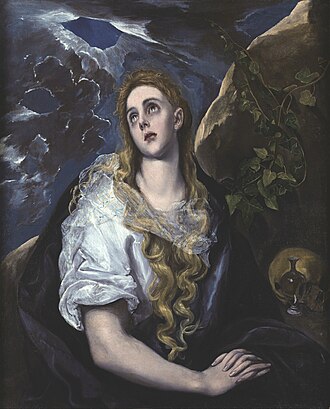 悔悛するマグダラのマリア - El Greco (1580)
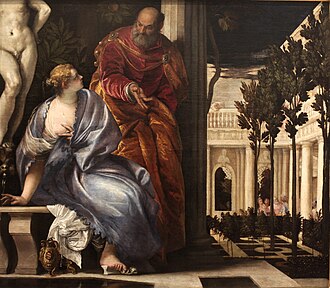 バテシバの水浴 - Paolo Veronese (1575)
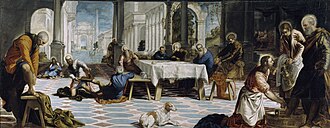 聖木曜日の洗足式 - Jacopo Tintoretto (1540s)
マニエリスムとは? よくある質問
Mannerism is what happened when young artists, after Leonardo, Michelangelo and Raphael, felt everything had already been done and set out to do something different. Their paintings stretch bodies, twist poses and bend space on purpose, and the result can be strange, elegant and surprisingly modern.
What is Mannerism, in simple words?
Mannerism is a style in European art that grew out of the later High Renaissance around 1520 and lasted until about the end of the 16th century in Italy. Where High Renaissance art aimed for proportion, balance and ideal beauty, Mannerism exaggerated those qualities. Paintings often look asymmetrical or unnaturally elegant, and they favour tension and instability over calm clarity. Its artificial rather than naturalistic look is its trademark.
Why is it called Mannerism?
The word comes from the Italian maniera, meaning "style" or "manner". Giorgio Vasari, himself a Mannerist artist, used the word in his Lives of the artists (1568) and called his own time "la maniera moderna", the modern style. As a label for a period, Mannerism was used by Jacob Burckhardt and popularised by German art historians in the early 20th century. Some writers simply call it the "Late Renaissance".
When and where did it start?
It developed between 1510 and 1520, in Florence, in Rome, or in both at once, and spread by about 1530. Rome, Florence and Mantua were its Italian centres. After the Sack of Rome in 1527 many artists fled and carried the style across Italy and Northern Europe, making it the first international style since the Gothic. In Italy it faded after 1580, but outside Italy it continued into the 17th century.
Who were the main painters?
Early Mannerists in Florence included Jacopo da Pontormo and Rosso Fiorentino, both students of Andrea del Sarto. In Rome, Parmigianino and Giulio Romano, Raphael's head assistant, moved in a similar direction. Later, Agnolo Bronzino and Giorgio Vasari led the refined "Maniera" phase. The late works of Michelangelo were a great model. Tintoretto in Venice and El Greco in Spain are also linked with the style.
How can I recognise a Mannerist painting?
Look for elongated bodies, precariously balanced or highly stylised poses, a collapsed or unclear sense of perspective, irrational settings and theatrical lighting. Clothes and compositions are elaborate. In the later phase, figures often have porcelain-like skin, lie in an even, cool light and show little emotion, which is why such works are sometimes called cold or aloof. The overall feeling is artful rather than natural.
How is it different from the High Renaissance?
High Renaissance painters, like Raphael in The School of Athens, sought balance, clarity and a calm, natural harmony. Mannerists deliberately pushed against this. Instead of studying nature directly, they studied ancient Hellenistic sculpture and the paintings of earlier masters, creating "art imitating art". That is why the early phase is often called "anti-classical", although at the time it was seen as a natural next step.
Why did artists start painting this way?
By the end of the High Renaissance, young artists faced a kind of crisis: it seemed everything had already been achieved in anatomy, light, expression and composition. They needed new goals. Patrons also encouraged competition and showy technique, pushing artists toward dramatic lighting, elaborate costumes, elongated proportions and stylised poses. Older theories linked the style to the Sack of Rome and the Reformation, but scholars now favour this explanation less.
What did people think of it?
At first it was viewed positively, thanks largely to Vasari's writings. Later it was seen in a negative light, as a distortion of natural truth and a tired repetition of formulas. Vasari himself criticised Tintoretto's style as fantastical, extravagant and bizarre. Before the 20th century the word Mannerism carried negative connotations, but today it is used in a more neutral way to describe the period.
Which famous works should I see first?
Good starting points are Michelangelo's Last Judgement on the altar wall of the Sistine Chapel, painted 1534-1541, and Bronzino's Venus, Cupid, Folly and Time, which was given to Francis I of France. Look also at Tintoretto's Last Supper for San Giorgio Maggiore, with its dark background and spotlight effects, and El Greco's Laocoön of 1610, set near Toledo. In sculpture, see Cellini's bronze Perseus with the Head of Medusa.
Why does it still matter?
Mannerism shows that artists can deliberately bend the rules to create emotion and surprise, not just copy nature. It spread across Europe, from the French court at Fontainebleau to Rudolf II's court in Prague, Haarlem and Antwerp, and it led toward the Baroque. The idea even returned in the 1960s and 1970s, when architects such as Robert Venturi used Mannerism to describe buildings that break conventional order on purpose.