カナの婚礼
パオロ・ヴェロネーゼ · 1560s
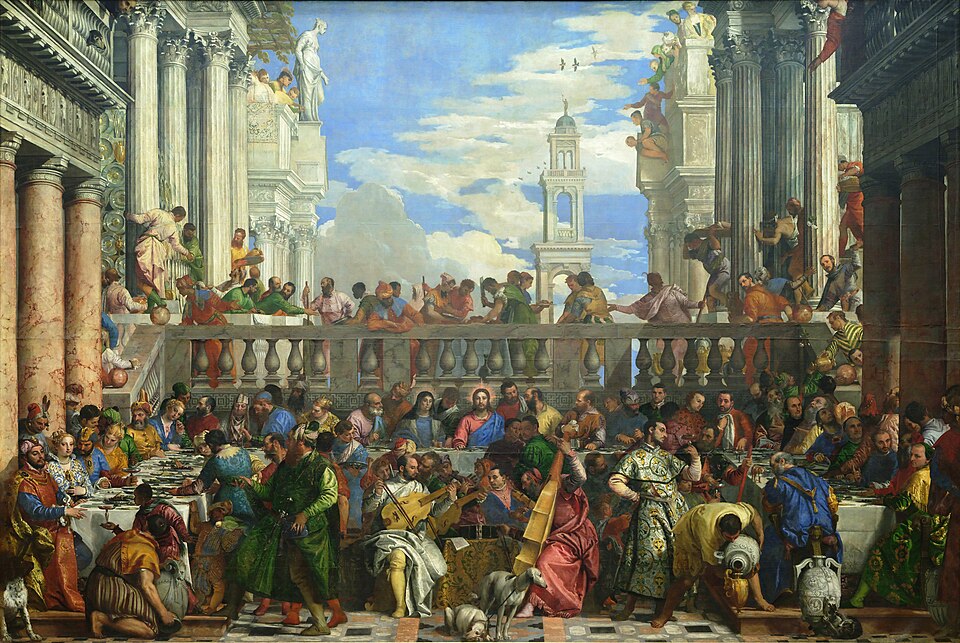
More than a hundred and thirty guests crowd a marble terrace while Christ quietly turns water into wine. Veronese painted this feast to fill an entire refectory wall in Venice, and today it is the largest picture in the Louvre's paintings collection.
The story behind the painting
On 6 June 1562 the Benedictine monks of San Giorgio in Venice commissioned Veronese to cover the far wall of their new refectory, designed by Andrea Palladio. The contract asked for the banquet of Christ's miracle at Cana with as many figures as could fit, painted in the best colours, including ultramarine made from lapis lazuli. Helped by his brother Benedetto Caliari, Veronese delivered the canvas in September 1563. Wikipedia dates it 1562 to 1563, while Wikidata gives only the 1560s.
What to look for
The canvas measures about 6.77 by 9.94 metres. Its lower half holds the crowd of guests, its upper half a cloudy sky and columns of the Doric and Corinthian orders around a courtyard, with an arcaded tower in the distance. In the foreground musicians play the lute, the violone and the viola da gamba. By tradition, the man in white playing a viola da braccio is Veronese himself, with Tintoretto, Jacopo Bassano and Titian, dressed in red, nearby, and the poet Pietro Aretino studying a glass of the new wine.
Meaning and intent
Veronese places a sacred miracle inside the kind of lavish feast that marked Venetian society of his time, so the holy story sits among the pleasures of the world. Among the guests tradition names rulers such as Francis I of France, Mary I of England, Charles V and Suleiman the Magnificent, many dressed in eastern fashions. The picture was made to be seen from below: its bottom edge hung 2.5 metres above the floor, behind the abbot's seat, and its painted architecture seemed to extend the real room.
Legacy
The painting hung in the San Giorgio refectory from the 16th to the 18th century. In 1797 soldiers of Napoleon's Army of Italy took it as war booty, and it is now in the Louvre, where its surface of about 67 square metres makes it the largest painting in the collection. Joshua Reynolds later wrote that Veronese would have thought no history subject proper unless it admitted at least forty figures.
豆知識
- Commissioned on 6 June 1562 by the Benedictines of San Giorgio, Venice.
- Delivered in September 1563 with help from Benedetto Caliari.
- About 6.77 by 9.94 metres, the largest painting in the Louvre.
- Taken to France by Napoleon's army in 1797.
画家について
パオロ・ヴェロネーゼ (1528-1588)
宗教美術 · 男性 · ルーヴル美術館絵画部門 · イエス・キリスト · ヴェネツィア派 · マニエリスム · テーブル · イヌ · 家庭内労働者 · ポット
同じ画家の作品: パオロ・ヴェロネーゼ
.jpg) レヴィ家の饗宴 - Paolo Veronese (1573)
レヴィ家の饗宴 - Paolo Veronese (1573).jpg) ヴィーナスとアドニス - Paolo Veronese (1580)
ヴィーナスとアドニス - Paolo Veronese (1580)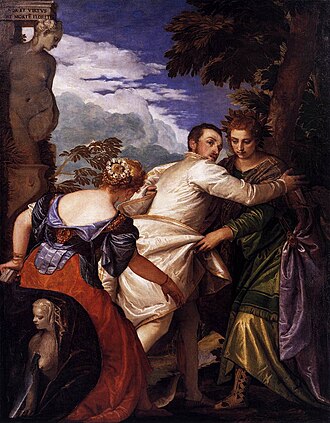 美徳と悪徳の間の選択 - Paolo Veronese (1565)
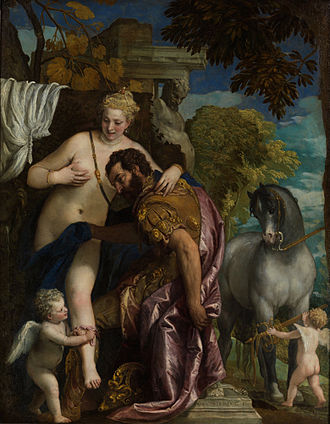 キューピッドによって結ばれるマルスとヴィーナス - Paolo Veronese (1570s)
 アレクサンドロス大王の前に出たダレイオスの家族 - Paolo Veronese (1565)
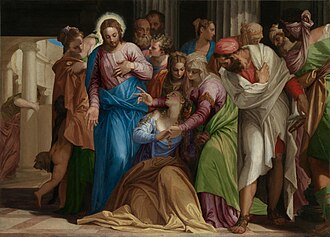 マグダラのマリアの改宗 - Paolo Veronese (1548)
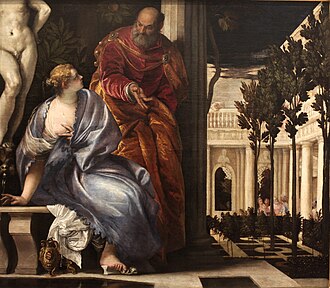 バテシバの水浴 - Paolo Veronese (1575)
%20grande.jpg) 博士たちの間のキリスト - Paolo Veronese (1560)
博士たちの間のキリスト - Paolo Veronese (1560)
関連する画家の作品
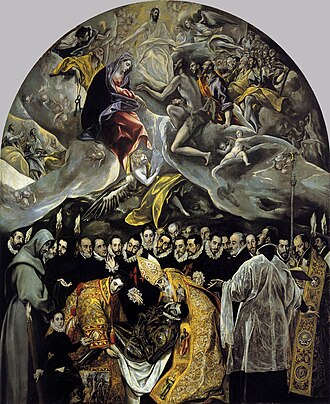 オルガス伯の埋葬 - El Greco (1586)
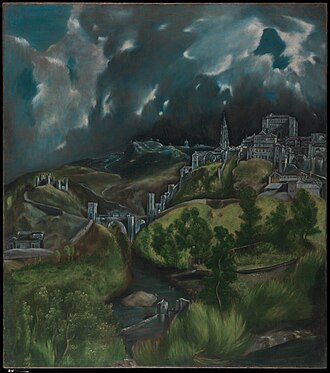 トレドの風景 - El Greco (1596)
 最後の晩餐 - Jacopo Tintoretto (1563)
 奴隷を解放する聖マルコ - Jacopo Tintoretto (1540s)
.jpg) ウルビーノのヴィーナス - Titian (1538)
ウルビーノのヴィーナス - Titian (1538) 聖母被昇天 - Titian (1510s)
 エマオの晩餐 - Caravaggio (1601)
 聖マタイの召命 - Caravaggio (1609)
 大使たち - Hans Holbein the Younger (1533)
 墓の中のキリストの屍 - Hans Holbein the Younger (1520s)