羊飼いの礼拝
エル・グレコ · 1612
.jpg)
El Greco painted this nativity in the last year of his life, meant to hang above his own tomb. The light that pours from the newborn Child feels like a final statement of faith.
The story behind the painting
The Adoration of the Shepherds was made by El Greco during the last year of his life, and the Museo del Prado states that it can be considered the artist's final work. It had a deeply personal purpose: he painted it to hang over his own tomb in the convent of Santo Domingo el Antiguo in Toledo. A few years after his death, El Greco's remains were moved to another church, but the painting stayed where it was. It remained at Santo Domingo until the twentieth century, watching over a grave that no longer held the painter. Today it is in the Prado in Madrid. Wikidata dates it to 1612 and records its size as 319 by 180 centimetres, a tall canvas that lifts the eye upward.
What to look for
Begin with the Child, who seems to give off his own light. That glow plays across the faces of the barefoot shepherds who have come to honour the miraculous birth, picking them out of the surrounding darkness. Notice how the bodies are stretched and distorted, a feature of all of El Greco's last paintings, and how the figures move with a rhythmic, almost dance-like energy. Strong contrasts between bright and dark passages heighten the drama. Above, a group of angels hovers over the scene; the source notes they may resemble the missing section of his Opening of the Fifth Seal. Finally, look to the lower left corner, where El Greco signed his name in Greek.
Meaning and intent
Because the painting was intended for his tomb, it is hard not to read it as the artist's own prayer. The source itself stays with what can be seen: a light coming from the Child rather than from the sky, humble barefoot visitors, and movement that makes the scene feel alive rather than still. In this picture the miracle is shown through light and motion. The shepherds are not posed in calm rows but caught up in the moment, while the angels above join the event from the darkness. The Greek signature, placed in a work meant for his burial place in Toledo, quietly reminds the viewer of the painter's origins.
Legacy
As the Prado describes it, this may be El Greco's last work, which gives it a special place at the end of his career. It also shows the extreme distortion of the body that marks all of his final paintings, so it serves as a clear example of how far his style had travelled by then. Its history adds to its quiet poignancy: made for a grave, it outlasted that purpose, remaining in the convent for centuries after the painter's remains had gone elsewhere. Now in Madrid, it allows visitors to stand before the image El Greco chose to watch over his own rest.
豆知識
- Painted in the last year of El Greco's life; Wikidata dates it 1612.
- Made to hang over his tomb at Santo Domingo el Antiguo, Toledo.
- Size: 319 x 180 cm.
- Museo del Prado, Madrid.
画家について
エル・グレコ (1541-1614)
女性 · 宗教美術 · 聖母マリア · プラド美術館 · 少年 · イエスの幼少時代 · 天使
同じ画家の作品: エル・グレコ
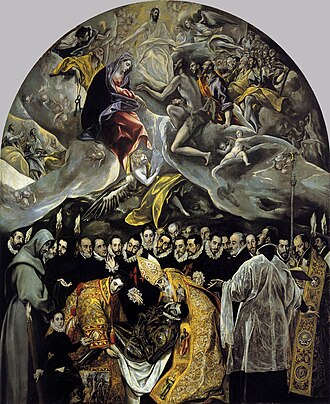 オルガス伯の埋葬 - El Greco (1586)
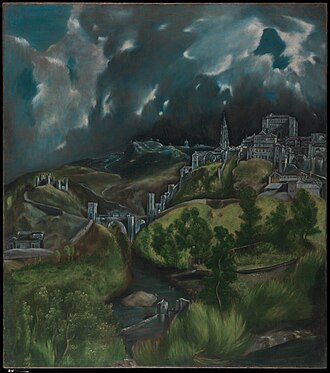 トレドの風景 - El Greco (1596)
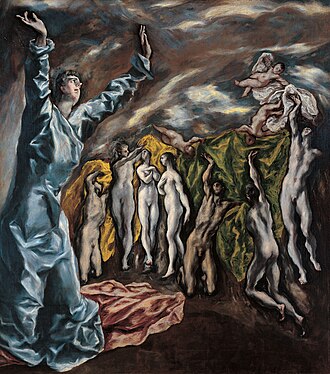 黙示録第5の封印 - El Greco (1610)
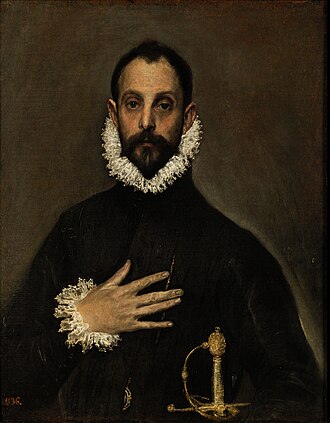 胸に手を置く騎士 - El Greco (1580)
%20-%20Laoco%C3%B6n%20-%20Google%20Art%20Project.jpg) ラオコーン - El Greco (1610s)
ラオコーン - El Greco (1610s)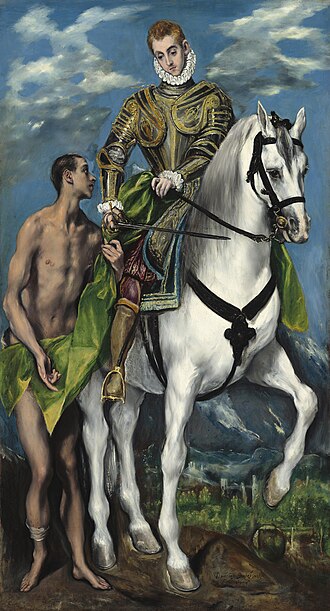 聖マルティヌスと乞食 - El Greco (1597)
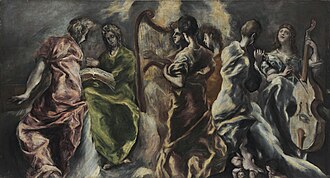 The Concert of the Angels - El Greco (1600s)
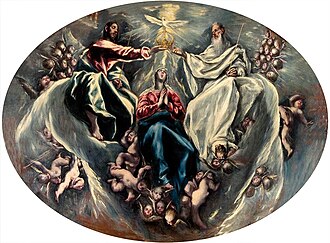 聖母戴冠 - El Greco (1597)
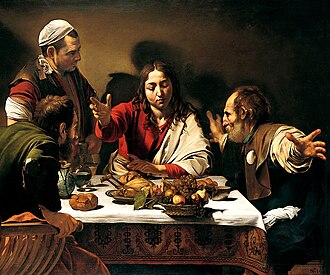 エマオの晩餐
 聖マタイの召命