ドイツのルネサンス期
The German Renaissance brought Italian ideas north of the Alps and mixed them with a sharp, detailed German eye.
Albrecht Dürer · Lucas Cranach the Elder
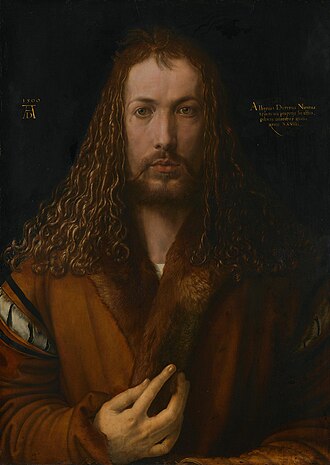 自画像 - Albrecht Dürer (1500)
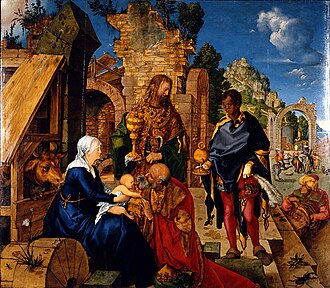 東方三博士の礼拝 - Albrecht Dürer (1504)
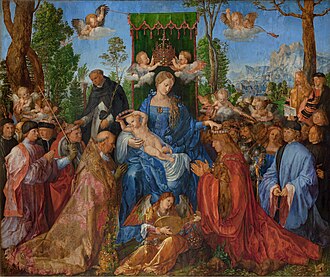 薔薇冠の祝祭 - Albrecht Dürer (1506)
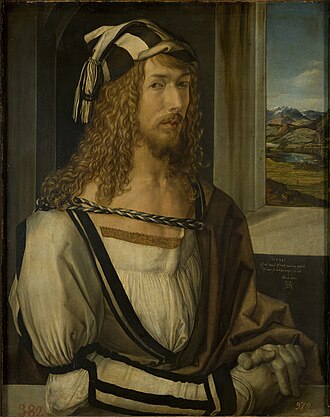 自画像 - Albrecht Dürer (1498)
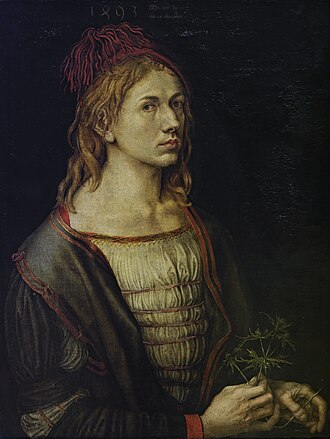 自画像 - Albrecht Dürer (1493)
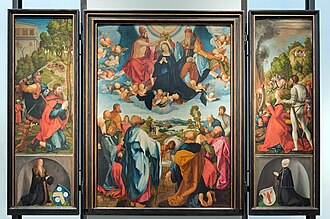 ヘラー祭壇画 - Albrecht Dürer (1500s)
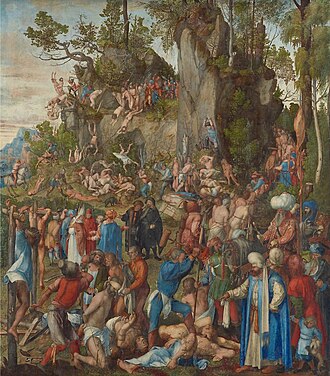 一万人のキリスト教徒の殉教 - Albrecht Dürer (1508)
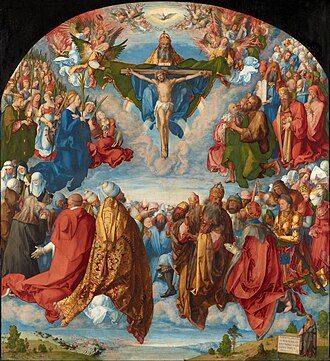 聖三位一体の礼拝 - Albrecht Dürer (1511)
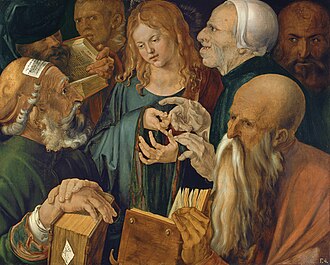 博士たちの間のキリスト - Albrecht Dürer (1506)
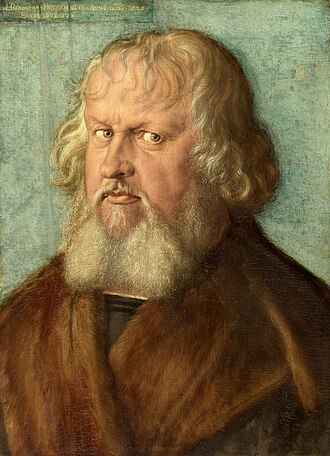 ヒエロニムス・ホルツシューアーの肖像 - Albrecht Dürer (1526)
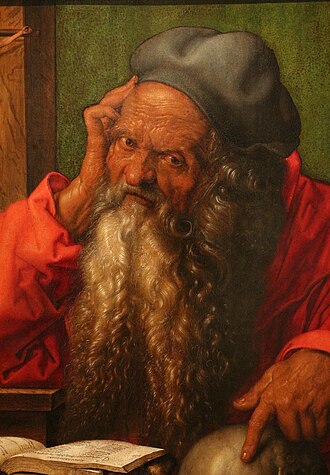 書斎の聖ヒエロニムス - Albrecht Dürer (1521)
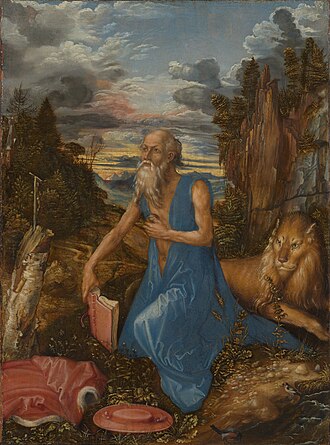 聖ヒエロニムス - Albrecht Dürer (1496)
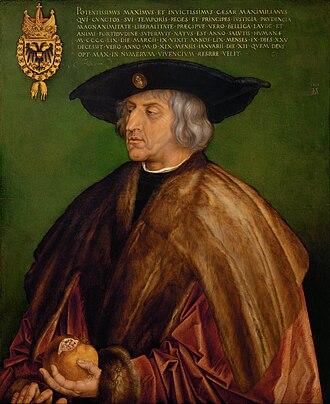 皇帝マクシミリアン1世の肖像 - Albrecht Dürer (1519)
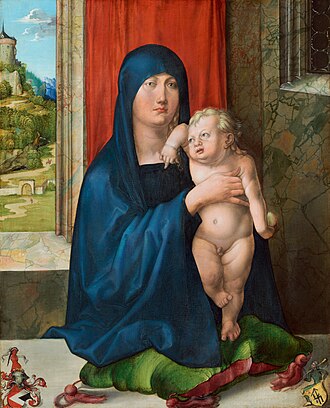 聖母子 - Albrecht Dürer (1490s)
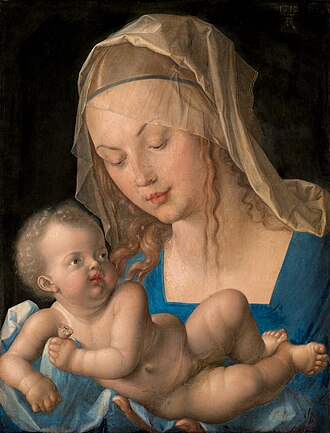 聖母子 - Albrecht Dürer (1512)
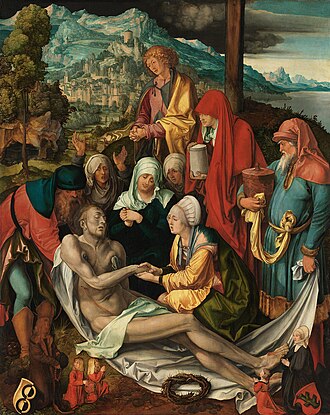 キリストの哀悼 - Albrecht Dürer (1500)
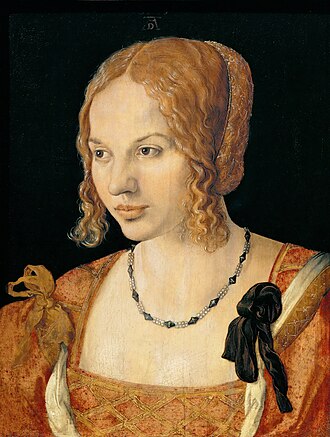 若いヴェネツィアの女性の肖像 - Albrecht Dürer (1505)
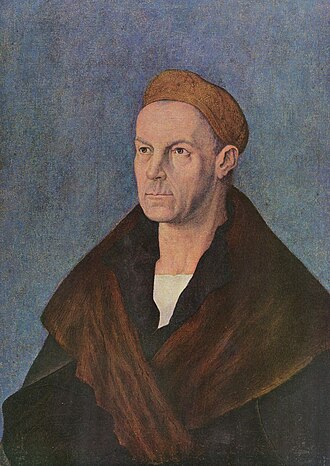 Portrait of Jakob Fugger the Rich - Albrecht Dürer (1520)
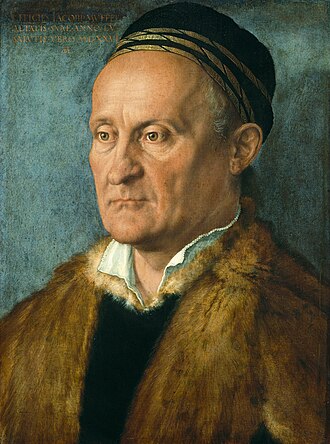 ヤコプ・ムッフェルの肖像 - Albrecht Dürer (1526)
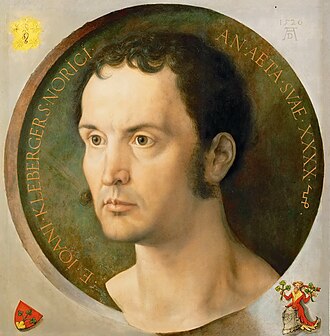 ヨハン・クレーベルガーの肖像 - Albrecht Dürer (1526)
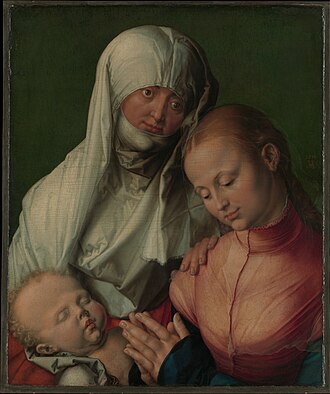 聖アンナと聖母子 - Albrecht Dürer (1519)
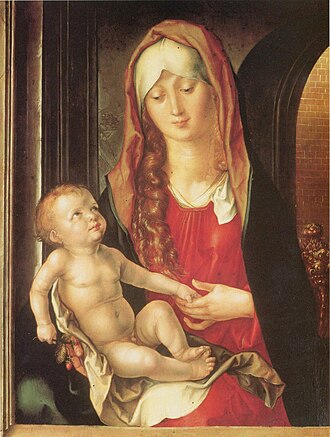 バーニャカヴァッロの聖母 - Albrecht Dürer (1490s)
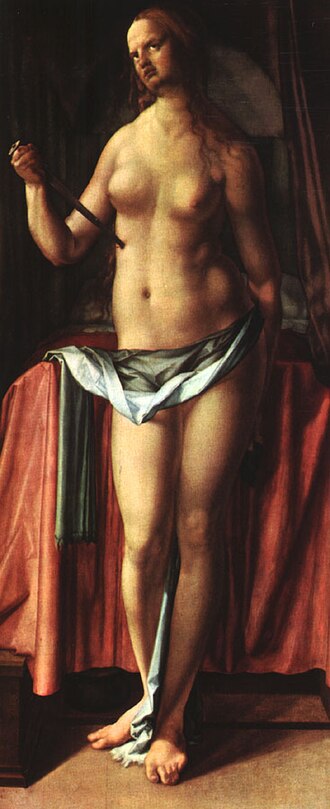 ルクレティアの自害 - Albrecht Dürer (1518)
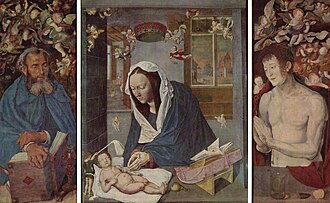 Dresden Altarpiece - Albrecht Dürer (1496)
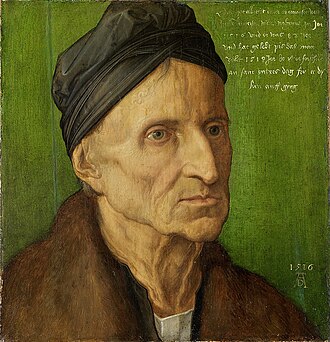 ミヒャエル・ヴォルゲムートの肖像 - Albrecht Dürer (1516)
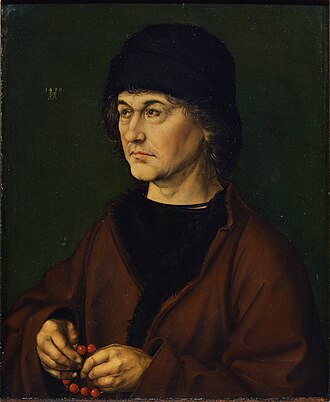 父の肖像 - Albrecht Dürer (1490)
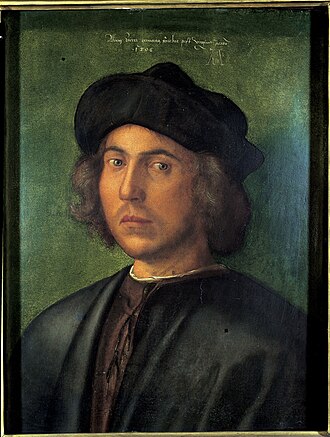 Portrait of a Young Man - Albrecht Dürer (1506)
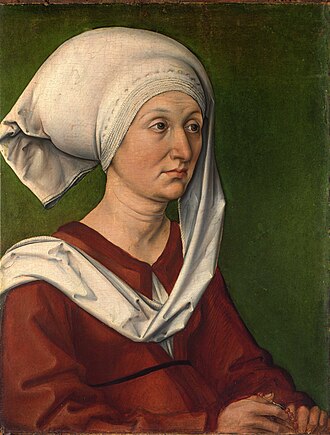 バルバラ・ホルパーの肖像 - Albrecht Dürer (1490)
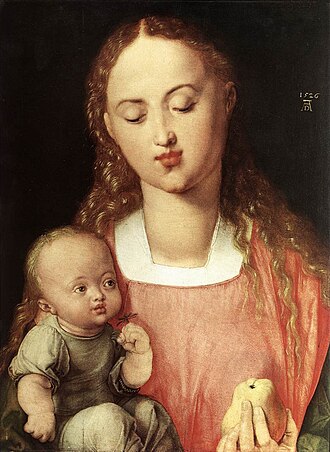 梨の実の聖母 - Albrecht Dürer (1526)
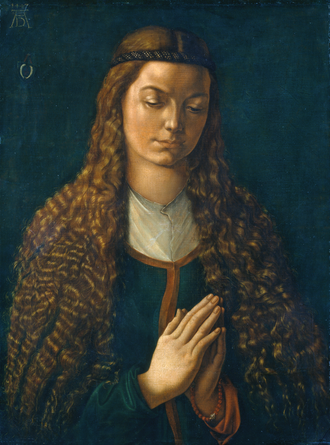 Portrait of a Young Fürleger with Loose Hair - Albrecht Dürer (1497)
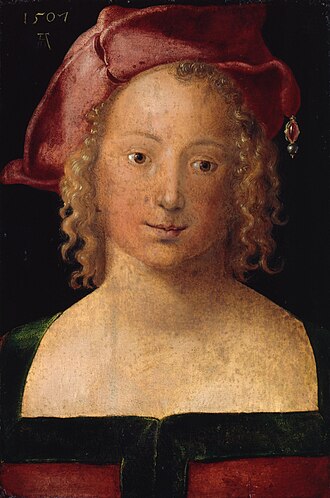 Portrait of a Young Woman with a (Red) Beret - Albrecht Dürer (1507)
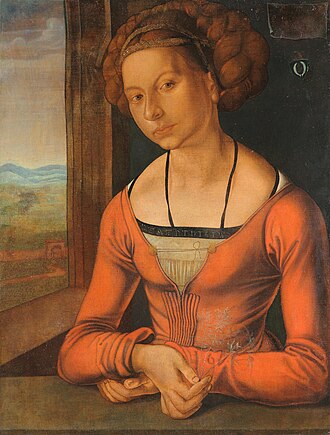 Portrait of a Young Woman with braided hair - Albrecht Dürer (1497)
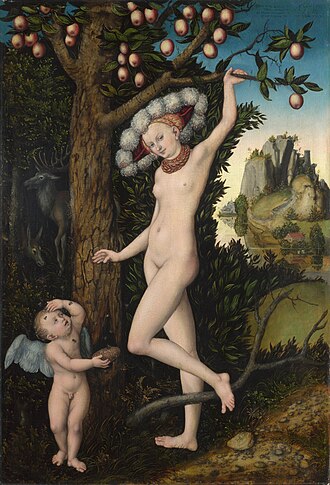 ヴィーナスに訴えるキューピッド - Lucas Cranach the Elder (1520s)
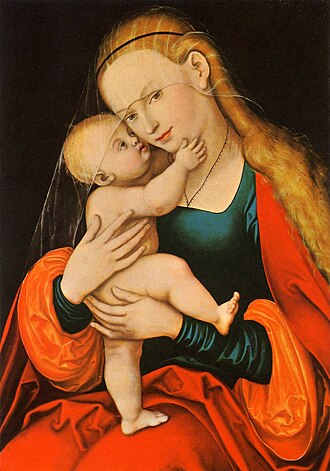 Maria Hilf - Lucas Cranach the Elder (1517)
ドイツのルネサンス期とは? よくある質問
The German Renaissance brought Italian ideas north of the Alps and mixed them with a sharp, detailed German eye. In the age of printing and the Reformation, Albrecht Dürer, Lucas Cranach and Hans Holbein the Younger made prints, portraits and altarpieces that are still among the most precise and personal images in European art.
What is the German Renaissance, in simple words?
It was the cultural and artistic movement that spread among German thinkers and artists in the 15th and 16th centuries, developing from the Italian Renaissance. It is part of the wider Northern Renaissance. Renaissance humanism reached the many German states and principalities, and there were advances in architecture, the arts and the sciences. Germany also produced two developments that dominated 16th century Europe: printing and the Protestant Reformation.
Why was Germany a good place for it?
At the start of the 16th century, the lands of the Holy Roman Empire were among the most prosperous in Europe, even though fewer people lived in towns than in Italy or the Netherlands. Wealth came from metalwork, mining, banking and textiles. Above all, book printing developed in Germany, and German printers dominated the new book trade in most other countries until well into the 16th century.
Why were prints so important?
Printmaking by woodcut and engraving was already more developed in Germany and the Low Countries than anywhere else, and Germans led the way in book illustration, with woodblocks often lent to printers in other cities. Albrecht Dürer trained in the Nuremberg workshop of Michael Wolgemut, which had turned largely to this new medium. Dürer's energetic, balanced woodcuts and engravings made him famous across Europe.
Who was Albrecht Dürer?
Dürer is the most significant German Renaissance artist, known for prints, drawings and painted portraits. After his apprenticeship ended in 1490 he travelled in Germany for four years and in Italy for a few months, then set up his own workshop in Nuremberg. His work keeps a German character but shows strong Italian influence, and it is often taken to mark the start of the German Renaissance in visual art.
How did the Reformation change German art?
Dürer supported Martin Luther but still painted Madonnas and portraits of leaders on both sides. After his death in 1528, his successors had to take sides, and most became Protestants. That cut them off from religious commissions, their main income. Lucas Cranach the Elder, a close friend of Luther, painted "Lutheran altarpieces", but religious works for public display almost stopped in Protestant areas, and by about 1550 German art had largely stalled.
What did Lucas Cranach paint?
Besides Lutheran altarpieces, Cranach was a busy portraitist and helped fill the gap left by the loss of church commissions. He developed a format of thin, vertical pictures of provocative nudes given classical or Biblical titles. On this site you can see examples such as Venus and Cupid with a Honeycomb, Adam and Eve, The Fountain of Youth and Law and Grace, as well as many of his portraits.
Who was Hans Holbein the Younger?
Holbein the Younger was an important portrait painter who also made a few religious works, working mainly in England and Switzerland. His father, Hans Holbein the Elder, had been a pioneer in moving German art from the Gothic to the Renaissance style. The son is also known for a series of small woodcuts on the Dance of Death. His portraits on this site include Henry VIII, Thomas Cromwell and The Merchant Georg Gisze.
What about Grünewald and the Danube School?
Matthias Grünewald left very few works, but his Isenheim Altarpiece, finished in 1515, is widely seen as the greatest German Renaissance painting. It is intensely emotional, keeping the Gothic tradition of unrestrained gesture inside Renaissance composition. The Danube School, a circle in Bavaria and Austria led by Albrecht Altdorfer, produced the first independent landscape art in the West, in both paintings and prints.
Why does it still look partly Gothic?
Elaborate Gothic ornament stayed in use in Germany until well into the 16th century, even in works that are clearly Renaissance in how they treat the human figure. Classical ornament had little historical meaning in much of Germany. Woodcarvers such as Tilman Riemenschneider and Veit Stoss, contemporaries of Dürer, show this mix: their compositions follow Renaissance principles while their ornament often remains Gothic.
Which works should I see first?
Begin on this site with Dürer: his Self-Portrait with Fur-Trimmed Robe, the Feast of the Rosary, the Adoration of the Trinity and the Portrait of Jakob Fugger the Rich. Then look at Holbein's Portrait of Henry VIII and The Body of the Dead Christ in the Tomb, and Cranach's Venus and Cupid with a Honeycomb. Together they show the precise detail, strong portraits and northern spirit of the movement.