一万人のキリスト教徒の殉教
アルブレヒト・デューラー · 1508
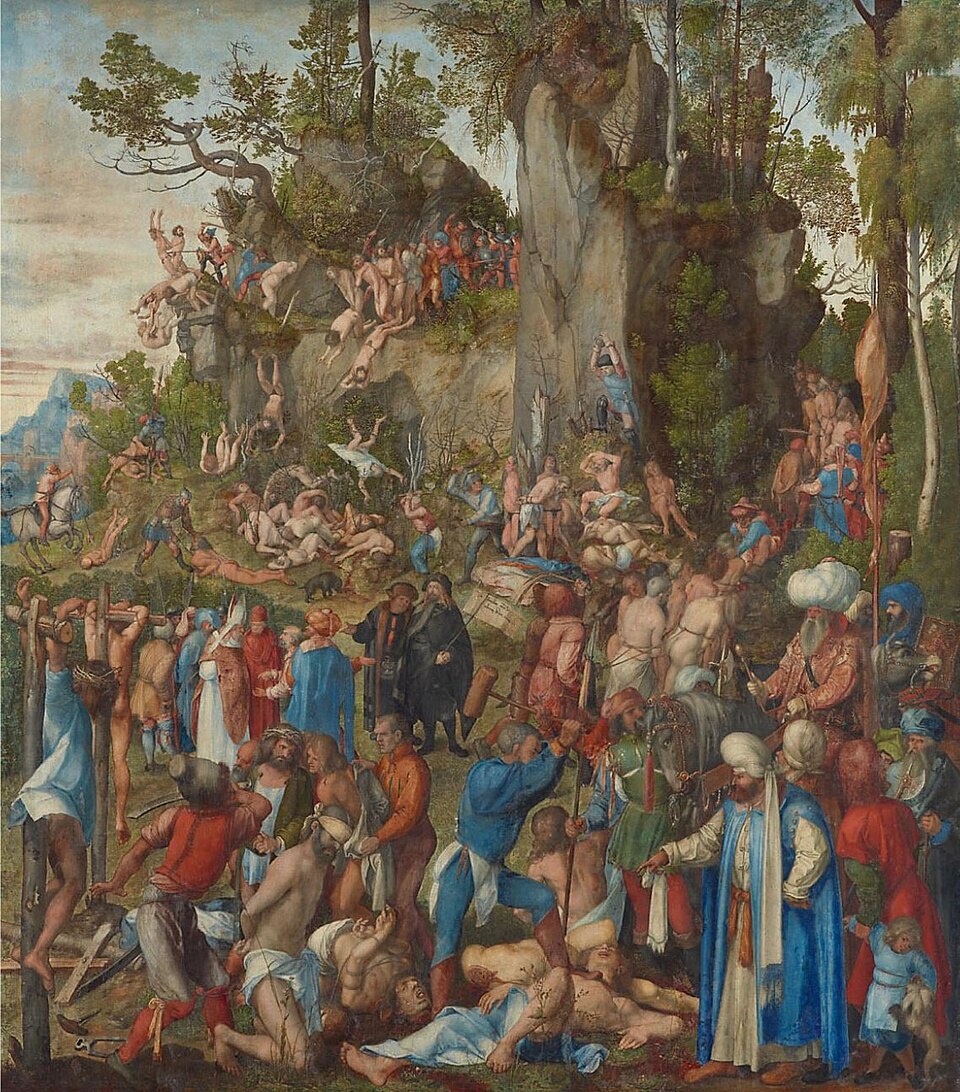
In the middle of a forest filled with suffering, two men in black walk calmly side by side. One of them is the painter himself, holding a small sign with his name.
The story behind the painting
Albrecht Dürer painted this oil in 1508; it is now in the Kunsthistorisches Museum in Vienna. It was commissioned by Frederick III, Elector of Saxony, for the All Saints' Church in Wittenberg. Frederick had been Dürer's patron since 1496, and he chose the subject himself, because his collection of relics included some belonging to the Ten Thousand Martyrs. Dürer had treated the same theme in a woodcut about ten years earlier. The new painting is mentioned repeatedly in his letters to Jakob Heller of Frankfurt, which shows how much attention the project drew while he worked on it.
What to look for
The legend tells of ten thousand Christian soldiers martyred on Mount Ararat by the Persian king Shapur II, on the order of a Roman emperor; sources name Hadrian, Antoninus Pius or Diocletian. Dürer spreads many separate scenes through a forest of clearings and cliffs. In the foreground are crucifixions and executions; in the background, prisoners are led to a cliff edge, and there are scenes of fighting and stoning. The Persian king rides a horse on the right, portrayed as an Ottoman sultan, and the executioners wear bright Ottoman dress. The panel measures about 99 by 87 cm, so all this crowds into a compact space.
Meaning and intent
Dürer made a telling choice compared with his earlier woodcut. He removed some of its most macabre details, such as the torture of the bishop Acacius, and replaced that scene with a crucifixion on the right and the bishop in chains behind it. The violence is still present, but it is ordered into a vast panorama of witness rather than lingering horror. At the very centre, dressed in black, the artist and his friend the humanist Conrad Celtes walk placidly, apparently unaware of the cruelty around them. Celtes had died a few months before the painting was made, so the pair becomes a quiet act of remembrance.
Legacy
The painting is signed on a cartouche that hangs from Dürer's self-portrait, reading, in Latin, that Albertus Dürer the German made it in the year of the Lord 1508. Placing himself and a lost friend inside a sacred story was a bold, personal gesture, and it remains the detail visitors search for first. The work also documents a patron's devotion: a prince who owned relics of these martyrs wanted their story told in his church. Today in Vienna, the panel invites viewers to look slowly, scene by scene, and to find at its heart two calm figures who seem to stand for memory itself.
豆知識
- Oil painting dated 1508, Kunsthistorisches Museum, Vienna
- Commissioned by Frederick III, Elector of Saxony, for All Saints' Church, Wittenberg
- Includes Dürer's self-portrait with Conrad Celtes at the centre
- Wikidata size: 99 x 87 cm
画家について
アルブレヒト・デューラー (1471-1528)
宗教美術 · 美術史美術館 · アルブレヒト・デューラー
同じ画家の作品: アルブレヒト・デューラー
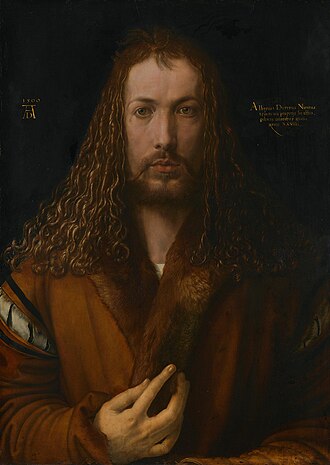 自画像 - Albrecht Dürer (1500)
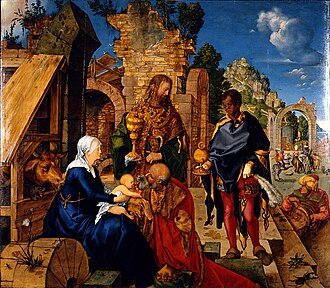 東方三博士の礼拝 - Albrecht Dürer (1504)
.jpg) 薔薇冠の祝祭 - Albrecht Dürer (1506)
薔薇冠の祝祭 - Albrecht Dürer (1506)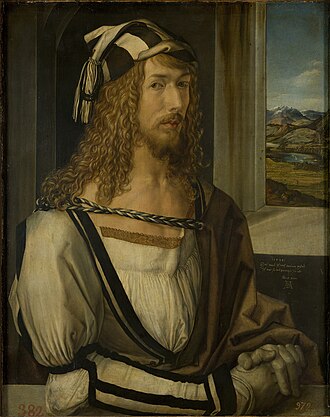 自画像 - Albrecht Dürer (1498)
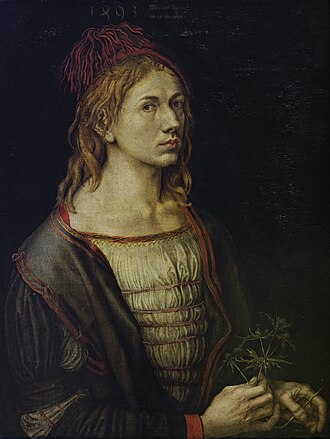 自画像 - Albrecht Dürer (1493)
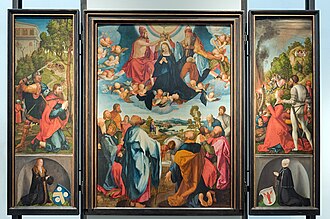 ヘラー祭壇画 - Albrecht Dürer (1500s)
%20-%20Google%20Art%20Project.jpg) 聖三位一体の礼拝 - Albrecht Dürer (1511)
聖三位一体の礼拝 - Albrecht Dürer (1511)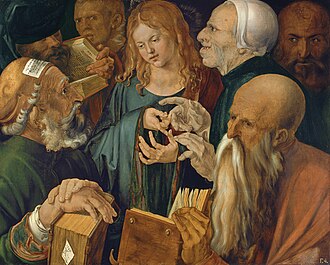 博士たちの間のキリスト - Albrecht Dürer (1506)
 モナ・リザ
モナ・リザ 白貂を抱く貴婦人
.jpg) ウルビーノのヴィーナス
ウルビーノのヴィーナス 聖母被昇天
聖母被昇天 ヴィーナスの誕生
 プリマヴェーラ