リュートを調弦する女
Johannes Vermeer · 1662
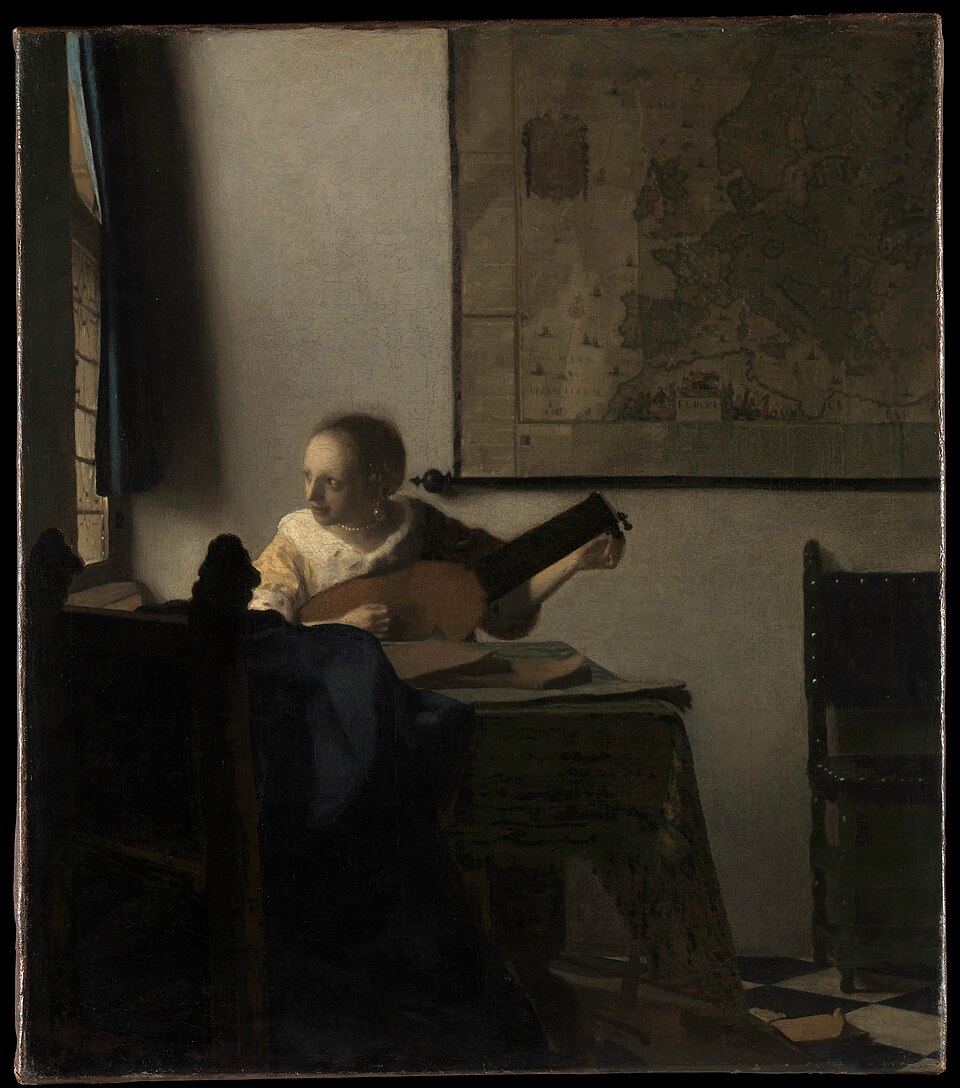
A young woman tunes her lute and looks eagerly toward the window, as if someone is about to arrive. Vermeer turned a moment of waiting into a quiet music of light and shadow.
The story behind the painting
Vermeer painted Woman with a Lute, also called Woman with a Lute Near a Window, around 1662 to 1663; Wikidata gives 1662. It was likely made shortly after Young Woman with a Water Pitcher, and it shares with that painting the framing of the figure within rectangular shapes. The canvas, 51.4 by 45.7 cm, was almost certainly cut from the same bolt of cloth as the one used for Lady Writing a Letter with her Maid. Such small facts let us glimpse the painter's studio, where works grew side by side from the same materials and ideas.
What to look for
A young woman sits by a window, wearing an ermine-trimmed jacket and enormous pearl earrings. She holds a lute and looks eagerly out of the window. In the foreground a viola da gamba lies on the floor, and songbooks flow across the tabletop and down onto the floor. Compared with the Water Pitcher, the tones are more muted, and Vermeer uses shadows and soft contours. Today the objects in the foreground have darkened with age, and the paint surface is worn in the same area, which somewhat weakens the impression of space and atmosphere there.
Meaning and intent
The scene suggests a musical courtship. According to the Metropolitan Museum of Art, the viola da gamba on the floor and the stream of songbooks hint at a duet to come, and the woman seems to be expecting a male visitor. Yet the lute adds another layer: contemporary viewers recognised the tuning of a lute as a symbol of the virtue of temperance. Longing and restraint sit together in the same quiet gesture. The softer shadows, part of a shift in Vermeer's painting in the mid to late 1660s, deepen the feeling of intimacy.
Legacy
The painting was given to the Metropolitan Museum of Art in New York in 1900, through the bequest of the railroad industrialist Collis P. Huntington, and it remains there today. The damage to the foreground reminds us that even Vermeer's carefully balanced pictures change with time. Still, the light falling from the window across her face and the eager turn of her head keep the moment alive. Its close ties to Young Woman with a Water Pitcher, in the same museum, and to Lady Writing a Letter with her Maid, show it as part of a connected group of works.
豆知識
- Painted around 1662-1663.
- The canvas came from the same bolt as Lady Writing a Letter with her Maid.
- Tuning a lute was read as a symbol of temperance.
- Bequeathed to the Metropolitan Museum of Art by Collis P. Huntington in 1900.
画家について
Johannes Vermeer (1632-1675)
女性 · 風俗美術 · メトロポリタン美術館 · オランダ黄金時代の絵画 · 窓 · 音楽家 · リュート · 地図
同じ画家の作品: Johannes Vermeer
 真珠の耳飾りの少女 - Johannes Vermeer (1665)
 牛乳を注ぐ女 - Johannes Vermeer (c. 1658)
 デルフト眺望 - Johannes Vermeer (1660s)
 天文学者 - Johannes Vermeer (1664)
 絵画芸術 - Johannes Vermeer (1660s)
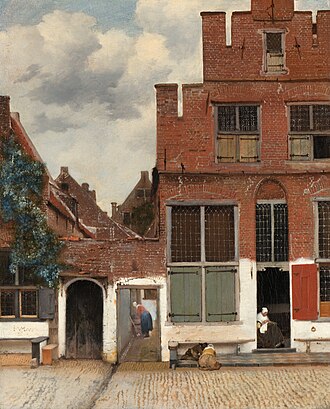 小路 - Johannes Vermeer (1658)
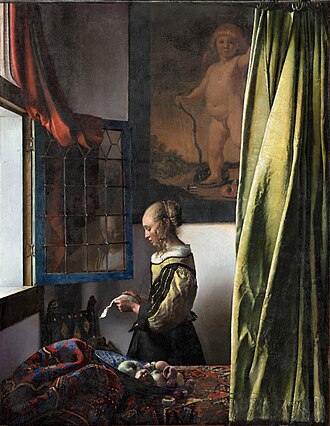 窓辺で手紙を読む女 - Johannes Vermeer (1650s)
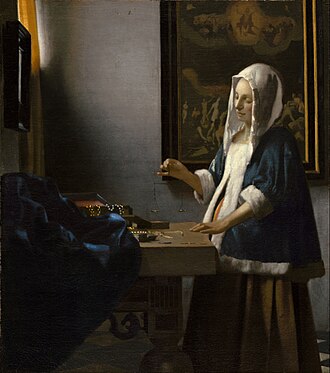 天秤を持つ女 - Johannes Vermeer (1665)
関連する画家の作品
 夜警 - Rembrandt van Rijn (1642)
 自画像 - Rembrandt van Rijn (1659)
 聖ニコラウスのお祭り - Jan Steen (1660s)
 牡蠣を食べる少女 - Jan Steen (1658)
 陽気な酒飲み - Frans Hals (1620s)
 微笑む騎士 - Frans Hals (1624)
 ウェイク・ベイ・ドゥールステーデの風車 - Jacob van Ruisdael (1670)
 The Jewish Cemetery - Jacob van Ruisdael (1650s)
 デルフトの家の中庭 - Pieter de Hooch (1658)
 リンゴの皮を剥く女性 - Pieter de Hooch (1663)