ヴァネッサ
ジョン・エヴァレット・ミレー · 1868
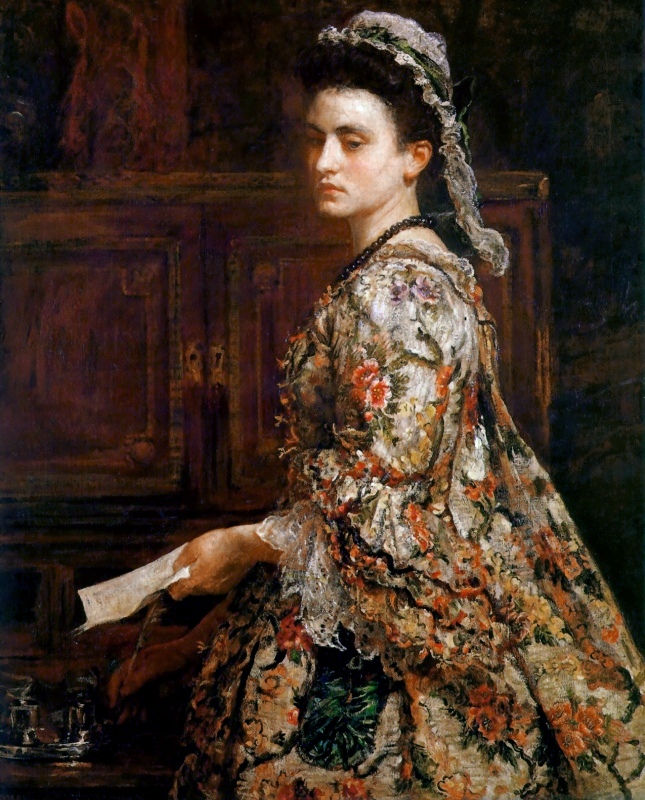
A sad young woman holds a letter, painted in bold, visible strokes. No portrait of the real Vanessa, Jonathan Swift's friend Esther Vanhomrigh, survives, so in 1868 Millais imagined her, and in doing so changed his own way of painting.
The story behind the painting
Esther Vanhomrigh, who lived from 1688 to 1723, was a close friend and correspondent of the writer Jonathan Swift. He gave her the nickname Vanessa, and she became known as Swift's Vanessa because of the fictional name he used when he published their correspondence. In 1868 John Everett Millais painted her in what is called a fancy portrait. The picture is wholly imaginary: no image of Esther Vanhomrigh survives, and very little is known about her appearance, although she was said not to be a beauty. Millais painted a companion piece showing Stella.
What to look for
The canvas, about 113 by 91.5 cm, shows a woman with brown hair holding a letter, presumably written to or by Swift. Look closely at the surface. Here Millais abandons, fully for the first time, the detailed finish still seen in his Waking and Sleeping of the previous year. Influenced by Diego Velázquez and Joshua Reynolds, he paints with dramatic, visible brush strokes in vivid colours, a handling of paint that has been described as almost violently modern. The fast, open brushwork makes the costume and the face shimmer rather than settle into crisp detail.
Meaning and intent
Her sad expression is tied to the painful story behind the letter. Her relationship with Swift was ended by his relationship with another woman, Esther Johnson, whom he called Stella and whom he may have married secretly. Vanessa died soon afterwards from tuberculosis. Millais does not tell this history directly; he gives us a single quiet moment with a letter in hand, and lets the melancholy face carry the rest. Because the likeness is invented, the painting is less about one person's features than about longing and loss.
Legacy
Vanessa marks a major turning point in Millais's art, the moment his finish gives way to loose, expressive painting. It also belongs to a revival of eighteenth-century styles in British art at the time, when interest in the brushwork of Reynolds and Gainsborough was growing again. The painting was shown at the Royal Academy Exhibition of 1869 at Burlington House in London. Today it hangs in Sudley House in Liverpool, a record of the year Millais began to paint in a freer and bolder way.
豆知識
- Painted by John Everett Millais in 1868.
- An imaginary portrait of Esther Vanhomrigh, Swift's Vanessa.
- Marks Millais's turn to loose, visible brushwork.
- Shown at the Royal Academy in 1869; now in Sudley House, Liverpool.
画家について
ジョン・エヴァレット・ミレー (1829-1896)
同じ画家の作品: ジョン・エヴァレット・ミレー
 オフィーリア - John Everett Millais (1851)
 両親の家のキリスト - John Everett Millais (1849)
 ロレンツォとイザベラ - John Everett Millais (1849)
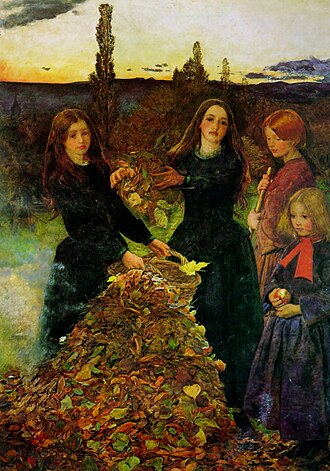 秋の落ち葉 - John Everett Millais (1856)
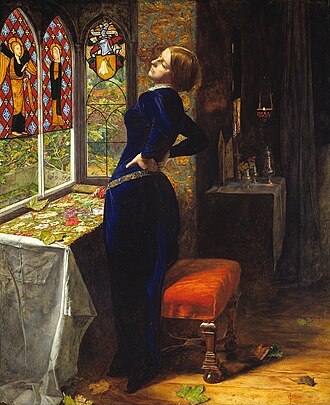 マリアナ - John Everett Millais (1851)
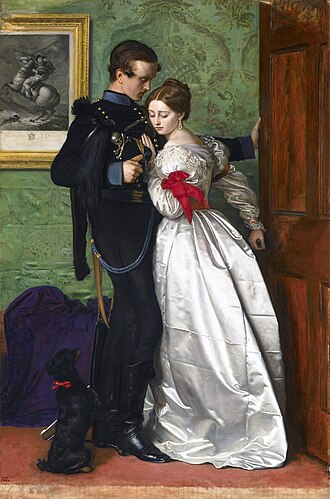 ブラック・ブランズウィッカー - John Everett Millais (1860)
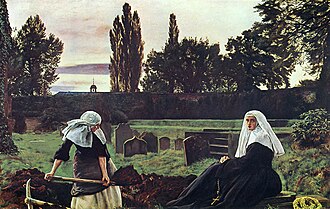 安息の谷 - John Everett Millais (1850s)
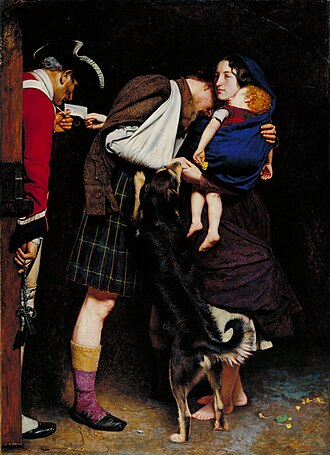 1746年の放免令 - John Everett Millais (1850s)
関連する画家の作品
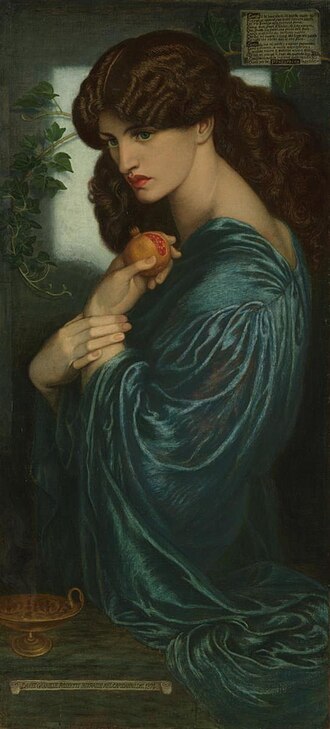 プロセルピナ - Dante Gabriel Rossetti (1874)
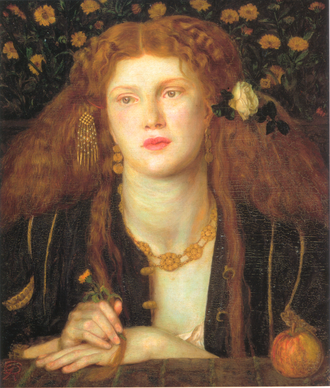 キスされた唇 - Dante Gabriel Rossetti (1859)
 ヒュラスとニンフたち - John William Waterhouse (1896)
 シャロットの女 - John William Waterhouse (1888)