ロレンツォとイザベラ
ジョン・エヴァレット・ミレー · 1849
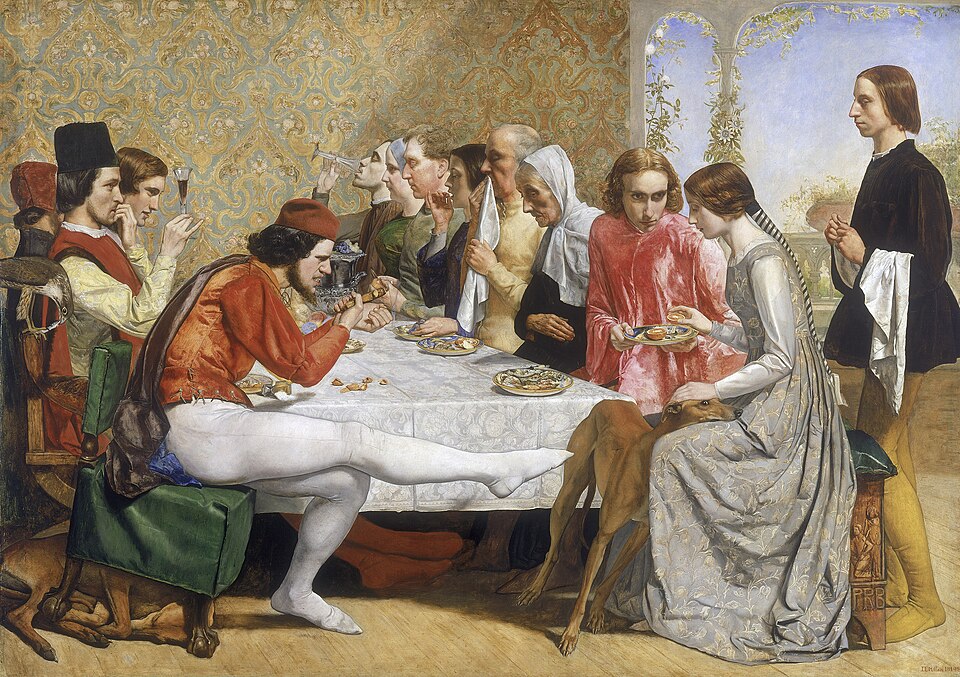
A long table, a crowd of diners, and a quiet couple sharing a blood orange while the brothers beside them are already plotting murder. Isabella was Millais's first exhibited painting in the new Pre-Raphaelite style.
The story behind the painting
Millais completed Isabella, also known as Lorenzo and Isabella, in 1848 to 1849, shortly after the Pre-Raphaelite Brotherhood was formed in 1848, and showed it at the Royal Academy in 1849. The tale comes from Boccaccio's Decameron and was retold in John Keats's poem Isabella, or the Pot of Basil. Isabella is the sister of wealthy merchants; Lorenzo works for her brothers. Millais and William Holman Hunt both made drawings of the poem, but only Millais turned his into a full painting. He also drew on Hogarth's satirical Marriage a-la-mode.
What to look for
Isabella sits at the right in grey, and the doomed Lorenzo hands her a blood orange on a plate. Across the table one brother violently kicks a frightened greyhound while cracking a nut, and his kicking leg and the upturned chair break the balance of the scene. The perspective is deliberately distorted, stretching the right side of the table and flattening the diners. Millais almost removes shadow modelling: a flat black tunic sits against the sharply modelled white cloth of a servant whose yellow stockings melt into the background. Each plate carries its own small glazed picture, and the bench under Isabella is carved with a kneeling figure and the letters PRB.
Meaning and intent
The picture shows the moment the brothers realise there is a romance between the two young people and plan to kill Lorenzo so that Isabella can marry a rich nobleman. The cut blood orange is read as a sign of a severed neck, pointing ahead to the story's end, when Isabella cuts off Lorenzo's head after finding him buried. Some have suggested that Isabella's braided hairstyle comes from a drawing of Beatrice d'Este that Millais had just copied. In 2012 the curator Carol Jacobi argued that the shadow, leg and nutcracker of the kicking brother form deliberate sexual symbols, though she did not know Millais's intention.
Legacy
Millais gave every figure the same careful precision, and several are real people. The man third from the back on the right, peeling an apple, is William Hugh Fenn, whom Millais had painted in 1848, and the profile at the back left is thought to be his friend the painter Walter Deverell. The painting now belongs to the Walker Art Gallery in Liverpool. In 1980 Sam Walsh painted The Dinner Party, one of his most complex works, inspired by Isabella, and it hangs in the same museum, where diners from different periods of the painter's life share one table.
豆知識
- Millais's first exhibited Pre-Raphaelite painting, shown at the Royal Academy in 1849.
- Based on Keats's poem Isabella, or the Pot of Basil, from Boccaccio.
- The bench is carved with the letters PRB.
- Now in the Walker Art Gallery, Liverpool.
画家について
ジョン・エヴァレット・ミレー (1829-1896)
風俗美術 · イヌ · ラファエル前派 · ウォーカー・アート・ギャラリー
同じ画家の作品: ジョン・エヴァレット・ミレー
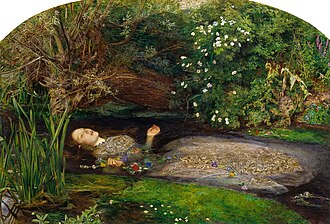 オフィーリア - John Everett Millais (1851)
%20-%20Google%20Art%20Project.jpg) 両親の家のキリスト - John Everett Millais (1849)
両親の家のキリスト - John Everett Millais (1849)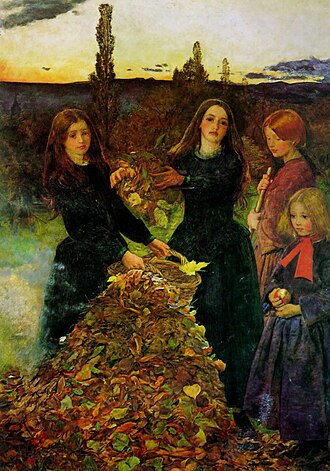 秋の落ち葉 - John Everett Millais (1856)
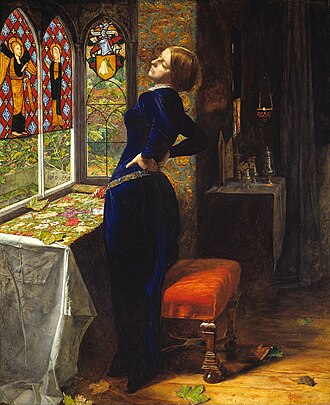 マリアナ - John Everett Millais (1851)
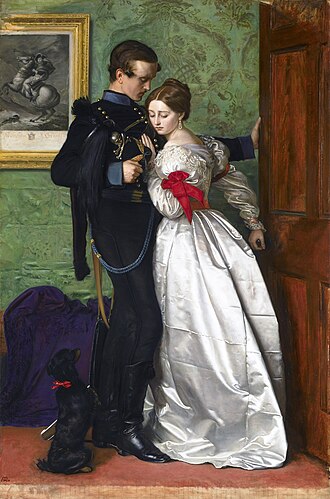 ブラック・ブランズウィッカー - John Everett Millais (1860)
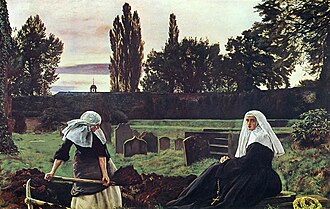 安息の谷 - John Everett Millais (1850s)
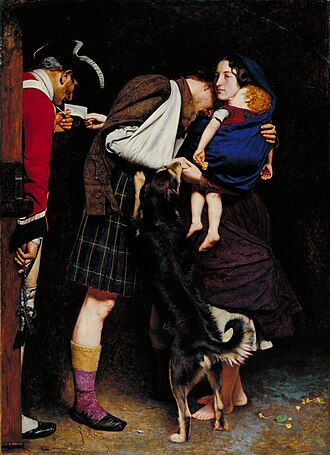 1746年の放免令 - John Everett Millais (1850s)
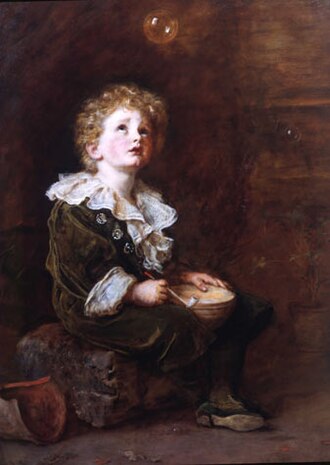 しゃぼん玉 - John Everett Millais (1886)
関連する画家の作品
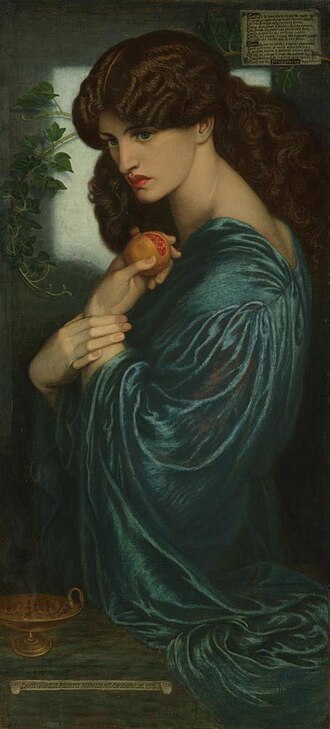 プロセルピナ - Dante Gabriel Rossetti (1874)
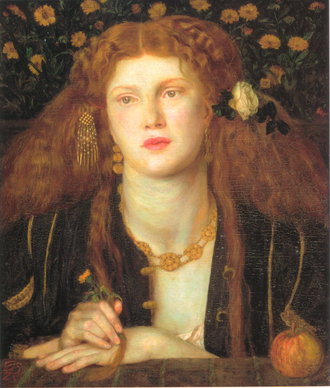 キスされた唇 - Dante Gabriel Rossetti (1859)
 ヒュラスとニンフたち - John William Waterhouse (1896)
.jpg) シャロットの女 - John William Waterhouse (1888)
シャロットの女 - John William Waterhouse (1888)