1746年の放免令
ジョン・エヴァレット・ミレー · 1850s
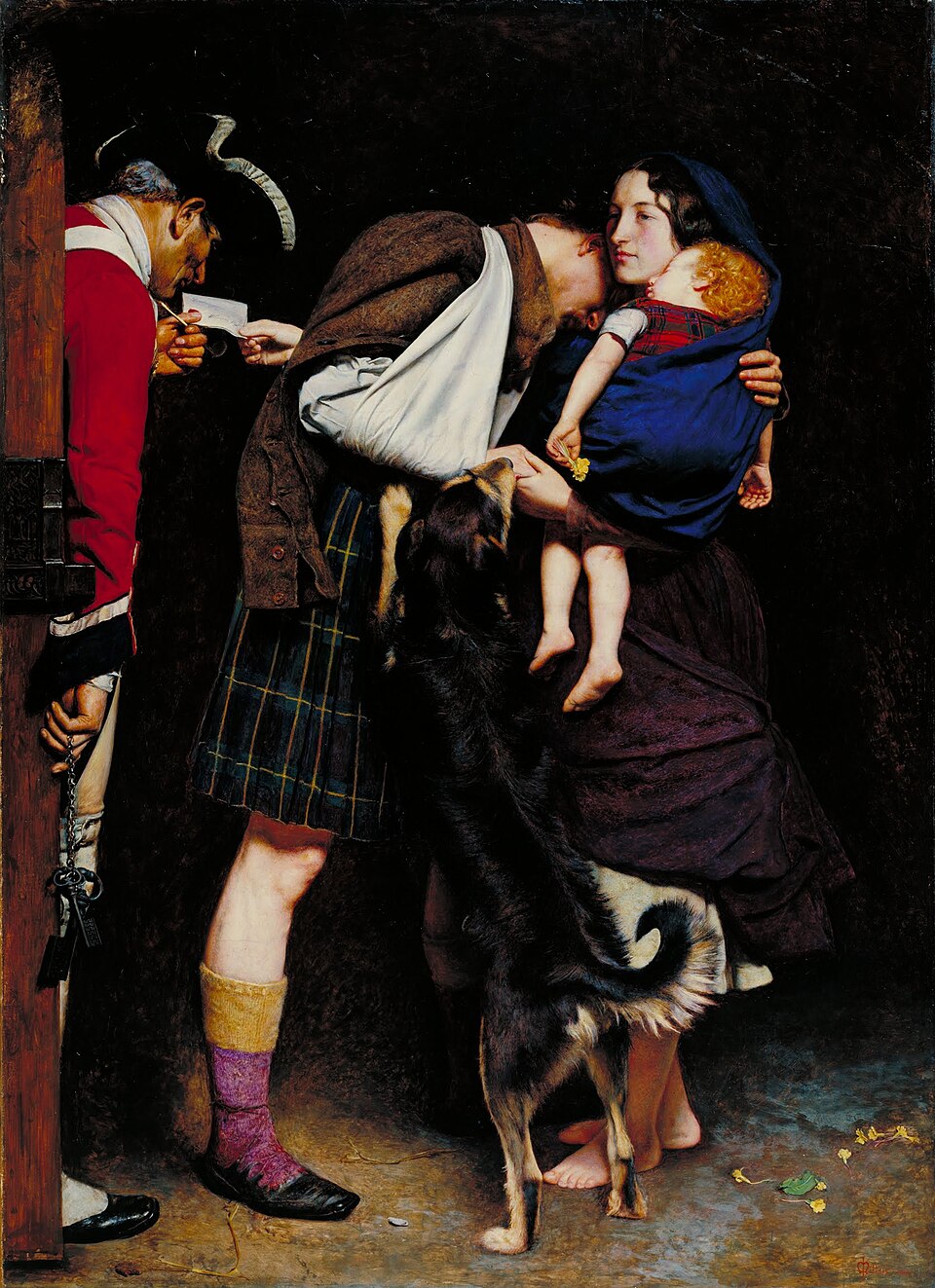
A young Highland wife holds out a paper to the gaoler, her baby in her arms, while her wounded husband weeps on her shoulder. She does not cry. The model for her face was Effie Gray, and the painting marks a turn in Millais's life and art.
The story behind the painting
Painted in 1852 to 1853 and exhibited in 1853, the picture is set after the Jacobite rising of 1745. A Highland soldier has been imprisoned, and his wife arrives with an order securing his release. Effie Gray, then the wife of the critic John Ruskin, Millais's principal supporter, modelled for the woman. While Millais worked on the painting he began to develop a friendship with her. A study for the picture has her head drawn on one side and, on the other, a man kneeling in supplication to a woman, labelled accepted. Effie later left Ruskin for Millais.
What to look for
The wife holds her child and shows the order to the guard while her husband embraces her. A reviewer in the Illustrated London News described him as overcome with emotion and weak from a wound, his arm in a sling, able only to fall upon her neck and weep, while she sheds no tear, her eyes red and heavy from weeping and waking, and meets the stern gaoler with a proud look. Notice the background: dark and generalised, very different from the dense detail of Millais's Ophelia, and lit with strong contrasts of light and shade.
Meaning and intent
The painting marks the beginning of Millais's move away from the strongly medievalist Pre-Raphaelitism of his early years. Its theme, though, continues earlier pictures such as A Huguenot and The Proscribed Royalist, 1651: tender relationships strained by historical drama. The Illustrated London News reviewer, while not joining any party, wrote that Millais had won an order of merit worth more than any academic honour, drew bigger crowds in his corner than all the Academicians together, and that Pre-Raphaelitism was a great fact that might regenerate art in Britain.
Legacy
The lawyer Joseph Arden bought the picture in 1853 and went on to collect Millais's Waiting and The Rescue, which is the companion piece to this one. It was shown at the Royal Academy in 1853 and at the Paris Salon of 1855 during the Exposition Universelle, and Sir Henry Tate presented it to the Tate Gallery in 1898. Its title was taken for a 1947 book by William Milbourne James about the Ruskin, Effie and Millais love triangle and a 1998 radio play, and its painting is dramatised in the play Mrs Ruskin and the series Desperate Romantics.
豆知識
- Painted 1852 to 1853 and exhibited at the Royal Academy in 1853.
- Effie Gray modelled for the wife.
- Marks Millais's move away from early Pre-Raphaelitism.
- Presented to the Tate Gallery by Sir Henry Tate in 1898.
画家について
ジョン・エヴァレット・ミレー (1829-1896)
ナショナル・ギャラリー · 歴史画 · イヌ · ラファエル前派 · テート・ギャラリー · 家族
同じ画家の作品: ジョン・エヴァレット・ミレー
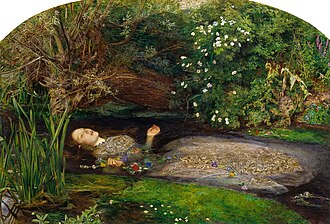 オフィーリア - John Everett Millais (1851)
%20-%20Google%20Art%20Project.jpg) 両親の家のキリスト - John Everett Millais (1849)
両親の家のキリスト - John Everett Millais (1849)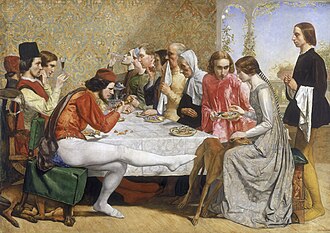 ロレンツォとイザベラ - John Everett Millais (1849)
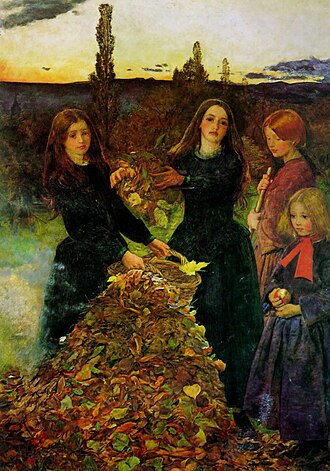 秋の落ち葉 - John Everett Millais (1856)
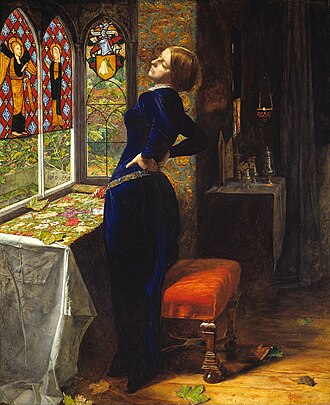 マリアナ - John Everett Millais (1851)
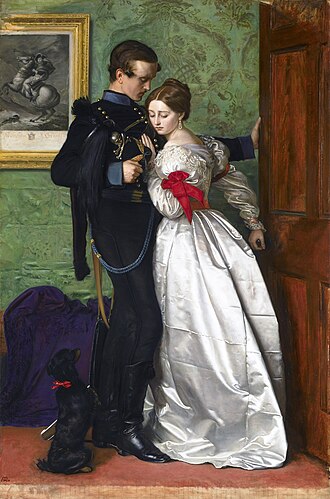 ブラック・ブランズウィッカー - John Everett Millais (1860)
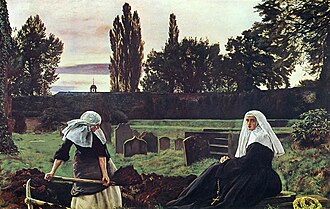 安息の谷 - John Everett Millais (1850s)
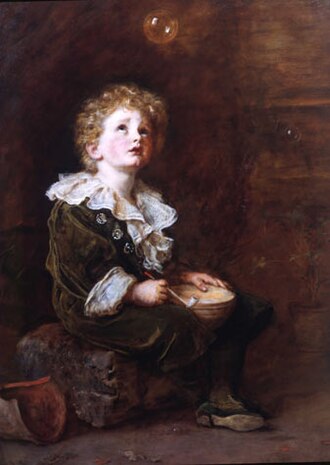 しゃぼん玉 - John Everett Millais (1886)
関連する画家の作品
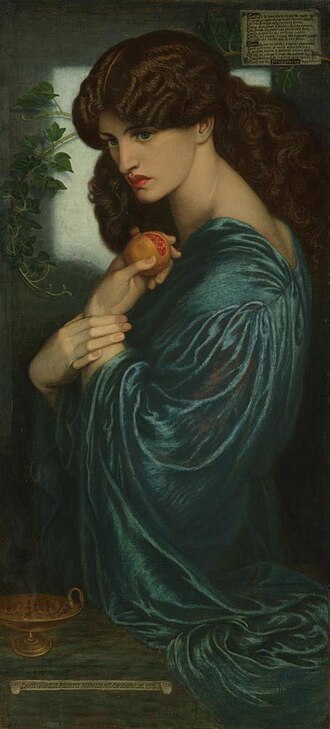 プロセルピナ - Dante Gabriel Rossetti (1874)
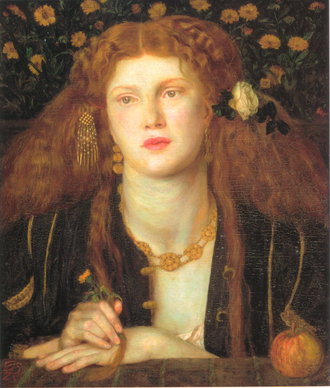 キスされた唇 - Dante Gabriel Rossetti (1859)
 ヒュラスとニンフたち - John William Waterhouse (1896)
.jpg) シャロットの女 - John William Waterhouse (1888)
シャロットの女 - John William Waterhouse (1888)