マリアナ
ジョン・エヴァレット・ミレー · 1851
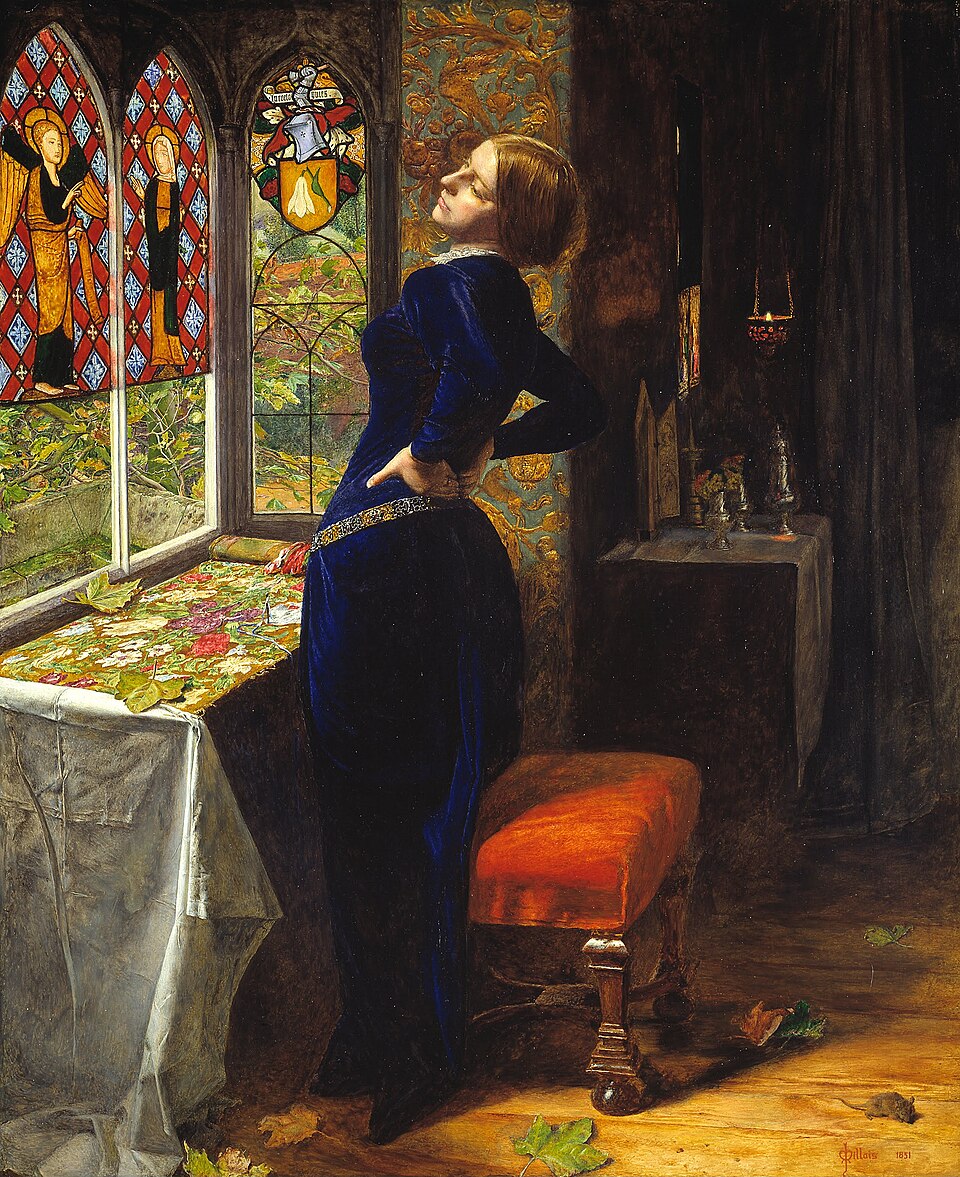
A woman in deep blue rises from her embroidery and arches her back, weary of waiting. Autumn leaves drift onto her work, a mouse creeps across the floor, and a whole poem of loneliness is packed into a panel barely larger than a window pane.
The story behind the painting
In Shakespeare's Measure for Measure, Mariana is rejected by her fiancé Angelo when her dowry is lost at sea, and she retreats to a solitary life in a moated house. Tennyson retold her story in his 1830 poem Mariana. Millais, a founding member of the Pre-Raphaelite Brotherhood formed in 1848, painted her in 1851 and showed the picture at the Royal Academy that year with lines from the poem as its caption. He wanted a viewer who knew Tennyson to read the whole poem through the painting. It may have been a companion to William Holman Hunt's Claudio and Isabella, from the same play.
What to look for
Mariana, in a long blue dress painted with Prussian blue and ultramarine, stands up from the embroidery before her to stretch her back. Her stool and table face a Gothic stained-glass window, through which garden leaves are turning from green to brown. Some leaves have fallen on her work and on the floor, beside a small mouse. Behind her a triptych, a silver casket and candles form a small altar near the bed curtain. The window shows the Annunciation, based on a window at Merton College, Oxford, and an invented coat of arms with a snowdrop and the motto In coelo quies, In Heaven there is rest.
Meaning and intent
Every detail can be read. The autumn leaves speak of waiting and passing time; the roll of finished embroidery shows how long she has worked; her arched back suggests hours of sitting, while also emphasising her body. The altar may recall Mariana's prayers to the Virgin in Tennyson's Mariana in the South. The mouse comes straight from the poem's mouldering wainscots, and one anecdote says Millais killed a real mouse in order to paint it. Yet Millais departs from Tennyson: his Mariana lives among vivid colours, not in the dilapidated ruin of the poem.
Legacy
The painting appeared a year after Millais's Christ in the House of His Parents had been heavily attacked. In 1851 John Ruskin defended the Pre-Raphaelites, writing that no study of drapery in the whole Academy could compare with the white cloths on Mariana's table. The picture in turn inspired Elizabeth Gaskell's 1853 novel Ruth. It was accepted by the nation in lieu of inheritance tax on the estate of Roger Makins, 1st Baron Sherfield, and allocated to the Tate in 1999, described then as arguably the greatest Pre-Raphaelite painting. The Victoria and Albert Museum holds an 1850 pen-and-ink study.
豆知識
- Painted in 1851 on a mahogany panel, 49.5 by 59.7 cm.
- Based on Tennyson's poem Mariana, after Shakespeare.
- Praised by John Ruskin in 1851.
- In Tate Britain since 1999.
画家について
ジョン・エヴァレット・ミレー (1829-1896)
女性 · ドレス · 直立姿勢 · テーブル · ラファエル前派 · テート・ギャラリー · 窓 · 席 · 寄せ木張り
同じ画家の作品: ジョン・エヴァレット・ミレー
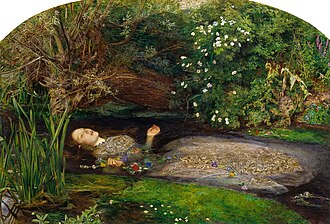 オフィーリア - John Everett Millais (1851)
%20-%20Google%20Art%20Project.jpg) 両親の家のキリスト - John Everett Millais (1849)
両親の家のキリスト - John Everett Millais (1849)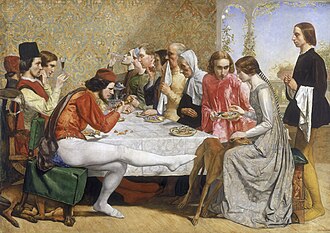 ロレンツォとイザベラ - John Everett Millais (1849)
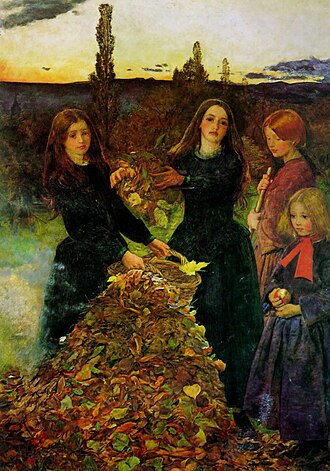 秋の落ち葉 - John Everett Millais (1856)
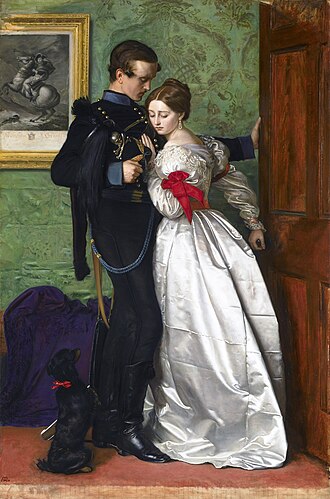 ブラック・ブランズウィッカー - John Everett Millais (1860)
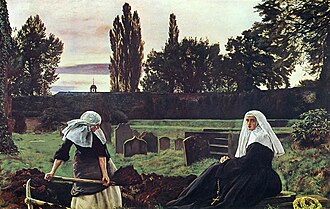 安息の谷 - John Everett Millais (1850s)
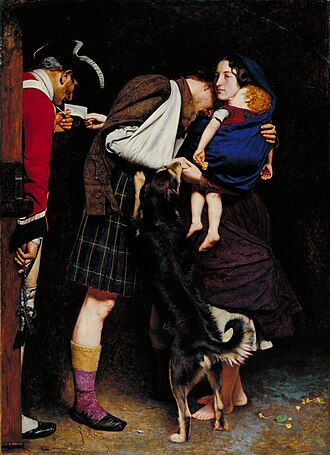 1746年の放免令 - John Everett Millais (1850s)
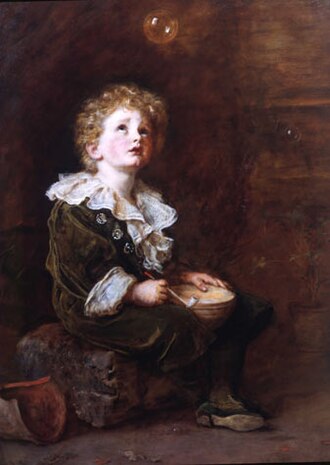 しゃぼん玉 - John Everett Millais (1886)
関連する画家の作品
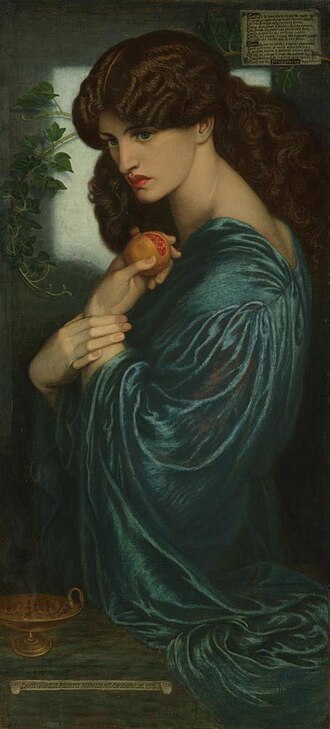 プロセルピナ - Dante Gabriel Rossetti (1874)
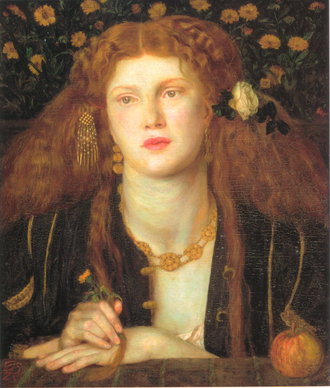 キスされた唇 - Dante Gabriel Rossetti (1859)
 ヒュラスとニンフたち - John William Waterhouse (1896)
.jpg) シャロットの女 - John William Waterhouse (1888)
シャロットの女 - John William Waterhouse (1888)