The Vision of Zacharias in the Temple
Rembrandt van Rijn · 1633
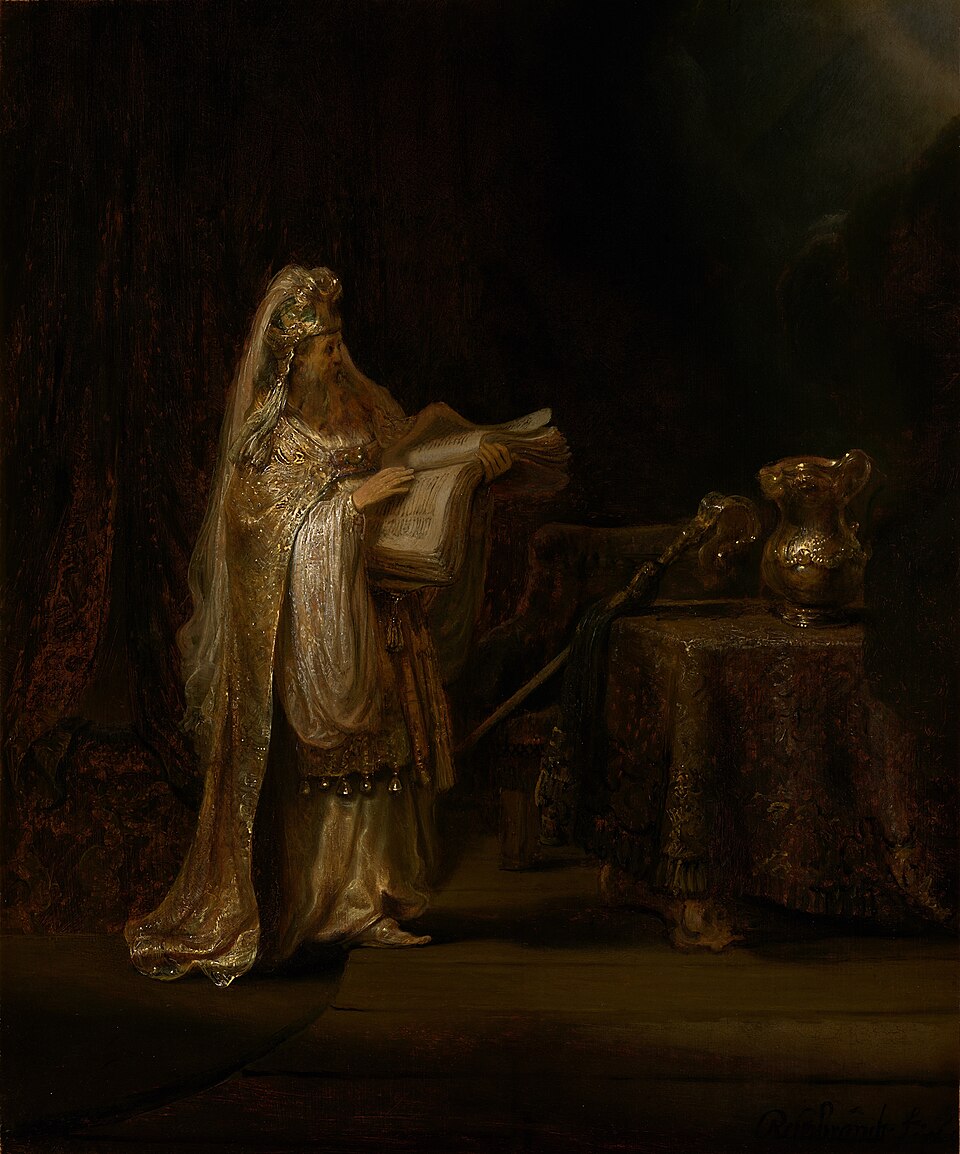
An old priest in a gold-embroidered mantle stands in the half-dark of the temple, and a light breaks in at the top right. Rembrandt painted it at 27. It vanished into a private collection in 1961, and came back as a Rembrandt in 2026.
The story behind the painting
The panel is dated 1633, when Rembrandt was 27. It shows a scene from the Gospel of Luke: the high priest Zacharias is told by the Archangel Gabriel that, despite their age, he and his wife will have a son, John the Baptist. The painting was included in Rembrandt catalogues until 1960. After it was sold in 1961 to a private collector, it was lost from sight. In 2026 the Rijksmuseum re-attributed it to Rembrandt after a two-year authentication process, and it is now on long-term loan there, displayed from March 2026. The scholar Hofstede de Groot, writing in 1915, had dated it about 1631 to 1632.
What to look for
Hofstede de Groot described it closely. Zacharias stands turned to the right, almost in profile, holding an open folio with both hands. He has a full grey beard and a rich, fantastic priestly costume: a long white under-garment with wide sleeves, a light gold-embroidered mantle fastened with a brooch, and a helmet-shaped head-dress adorned with gold, from which a long veil falls. On the right is an octagonal table with a greyish-green cloth, a large silver vase and the priest's staff leaning near it. An armchair stands further back, and on the left a dark curtain seems to hide a throne or altar. The light at upper right marks Gabriel's arrival.
Meaning and intent
The figure is small and full-length on an oak panel of about 58 by 48 cm, so the drama is quiet: no flying angel fills the scene, only a light entering the dark temple while an old man reads. That restraint fits the moment in Luke, when a promise arrives that seems impossible for an aged couple. Rembrandt reused the priest almost exactly in his etching The Circumcision, where he holds a staff and smoke rises from the vase on the table. The painting is signed at the lower right, Rembrandt f.
Legacy
The panel has a long recorded history. It appeared in the De Julienne sale in Paris in 1767, was in the collection of Jeremiah Harman by 1836, sold in London in 1844, and later belonged to Captain E. Purvis, the Paris dealer Charles Sedelmeyer and A. Lehmann in Paris. It was exhibited in the Rembrandt exhibition in Amsterdam in 1898, by Fred. Muller and Co. in 1906 and in Paris in 1911. An old copy in the Schwerin Museum was once doubtfully given to Salomon Koninck. After decades out of view, it can now be seen again in Amsterdam.
豆知識
- Dated 1633, when Rembrandt was 27.
- Lost from view after a private sale in 1961.
- Re-attributed to Rembrandt by the Rijksmuseum in 2026.
- On long-term loan to the Rijksmuseum, displayed from March 2026.
画家について
Rembrandt van Rijn (1606-1669)
宗教美術 · テーブル · アムステルダム国立美術館 · 本 · Charles Sedelmeyer collection · ザカリア
同じ画家の作品: Rembrandt van Rijn
 夜警 - Rembrandt van Rijn (1642)
 自画像 - Rembrandt van Rijn (1659)
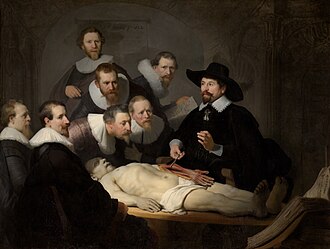 テュルプ博士の解剖学講義 - Rembrandt van Rijn (1632)
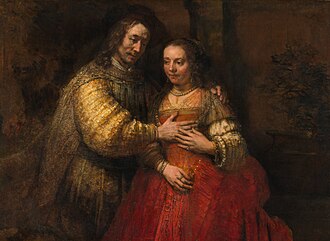 ユダヤの花嫁 - Rembrandt van Rijn (1660s)
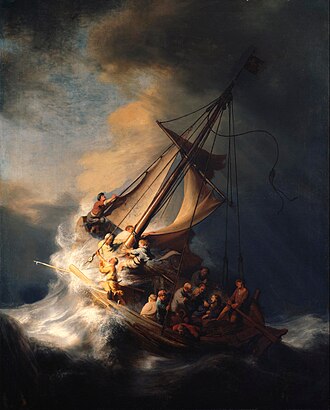 ガラリアの海の嵐 - Rembrandt van Rijn (1633)
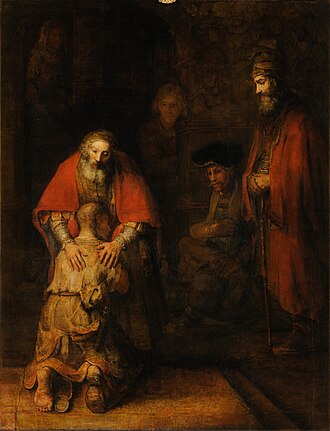 放蕩息子の帰還 - Rembrandt van Rijn (1668)
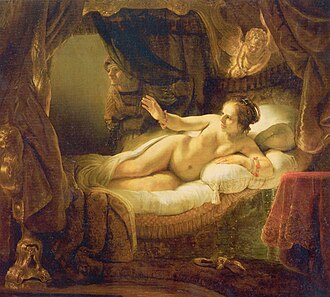 ダナエ - Rembrandt van Rijn (1636)
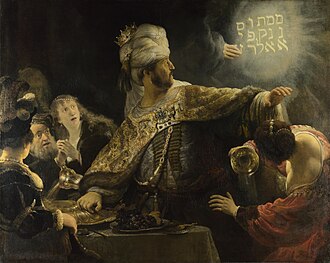 ベルシャザルの酒宴 - Rembrandt van Rijn (1636)
関連する画家の作品
 真珠の耳飾りの少女 - Johannes Vermeer (1665)
 牛乳を注ぐ女 - Johannes Vermeer (c. 1658)
 聖ニコラウスのお祭り - Jan Steen (1660s)
 牡蠣を食べる少女 - Jan Steen (1658)
 陽気な酒飲み - Frans Hals (1620s)
 微笑む騎士 - Frans Hals (1624)
 ウェイク・ベイ・ドゥールステーデの風車 - Jacob van Ruisdael (1670)
 The Jewish Cemetery - Jacob van Ruisdael (1650s)
 デルフトの家の中庭 - Pieter de Hooch (1658)
 リンゴの皮を剥く女性 - Pieter de Hooch (1663)