The Immaculate Conception
フランシスコ・デ・スルバラン · 1635
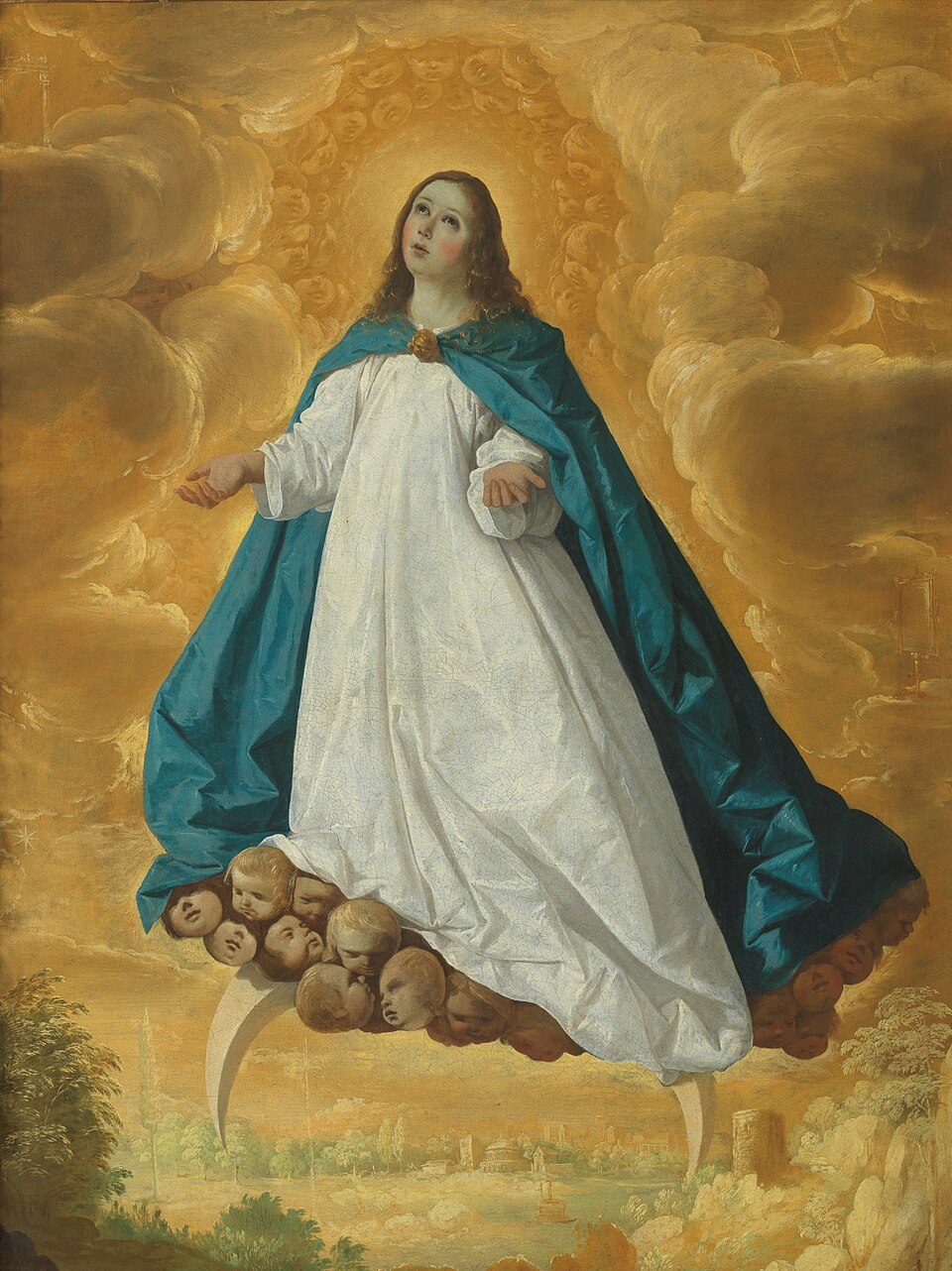
A young Mary rises on a crescent moon, arms open, palms turned to heaven, wrapped in gold light. Zurbarán painted this small canvas around 1635, probably for a private oratory, and gave up hard shadows to let plain sunlight do the work.
The story behind the painting
The Immaculate Conception was not declared a dogma of the Catholic Church until 1854, yet in Spain it was deeply honoured from the Middle Ages. Its imagery grew through the sixteenth century from a verse in the Book of Revelation about a woman clothed with the sun, the moon at her feet and a crown of twelve stars, joined by symbols from the Litany of Loreto. Zurbarán's versions set a model that Murillo later followed. This canvas, one of three by Zurbarán on the theme in the Prado, is number 43 in Odile Delenda's catalogue. The source dates it about 1630 to 1635; the museum and Wikidata say about 1635.
What to look for
The picture is split into a large heavenly zone and a much smaller earthly one, both on a golden ground. In the sky the Marian symbols are barely visible, almost hidden in the clouds; below, they sit faintly in a dreamlike landscape. Mary has a fresh face and an innocent expression. She stands on a crescent moon, lit as if emerging from a halo of light. Her deep blue mantle is thrown back to show the whole white tunic, and her beautifully creased clothing is lighter than in earlier versions. Her silhouette is a broad pyramid, turned three quarters to the left, arms open in prayer, with tiny cherub heads forming a golden nimbus around her head.
Meaning and intent
Here Zurbarán drops the violent contrasts of tenebrism and shows that simple sunlight can be just as powerful, using light, pearly brushstrokes in white, blue and gold. Mary is shown as the bride of the Song of Songs, the one who rises like the dawn, fair as the moon and bright as the sun. The whole image seems to express one idea from Scripture: that she was anointed from eternity, before the earth existed. The source also notes some weaknesses, possibly due to the workshop: a slightly awkward composition, a moon that is too wide, and not very beautiful angel heads beneath the Virgin.
Legacy
Compared with his first Immaculate Conception of 1629, this smaller and freer canvas shows how far the painter had moved. Its recorded history begins late: it was in a private collection in Great Britain before 1972, passed through the London dealers Colnaghi in 1974, was sold at Christie's in New York in 1985, and entered the Madrid collection of Plácido Arango Arias. In 2015 Arango donated it to the Museo del Prado, where it joined the museum's other Zurbarán versions of the same subject. Delenda's catalogue lists it among the painter's works on this theme.
豆知識
- Painted around 1635, probably for a private oratory.
- Number 43 in Odile Delenda's Zurbarán catalogue.
- Donated to the Museo del Prado in 2015 by Plácido Arango.
- One of three Zurbarán Immaculate Conceptions in the Prado.
画家について
フランシスコ・デ・スルバラン (1598-1664)
同じ画家の作品: フランシスコ・デ・スルバラン
 Saint Francis in Meditation - Francisco de Zurbarán (1639)
 The Immaculate Conception - Francisco de Zurbarán (1661)
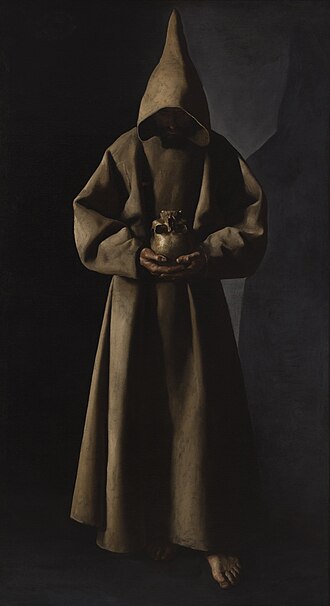 Saint Francis - Francisco de Zurbarán (1635)
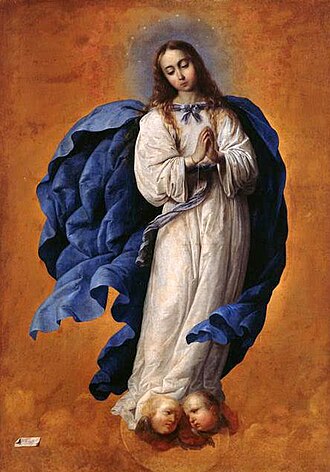 The Immaculate Conception - Francisco de Zurbarán (1661)
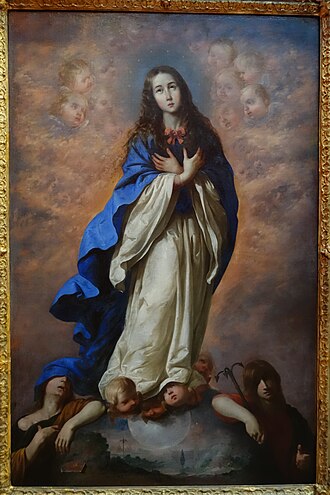 The Immaculate Conception - Francisco de Zurbarán (1658)
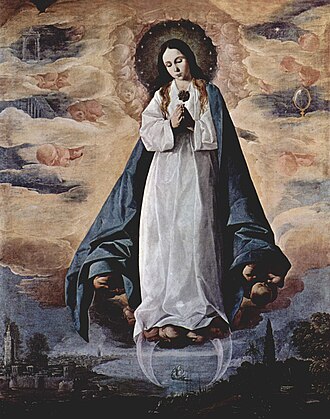 The Immaculate Conception - Francisco de Zurbarán (1630)
 Saint Lawrence - Francisco de Zurbarán (1630s)
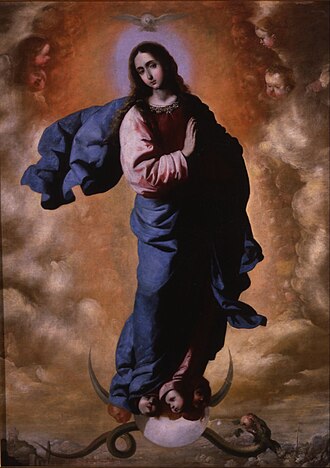 The Immaculate Conception - Francisco de Zurbarán (1645)
関連する画家の作品
 エマオの晩餐 - Caravaggio (1601)
 聖マタイの召命 - Caravaggio (1609)
 ラス・メニーナス - Diego Velázquez (1656)
 ブレダの開城 - Diego Velázquez (1635)
 チャールズ1世の三面肖像画 - Anthony van Dyck (1635)
 馬上のチャールズ1世とサン・アントワーヌの領主の肖像 - Anthony van Dyck (1636)
 キリスト昇架 - Peter Paul Rubens (1609)
 レウキッポスの娘たちの略奪 - Peter Paul Rubens (1618)
 夜警 - Rembrandt van Rijn (1642)
 自画像 - Rembrandt van Rijn (1659)
 陽気な酒飲み - Frans Hals (1620s)
 微笑む騎士 - Frans Hals (1624)