スザンナと長老たち
Rembrandt van Rijn · 1647
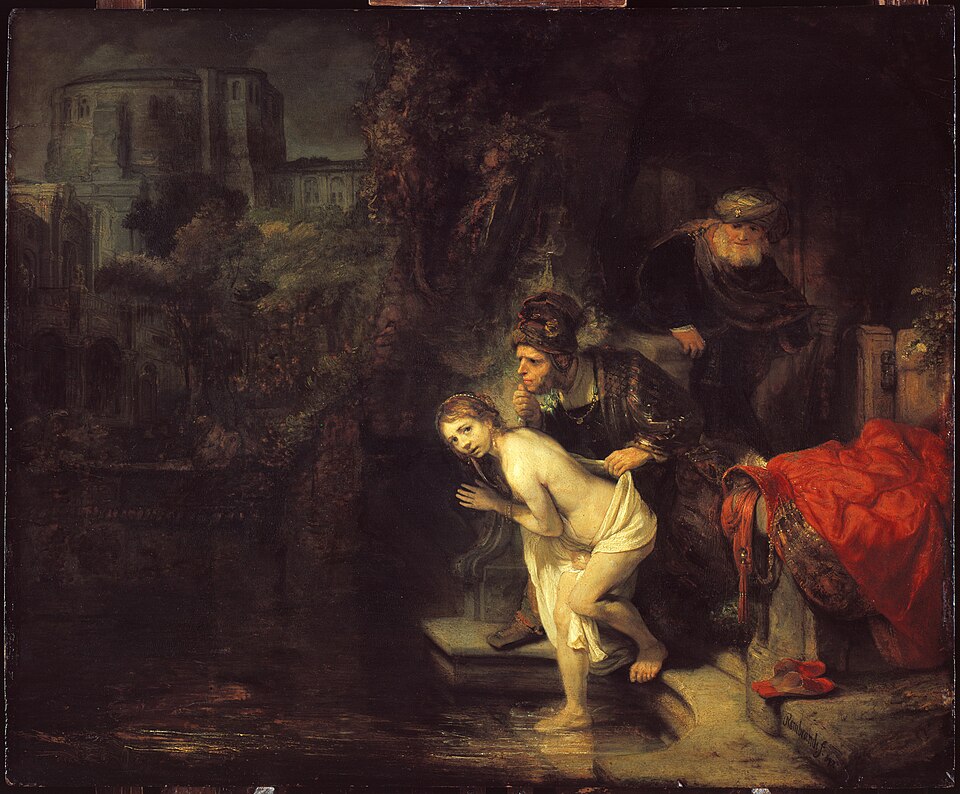
Susanna twists away from a grasping elder and looks straight out at us. Rembrandt turned an old pretext for erotic painting into an assault and a plea, and a later owner, Joshua Reynolds, quietly repainted much of the rest.
The story behind the painting
Rembrandt finished this oil on a Peltogyne panel in 1647. Religious themes were then less common in Dutch painting than elsewhere in Europe, because of the rise of Protestantism and a loss of favour for Catholic traditions, and many of the Biblical pictures of the time came from Rembrandt himself. He started from a Susanna by his teacher Pieter Lastman, which he copied in a drawing around 1636 as a study. The finished painting differs strongly from Lastman's: only the palace in the background echoes the master. Lastman's figures are passive, while Rembrandt's scene is active. Shortly after finishing it, Rembrandt appears to have sold it to a collector named Adriaen Banck.
What to look for
Susanna is undressing to step into a pool when the two elders interrupt her. The younger one grabs her robe and leers down at her; she pulls away, distressed, and meets the viewer's eye, perhaps asking for help. The colour is rich and the light and shadow intense. Many details have an Orientalist feel: dense tropical foliage around the pool and along the far bank, turbans on the elders, a Babylonian palace in the distance. Dutch artists knew such Eastern features from illustrated books by traders who had travelled to Asia, so they are a fantasy built from secondhand accounts.
Meaning and intent
The story, from the additions to the Book of Daniel, was traditionally read as one of God's faithfulness and justice: Susanna, falsely accused and facing execution, prays and is saved by Daniel's test of the elders' testimony. Painters usually infused it with eroticism, showing Susanna as a temptress or a Venus, as in Alessandro Allori's version, while in Lastman's the intrusion seems a minor annoyance. Rembrandt's version is more grounded, closer to an attempted assault as the text describes, with Susanna as a victim. By looking at us, she makes the viewer a participant rather than a hidden voyeur, and the picture becomes less an erotic piece for a patron and more about the story itself.
Legacy
The painting passed through many hands: Adriaen Banck in 1647, Adriaen Maen in 1660, Baron Schonborn in 1738, J. A. J. Aved in 1766, Edmund Burke in 1769 and Sir Joshua Reynolds in 1795, according to Wikipedia's list. In 1883 Wilhelm von Bode bought it for the Kaiser-Friedrich Museum in Berlin, and it is now in the Gemäldegalerie. In 2015 X-ray scans revealed that Reynolds, after acquiring it in the late 18th century, had painted over large parts and removed others with solvents, leaving only the figures, the distant palace and a few foreground elements untouched. Why he did so is unclear, though he was known to alter works he owned.
豆知識
- Oil on a Peltogyne panel, completed in 1647.
- Based at first on a Susanna by Rembrandt's teacher Pieter Lastman.
- X-rays in 2015 showed Joshua Reynolds had repainted much of the background.
- Bought for Berlin by Wilhelm von Bode in 1883; now in the Gemäldegalerie.
画家について
Rembrandt van Rijn (1606-1669)
宗教美術 · 女性 · ヌード · 裸 · 絵画館 · Charles Sedelmeyer collection · 入浴 · 高齢者 · 洗浄
同じ画家の作品: Rembrandt van Rijn
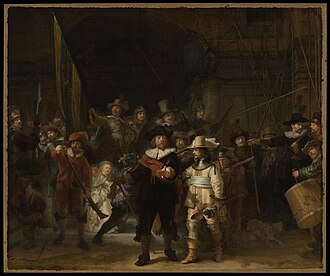 夜警 - Rembrandt van Rijn (1642)
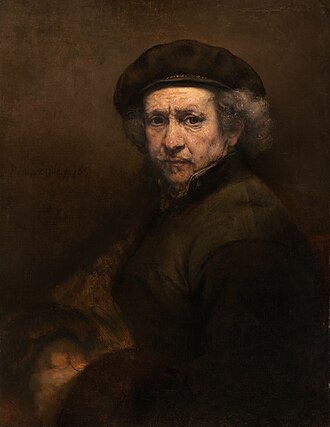 自画像 - Rembrandt van Rijn (1659)
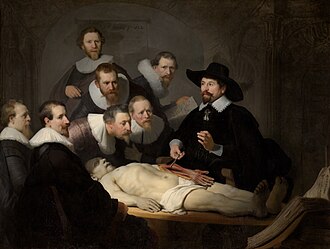 テュルプ博士の解剖学講義 - Rembrandt van Rijn (1632)
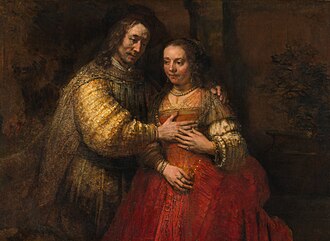 ユダヤの花嫁 - Rembrandt van Rijn (1660s)
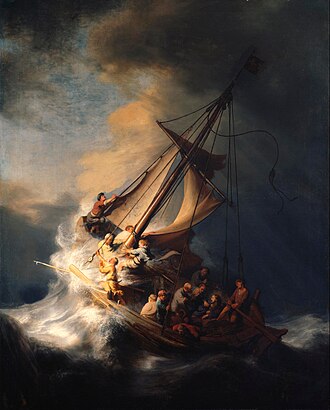 ガラリアの海の嵐 - Rembrandt van Rijn (1633)
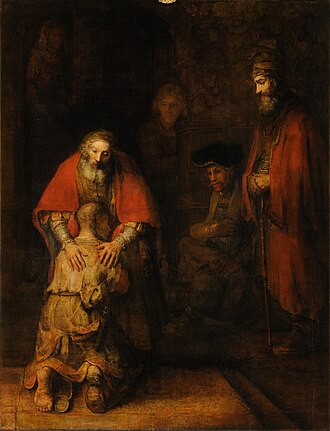 放蕩息子の帰還 - Rembrandt van Rijn (1668)
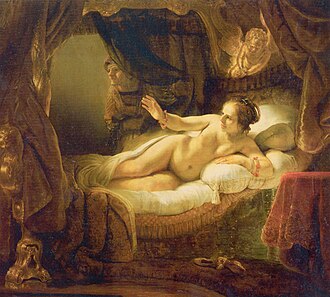 ダナエ - Rembrandt van Rijn (1636)
 ベルシャザルの酒宴 - Rembrandt van Rijn (1636)
 真珠の耳飾りの少女
 牛乳を注ぐ女