St. Luke
フランス・ハルス · 1625
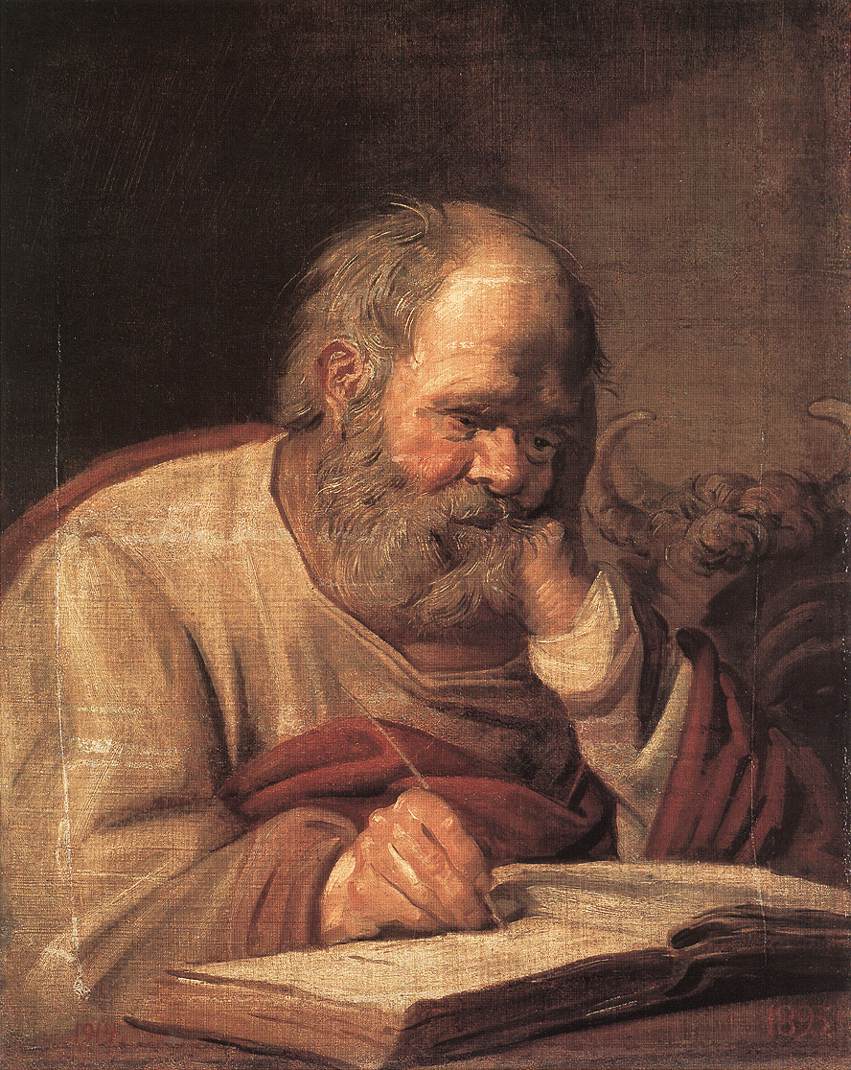
An old man with an unkempt beard rests his head on his fingers, quill poised over a battered book, an ox peering from the shadows. Frans Hals painted St Luke in 1625, and the picture spent more than a century unrecognised.
The story behind the painting
Frans Hals painted St Luke in 1625 as part of a series of the Four Evangelists that share a theme, a palette and his way of painting. In his 1989 catalogue of the international Hals exhibition, Seymour Slive set a detail from Hals's Banquet of the Officers of the St Adrian Militia Company of 1627 beside it, to show that Johan Damius was the probable model for Luke, though with a little less hair. So a Haarlem militia officer may have lent his face to the evangelist.
What to look for
Luke sits at a desk, reading. His beard is thick and unkempt, his crown bald, his hair thin. His skin is full of wrinkles and folds, on the forehead, around the eyes, on the hands and cheekbones, and his cheeks and nose are reddish. He wears a beige robe with a red one draped over his shoulders. His left fingers rest against his temple, his right hand holds a quill above an open book with curled pages. On the left, half hidden, an ox looks straight at us with one eye.
Meaning and intent
The ox is Luke's traditional attribute. Everything else turns inward: head tilted down, brows furrowed, eyes lowered, mouth hidden by the beard. The Wikipedia article reads his expression as serene, quiet contemplation, a man deep in his work. Hals, famous for laughing faces and quick brushwork, here gives a saint the worn skin and plain clothes of an ordinary old man, which makes the holy writer feel close and human.
Legacy
Catherine II acquired the evangelists in 1771 and took them to St Petersburg, where they sat in storage. In 1812 Alexander I sent Luke and Matthew to Catholic churches in New Russia. Their path until their registration in Odesa's museum in 1948 is unclear. Thought to be 19th century works, they were recognised by Linnik as two of Hals's four lost evangelists. They were shown in Haarlem in 1962 and Moscow in 1965. The painting belongs to the Odesa Museum of Western and Eastern Art and in 2025 was on display at the Gemäldegalerie in Berlin. The article's provenance section largely speaks of St Matthew, so details may apply to both.
豆知識
- Painted in 1625, one of Hals's Four Evangelists.
- Johan Damius was the probable model.
- Sent to New Russia in 1812 and identified in Odesa as a Hals.
- Belongs to the Odesa Museum, shown in Berlin in 2025.
画家について
フランス・ハルス (1591-1666)
同じ画家の作品: フランス・ハルス
 陽気な酒飲み - Frans Hals (1620s)
 微笑む騎士 - Frans Hals (1624)
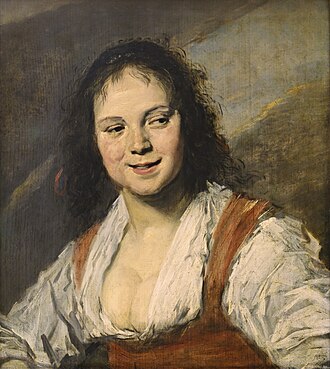 ジプシー女 - Frans Hals (1628)
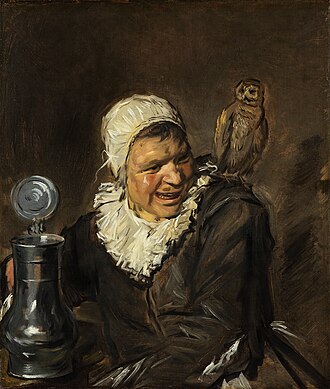 マッレ・バッベ - Frans Hals (1640s)
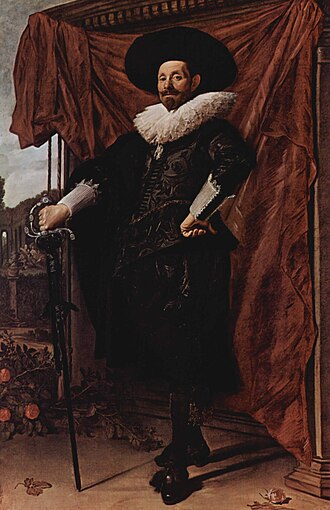 剣を持ってポーズをとるウィレム・ファン・ヘイトゥイセン - Frans Hals (1625)
 Militia Company of District XI under the Command of Captain Reynier Reael - Frans Hals (1630s)
 リュートを弾く道化師 - Frans Hals (1623)
 ざんげ節に浮かれ騒ぐ人々 - Frans Hals (1610s)
関連する画家の作品
 夜警 - Rembrandt van Rijn (1642)
 自画像 - Rembrandt van Rijn (1659)
 真珠の耳飾りの少女 - Johannes Vermeer (1665)
 牛乳を注ぐ女 - Johannes Vermeer (c. 1658)
 聖ニコラウスのお祭り - Jan Steen (1660s)
 牡蠣を食べる少女 - Jan Steen (1658)
 ウェイク・ベイ・ドゥールステーデの風車 - Jacob van Ruisdael (1670)
 The Jewish Cemetery - Jacob van Ruisdael (1650s)
 デルフトの家の中庭 - Pieter de Hooch (1658)
 リンゴの皮を剥く女性 - Pieter de Hooch (1663)