ジプシー女
フランス・ハルス · 1628
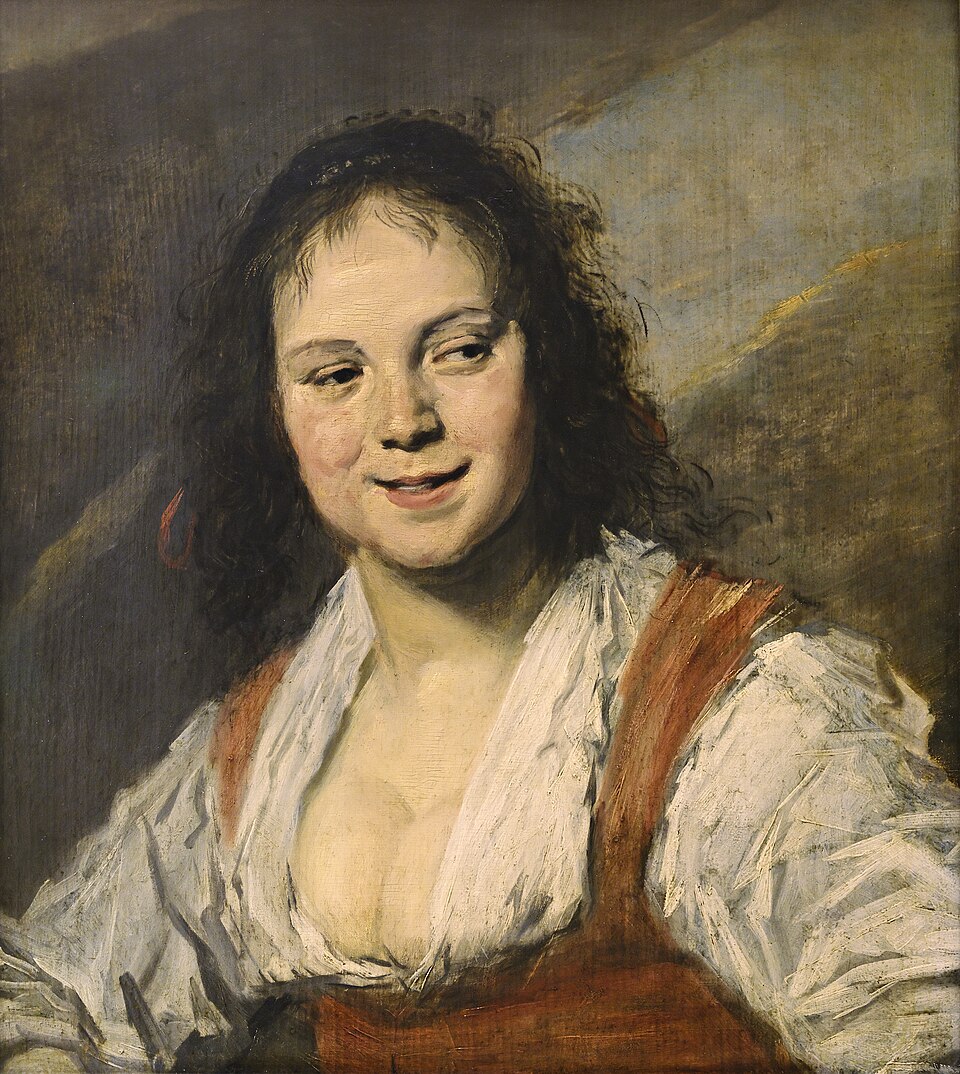
A young woman laughs, glancing down to one side, her hair loose on her shoulders. Frans Hals painted her quickly and boldly around 1628, and nearly four centuries later she still inspired a Dutch pop hit.
The story behind the painting
Hals painted this picture on wood in Haarlem. Wikidata dates it 1628, while Wikipedia gives 1628 to 1630. It is not a commissioned portrait but a tronie, a study of a face and an unusual costume made for its own sake, so we do not know who the model was. The picture was first documented at a sale in Paris in 1782, and every catalogue of Frans Hals since then has included her. Today she hangs in the Louvre in Paris.
What to look for
In 1910 the cataloguer Hofstede de Groot described her as a laughing girl, life-size and half-length, seen almost full face and looking down towards the right. Her brown hair falls on her shoulders, and she wears a red bodice over a white chemise that leaves her breast exposed. He noted yellow flesh tones and called it a superb picture. Look for the speed of the brushwork: Hals usually painted such genre works wet-on-wet in a single session. In raking light, diagonal strokes can be seen on either side of her breasts.
Meaning and intent
Those hidden strokes show that Hals first made her neckline less daring and then changed his mind. Because a low neckline like this was not usually seen in public in his time and place, various art historians have assumed he meant to paint a prostitute, and the hesitation may show a certain reservation on his part, although such subjects were common then. From the 19th century the Louvre called the picture La Bohémienne, a female gypsy. Wikidata lists Romani people among its subjects, but the Wikipedia article says there is no reason to assume the model was Romani.
Legacy
In 1962 the painting was lent to a Frans Hals exhibition at the Frans Hals Museum in Haarlem. There the singer-songwriter Lennaert Nijgh, a Haarlem native, was so taken with her that he wrote a song about her. He called it Malle Babbe, mistakenly using the name of another Hals painting in the same show. The song celebrates the girl's lusty, vibrant energy and became a Dutch hit for Rob de Nijs in 1975, and it is still sung by other artists. Because of it, the painting is sometimes wrongly called Malle Babbe.
豆知識
- A tronie, a study of a face and costume, not a commissioned portrait.
- Painted on wood; dated 1628 by Wikidata and 1628-1630 by Wikipedia.
- Hals first painted the neckline higher, then lowered it.
- Inspired the 1975 Dutch hit song Malle Babbe.
画家について
フランス・ハルス (1591-1666)
女性 · 肖像 · ルーヴル美術館絵画部門 · ロングヘア · ドレス · 黒髪 · 笑み
同じ画家の作品: フランス・ハルス
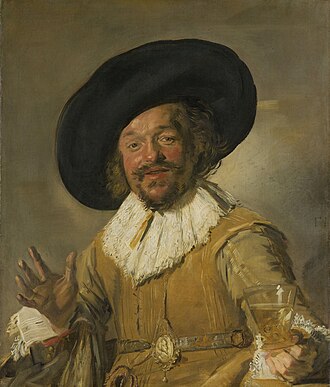 陽気な酒飲み - Frans Hals (1620s)
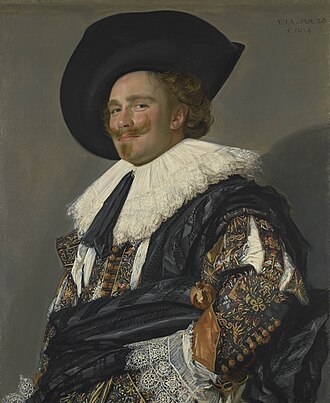 微笑む騎士 - Frans Hals (1624)
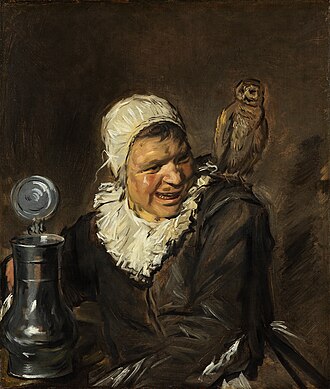 マッレ・バッベ - Frans Hals (1640s)
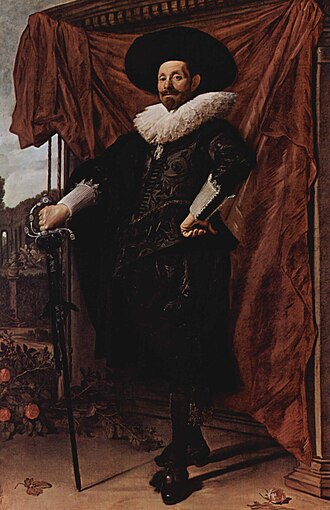 剣を持ってポーズをとるウィレム・ファン・ヘイトゥイセン - Frans Hals (1625)
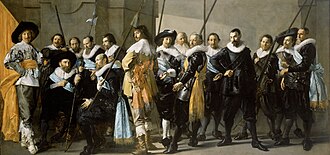 Militia Company of District XI under the Command of Captain Reynier Reael - Frans Hals (1630s)
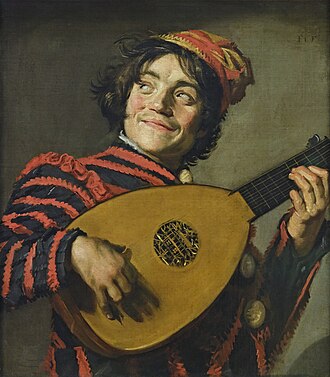 リュートを弾く道化師 - Frans Hals (1623)
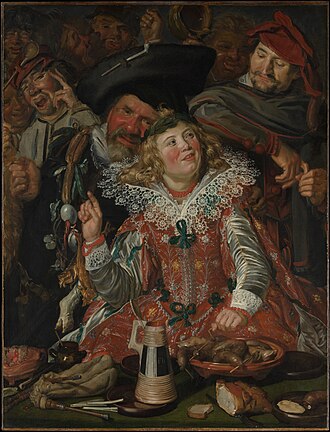 ざんげ節に浮かれ騒ぐ人々 - Frans Hals (1610s)
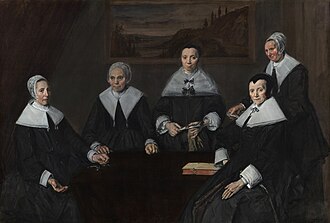 養老院の女性理事たち - Frans Hals (1664)
 夜警
夜警 自画像
自画像 真珠の耳飾りの少女
 牛乳を注ぐ女