Salmon, Boaz, Obed
ミケランジェロ・ブオナローティ · 1511
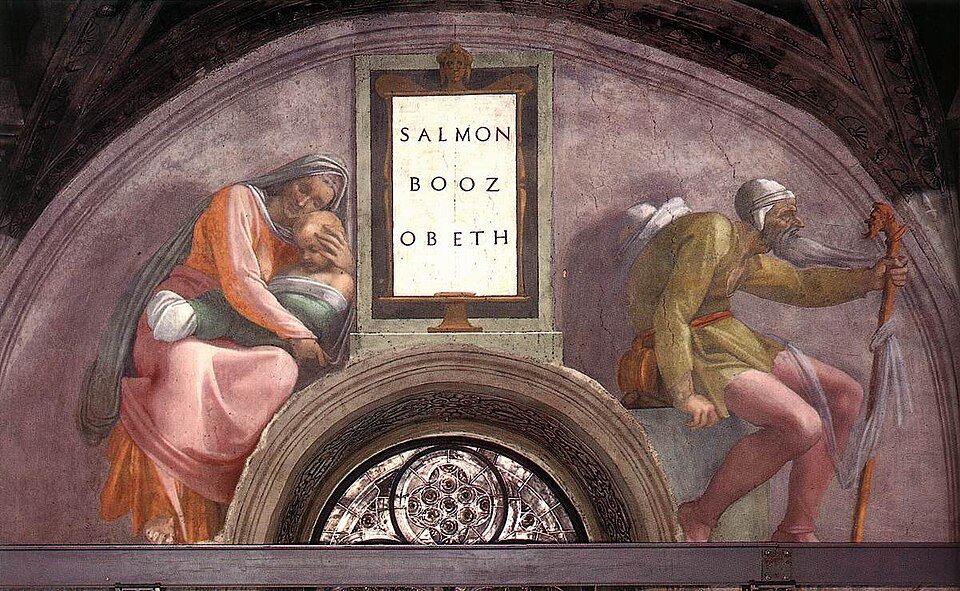
On one side a mother sleeps with her child held close; on the other an angry old pilgrim glares at his own carved staff. Michelangelo set these two moods side by side in one lunette of the Sistine Chapel.
The story behind the painting
Michelangelo painted this lunette around 1511 to 1512 as part of the decoration of the Sistine Chapel, within the ceiling project commissioned by Pope Julius II; Wikidata dates it 1511. The lunettes hold the series of the Ancestors of Christ and were painted, like the rest of the vault, in two phases, starting from the wall opposite the altar. By summer 1511 the first half was done and the scaffolding was rebuilt in the other half. The second phase began in October 1511 and ended a year later, just in time for the unveiling on the eve of All Saints in 1512. This lunette was probably the twelfth of sixteen to be painted.
What to look for
The lunette is split into two groups around a plaque reading SALMON, BOOZ, OBETH. On the left a woman with closed eyes holds her sleeping child in swaddling, though he looks much older than a newborn. Her breast still shows from her dress, a reminder of nursing; this detail was once hidden by a later retouching, removed in the recent restoration. She wears a long red tunic, a dull green veil and a pink mantle. On the right an old man in profile leans on a staff topped by a bearded head that resembles him. He wears a short yellow tunic, pink sandals and a white cap, with a flask hanging from his belt.
Meaning and intent
The lunettes follow the genealogy of Christ in the Gospel of Matthew. The old man is traditionally identified as Boaz, but only through fragile links: the Bible says he rejoiced in his old age at the birth of Obed, so the child would be Obed in the arms of his mother Ruth. His objects suggest a pilgrim, and his look expresses anger. Although Michelangelo gave him a wrinkled face and white beard, he kept the body muscular and supple, with athletic legs. The tender mother and child form one of the gentlest groups of the series and contrast sharply, in attitude and colour, with the bent old man.
Legacy
In the second half of the chapel, the plaques were simplified at the insistence of the pope, who wanted the work finished quickly. The backgrounds became lighter and the figures larger, painted faster and more fluidly. The larger proportions were an optical device for people moving from the door toward the altar, as in solemn processions. The lunettes were among the most blackened parts of the chapel and were restored with striking results in 1986. A similar old man with the same staff appears in the so-called Oxford sketchbook at the Ashmolean Museum, along with a sketch of the mother. The work measures about 215 by 430 cm.
豆知識
- Painted around 1511 to 1512 for the Sistine Chapel.
- Probably the twelfth of sixteen lunettes painted.
- The identification of the old man as Boaz rests on fragile links.
- Restored with striking results in 1986.
画家について
ミケランジェロ・ブオナローティ (1475-1564)
同じ画家の作品: ミケランジェロ・ブオナローティ
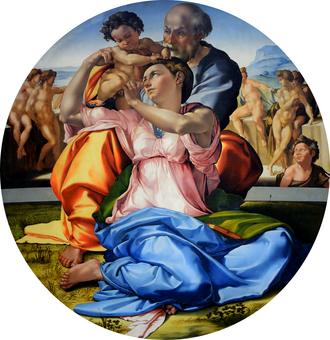 聖家族 - Michelangelo (1500s)
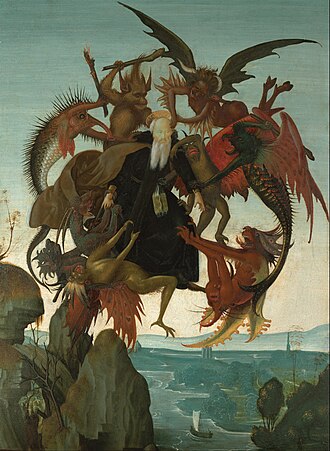 聖アンソニーの苦悩 - Michelangelo (1487)
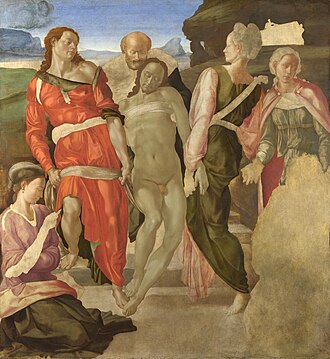 キリストの埋葬 - Michelangelo (1500s)
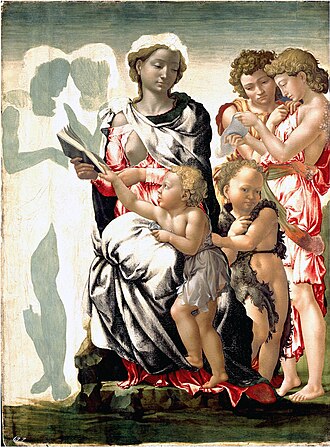 マンチェスターの聖母 - Michelangelo (1494)
 レダと白鳥 - Michelangelo (1530)
 大洪水 - Michelangelo (1508)
 ノアの燔祭 - Michelangelo (1508)
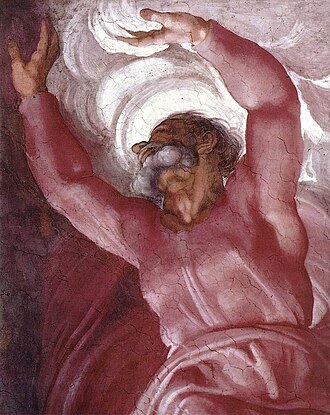 Separation of Light from Darkness - Michelangelo (1512)
関連する画家の作品
 システィーナの聖母 - Raphael (1510s)
 ラ・フォルナリーナ - Raphael
 ウルビーノのヴィーナス - Titian (1538)
 聖母被昇天 - Titian (1510s)
 モナ・リザ - Leonardo da Vinci (1503-1519)
 白貂を抱く貴婦人 - Leonardo da Vinci (1490)
 自画像 - Albrecht Dürer (1500)
 東方三博士の礼拝 - Albrecht Dürer (1504)
 ヴィーナスの誕生 - Sandro Botticelli (c. 1485)
 プリマヴェーラ - Sandro Botticelli (1480s)
 快楽の園 - Hieronymus Bosch
 愚者の船 - Hieronymus Bosch (1500s)