Portrait of a gentleman, half-length, in a black velvet cloak and white lace collar and cuffs
Rembrandt van Rijn · 1635
.jpg)
A young man in black velvet and white lace was sold in London as the work of Rembrandt's circle. One Amsterdam dealer looked at the lace, looked at the date, and bet that it was Rembrandt himself.
The story behind the painting
The painting, made around 1635, came up at Christie's in London catalogued only as "circle of Rembrandt". The Amsterdam art dealer Jan Six saw the catalogue entry and showed it to the Rembrandt scholar Ernst van de Wetering before booking a ticket to London. The picture struck him as very Rembrandt-like. His main clue was the tentative date in the catalogue, 1633 to 1635. At that young age, Six reasoned, Rembrandt did not yet have a circle, so the painting might well be an original from his early years. Six bought it through an anonymous investor.
What to look for
The full catalogue title describes the sitter: a gentleman shown half-length, in a black velvet cloak with a white lace collar and cuffs. Wikidata also records a glove and a table in the picture, and the canvas measures about 94.5 by 73.5 cm. Look closely at the lace. It was the careful lacework that sent Six hurrying to the National Gallery in London to compare it with Rembrandt's Portrait of Philips Lucasz from the same years, which shows similar lace. That portrait's companion, Portrait of Petronella Buys, also has lace and the same kind of background as both other paintings.
Meaning and intent
The story is really about how attribution works. A label like "circle of Rembrandt" places a painting near a master but not in his hand. Six's argument turned that label against itself: if the date was right, the circle did not exist yet, and the painting belonged to Rembrandt's juvenilia, early works that scholars have only begun to explore in recent decades. The source notes that the painting has not yet been catalogued as by Rembrandt, so the attribution remains a claim rather than a settled fact. The black and white costume and the lace became the evidence in that claim.
Legacy
The find caused a Dutch controversy. The dealer Sander Bijl, son of the restorer Martin Bijl, had also spotted the catalogue entry and had proposed to Six that they buy the painting together. He ended up bidding against Six, and only learned who had won when his own father was hired to restore it. At the time Martin Bijl was also restoring another Rembrandt owned by Six for the 2019 Rembrandt year. The painting had come from a private owner descended from Sir Richard Neave, 1st Baronet, or his son Sir Thomas Neave, and it is now on view in Amsterdam.
豆知識
- Painted around 1635 and attributed to Rembrandt.
- Sold in London as "circle of Rembrandt" and bought by dealer Jan Six.
- Not yet catalogued as a Rembrandt.
- Now on view in Amsterdam.
画家について
Rembrandt van Rijn (1606-1669)
同じ画家の作品: Rembrandt van Rijn
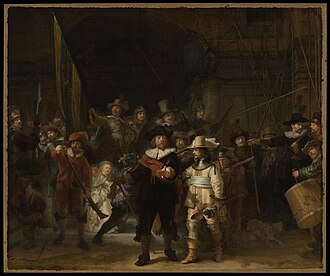 夜警 - Rembrandt van Rijn (1642)
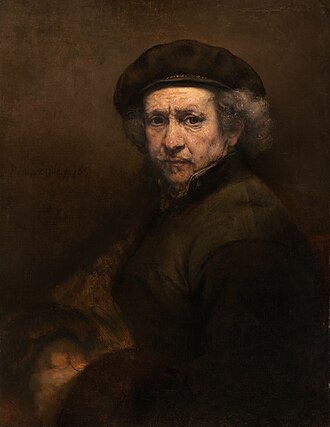 自画像 - Rembrandt van Rijn (1659)
 テュルプ博士の解剖学講義 - Rembrandt van Rijn (1632)
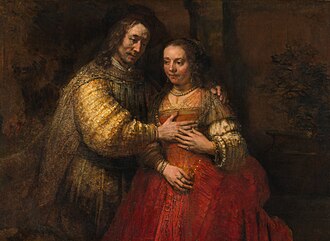 ユダヤの花嫁 - Rembrandt van Rijn (1660s)
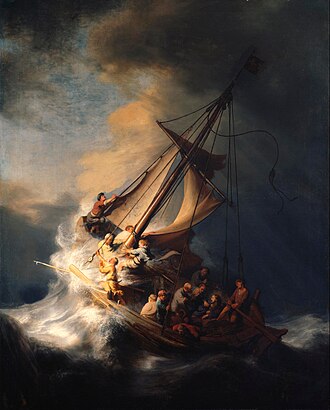 ガラリアの海の嵐 - Rembrandt van Rijn (1633)
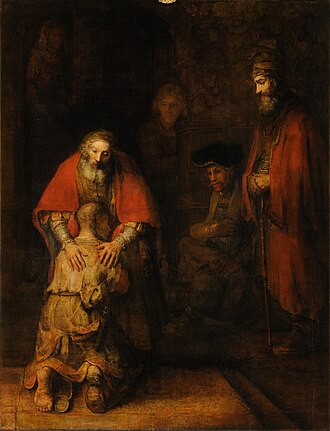 放蕩息子の帰還 - Rembrandt van Rijn (1668)
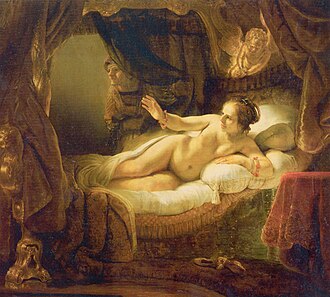 ダナエ - Rembrandt van Rijn (1636)
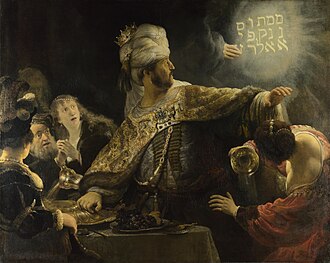 ベルシャザルの酒宴 - Rembrandt van Rijn (1636)
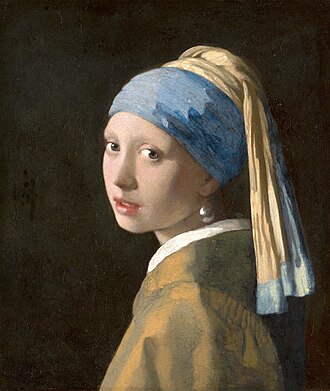 真珠の耳飾りの少女
 牛乳を注ぐ女