ドルバダーン城
J. M. W. Turner · 1800
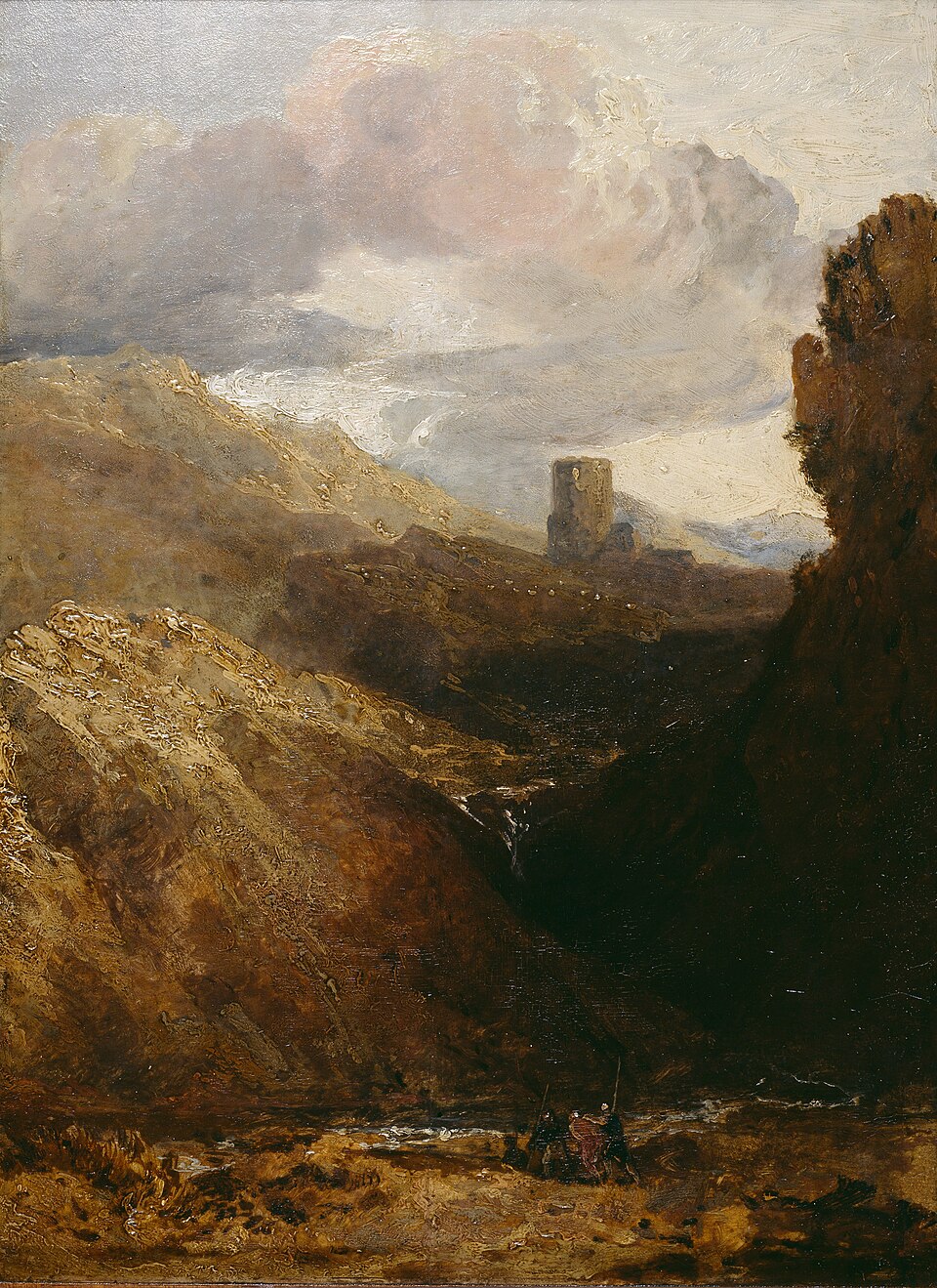
A small dark tower rises against a vast Welsh sky, and below it a prisoner in red is led toward the walls. Turner chose this picture as one of his two Diploma works for the Royal Academy in 1800.
The story behind the painting
Turner first visited Wales in 1792, travelling through the south, and returned in 1794 to Flintshire and Denbighshire. In 1798 he made a much longer journey through Dyffryn Wysg, Ceredigion, Aberystwyth, Gwynedd and Llangollen, and around Dolbadarn, Llanberis and other parts of Snowdonia. Many studies from that tour survive in a sketchbook now held by Tate Britain. Back in his London studio he worked these sketches up into more finished paintings of North Wales, and this one, dated 1798 to 1799 by Wikipedia and 1800 by Wikidata, became one of the two works he submitted to the Royal Academy as Diploma works in 1800.
What to look for
The picture is oil on a wood panel, with a visible area of about 45.5 by 30 cm, so it is tall rather than wide. The castle tower stands high above the scene while mountains climb toward the sky. Look for the small group of soldiers and their prisoner, Owain Goch, picked out in red among the darker tones. Turner's strong contrast of light and dark creates a feeling of danger, and the painting is counted as an example of the Sublime. The frame you may see was made especially for it by John Jones of London in the 1940s.
Meaning and intent
The scene is Turner's impression of a 13th century event in Welsh history. Owain Goch, brother of Prince Llywelyn ap Gruffudd, is being taken by soldiers to imprisonment at Dolbadarn Castle, where he was held from 1255 until his release in 1277. His captivity left Llywelyn free to concentrate on uniting Wales against the English. Turner exhibited the work with lines of verse, a habit of his, speaking of the awful silence of the waste, a majestic solitude, and hopeless Owen who wrung his hands for liberty in vain. The landscape and the story of lost freedom are meant to be felt together.
Legacy
As a Diploma work, the painting marked Turner's standing at the Royal Academy at the turn of the century, and it belongs to the body of work that grew out of his Welsh tours. It is now kept at the National Library of Wales, which bought it with help from the National Art Collection Fund and the National Lottery. The supporting sketchbook at Tate Britain still lets viewers follow how a travelling artist's quick studies became a finished, carefully framed image of Welsh history and wild mountain scenery.
豆知識
- One of Turner's two Diploma works for the Royal Academy, 1800.
- Shows Owain Goch led to Dolbadarn Castle, where he was held 1255 to 1277.
- Oil on wood panel, about 45.5 by 30 cm.
- Kept at the National Library of Wales.
画家について
J. M. W. Turner (1775-1851)
同じ画家の作品: J. M. W. Turner
 戦艦テメレール号 - J. M. W. Turner (1839)
 雨、蒸気、速度 - グレート・ウェスタン鉄道 - J. M. W. Turner (1844)
 奴隷船 - J. M. W. Turner (1840)
 カルタゴを建設するディドー - J. M. W. Turner (1815)
 トラファルガーの海戦 - J. M. W. Turner (1820s)
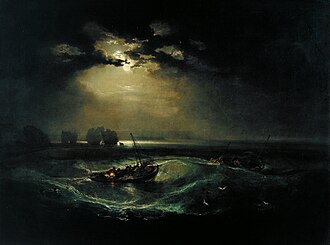 Fishermen at Sea - J. M. W. Turner (1796)
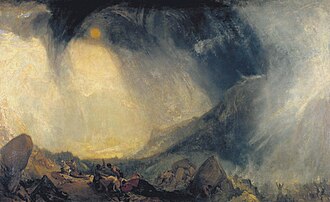 吹雪、アルプスを越えるハンニバルとその軍勢 - J. M. W. Turner (1812)
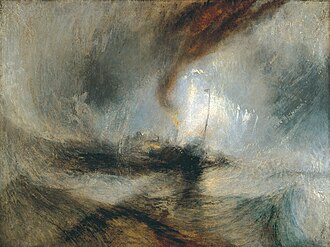 Snow Storm: Steam-Boat off a Harbour's Mouth - J. M. W. Turner (1842)
関連する画家の作品
 ウォルドグレイヴ家の貴婦人たち - Joshua Reynolds (1780)
 ジョージ K. H. クースメイカー大尉 - Joshua Reynolds (1782)
 印象・日の出 - Claude Monet (1872)
 睡蓮 - Claude Monet (1906)
 1808年5月3日 - Francisco Goya (1814)
 裸のマハ - Francisco Goya (1800)
 雲海の上の旅人 - Caspar David Friedrich (c. 1818)
 楡の木のある僧院 - Caspar David Friedrich (1800s)
 民衆を導く自由の女神 - Eugène Delacroix (1830)
 サルダナパールの死 - Eugène Delacroix (1827)
 青衣の少年 - Thomas Gainsborough (1770)
 アンドリューズ夫妻 - Thomas Gainsborough (1748)