Cumaean Sibyl
ミケランジェロ・ブオナローティ · 1511
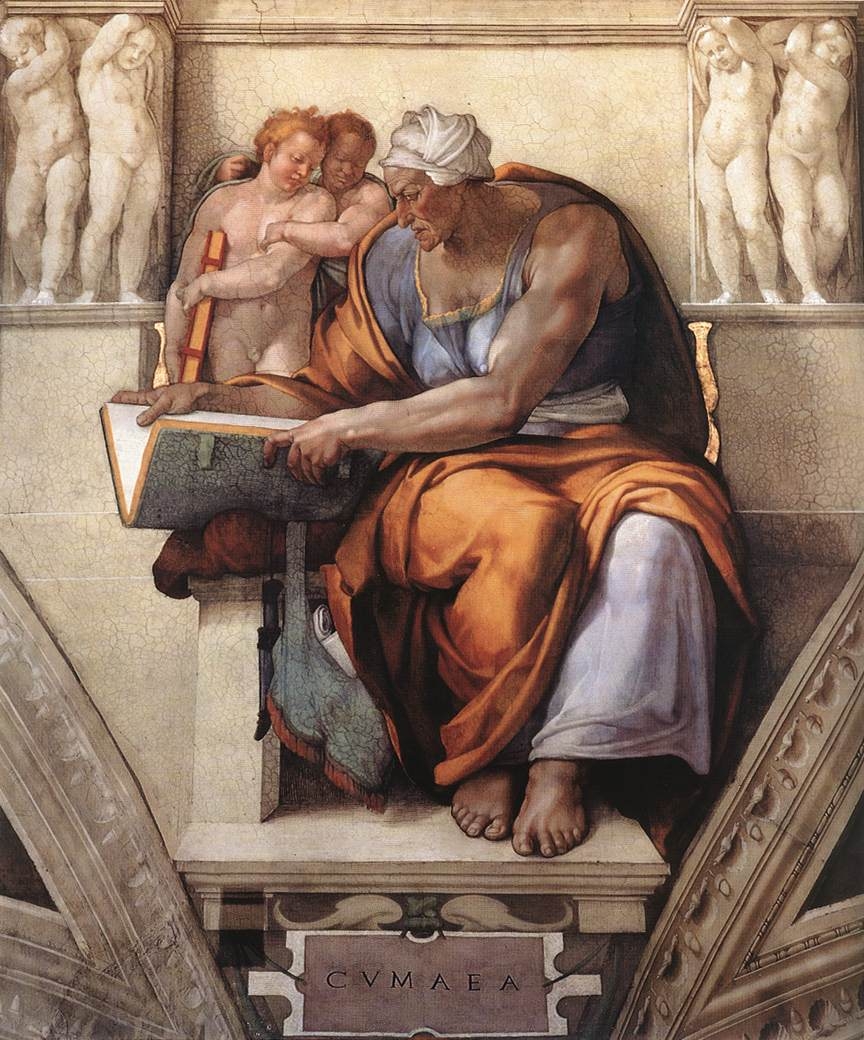
A giant old woman with a muscular arm and a wrinkled face strains over an open book of prophecy. Michelangelo's Cumaean Sibyl sits at the very centre of the Sistine Chapel ceiling, a pagan voice believed to have foretold Christ.
The story behind the painting
The fresco is part of the Sistine Chapel ceiling commissioned by Pope Julius II. Michelangelo painted the vault bay by bay, starting near the entrance used for the pope's solemn processions and ending above the altar. The Cumaean Sibyl sits in the fifth bay from the door and is one of the first figures of the second phase of the work, in autumn 1511. The French Wikipedia article gives 350 by 380 cm, while Wikidata gives 375 by 380 cm.
What to look for
She belongs to the series of Seers, each enthroned on a great marble seat between painted reliefs of putti, flanked by two young helpers, with a name plaque below, here CVMAEA. Michelangelo made her an old woman of gigantic, masculine build, especially in the bare, muscular arm in front, with dark skin and a deeply lined face. Her torso turns left while her legs do not. She holds the open book on a cushion, her expression hard and focused, as if struggling to decipher it. The two putti behind her also stare at the page. Warm orange in her cloak plays against blue and the green of the book, and she wears a white bonnet.
Meaning and intent
Her central place on the vault recalls the prophecy Virgil gave her in the fourth Eclogue: the birth of a child under Augustus who would bring back the Golden Age. It was the most important pagan prophecy reread by Christianity, and it helped humanism bring classical culture and Christian doctrine together. People believed that all of ancient humanity had waited for the Good News, and that God, though he spoke most directly to the Hebrew prophets, had also given glimpses to pagans through sibyls and seers.
Legacy
The art historian Charles de Tolnay pointed to Ovid's Metamorphoses, where the Cumaean Sibyl is described as an aged woman, as a possible inspiration for Michelangelo's choice. The powerful volume of the figure, shaped by deep shadow, gives her a sculptural presence and a strong sense of movement. Today she remains one of the most striking of the seers on the ceiling in the Vatican Museums, an image of age and effort rather than serene beauty, still bent over a text she cannot quite read.
豆知識
- Painted in autumn 1511 on the Sistine Chapel ceiling.
- Fifth bay from the entrance door.
- Linked to Virgil's fourth Eclogue prophecy.
- Commissioned as part of the ceiling by Pope Julius II.
画家について
ミケランジェロ・ブオナローティ (1475-1564)
同じ画家の作品: ミケランジェロ・ブオナローティ
 聖家族 - Michelangelo (1500s)
 聖アンソニーの苦悩 - Michelangelo (1487)
 キリストの埋葬 - Michelangelo (1500s)
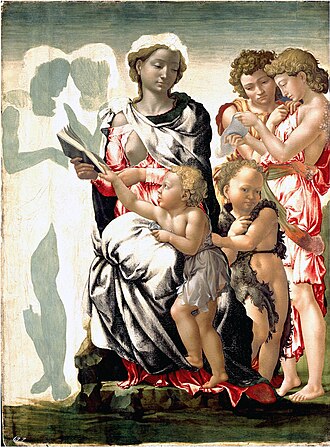 マンチェスターの聖母 - Michelangelo (1494)
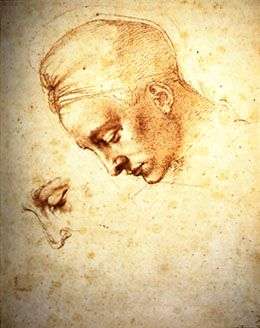 レダと白鳥 - Michelangelo (1530)
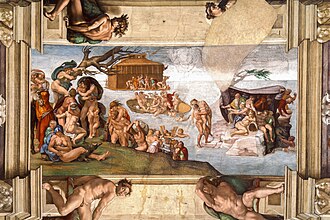 大洪水 - Michelangelo (1508)
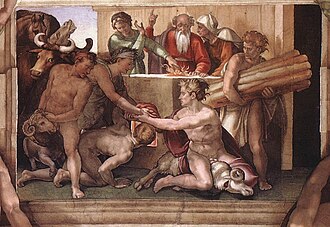 ノアの燔祭 - Michelangelo (1508)
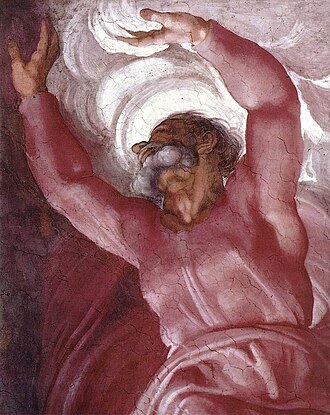 Separation of Light from Darkness - Michelangelo (1512)
関連する画家の作品
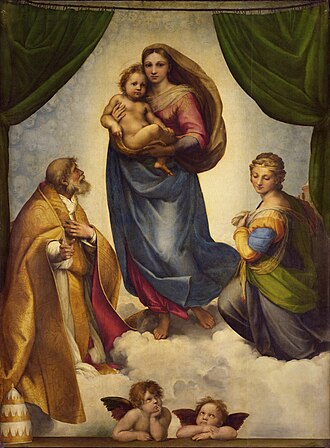 システィーナの聖母 - Raphael (1510s)
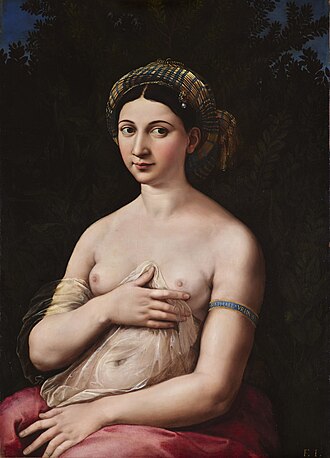 ラ・フォルナリーナ - Raphael
 ウルビーノのヴィーナス - Titian (1538)
 聖母被昇天 - Titian (1510s)
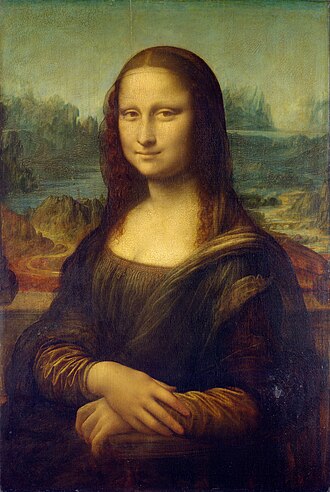 モナ・リザ - Leonardo da Vinci (1503-1519)
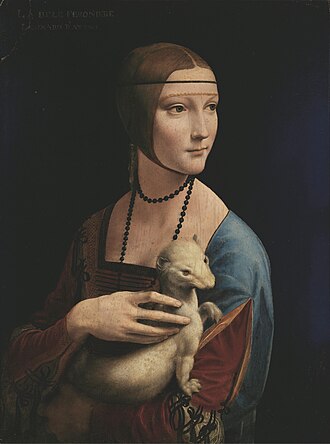 白貂を抱く貴婦人 - Leonardo da Vinci (1490)
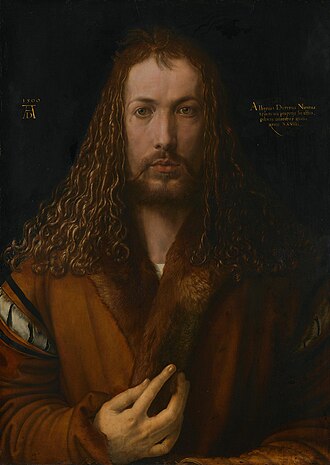 自画像 - Albrecht Dürer (1500)
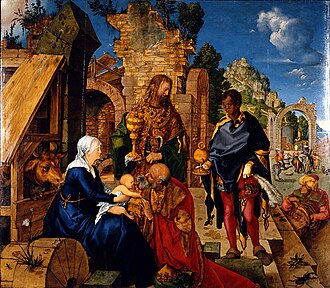 東方三博士の礼拝 - Albrecht Dürer (1504)
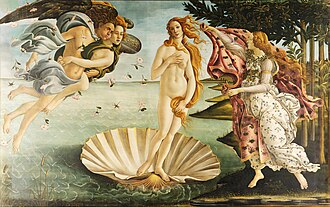 ヴィーナスの誕生 - Sandro Botticelli (c. 1485)
 プリマヴェーラ - Sandro Botticelli (1480s)
 快楽の園 - Hieronymus Bosch
 愚者の船 - Hieronymus Bosch (1500s)